This is the second blog post in a series looking at building reasoning within the maths curriculum. Here I’m looking at the using visuals in maths questions.
I’m always thinking about the best way to represent maths concepts practically to build understanding. The visual questions I use, therefore, are designed to correspond with the practical/visual models I have already used. The below-left example is one way that I represent the concept of ‘= means the same as’. The below-right example is a prompt that can be used to launch a practical investigation using matchsticks, developing the thought process of ‘how many [divisor] in [dividend]’ as children learn to do division by grouping.
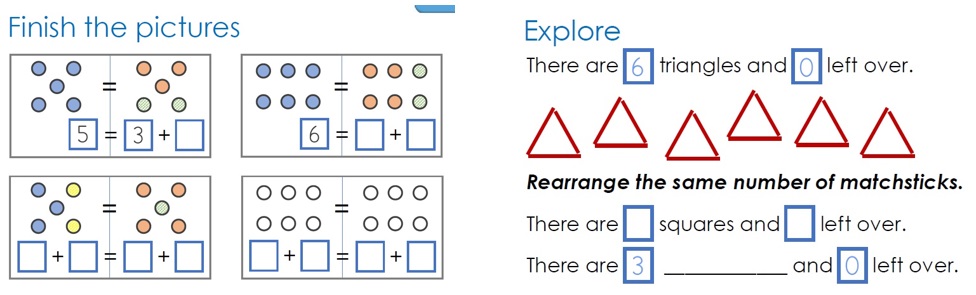
By using questions that correspond directly with children’s practical experiences, the transition between concrete/pictorial to abstract is smoother. I might also use the visual to address common misconceptions (below-right example).

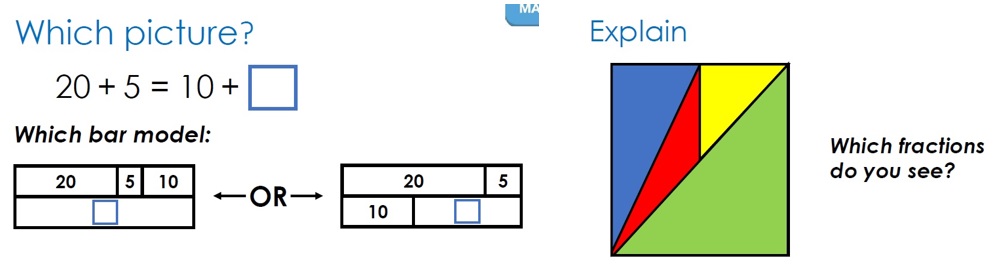
Below are two of my favourite types of visual reps questions to generate discussion. I like using ‘which picture’, where children have to consider which bar model represents a question correctly, and which bar model is showing a common error. Can children explain the mistake? I also love open-ended visuals: the bottom-right example is a particular favourite. More similar examples on this theme on the next blog!
All the examples in this blog are from the ‘I See Reasoning’ eBook range:
I See Reasoning – KS1
I See Reasoning – LKS2
I See Reasoning – UKS2
Also check out the other blogs from the series.

 Gareth Metcalfe Primary Maths