This is the third in a series of blog posts about how to systematically teach problem-solving skills using I See Problem-Solving, outworking the EEF research (recommendation 3) about using rich problems to learn mathematics.
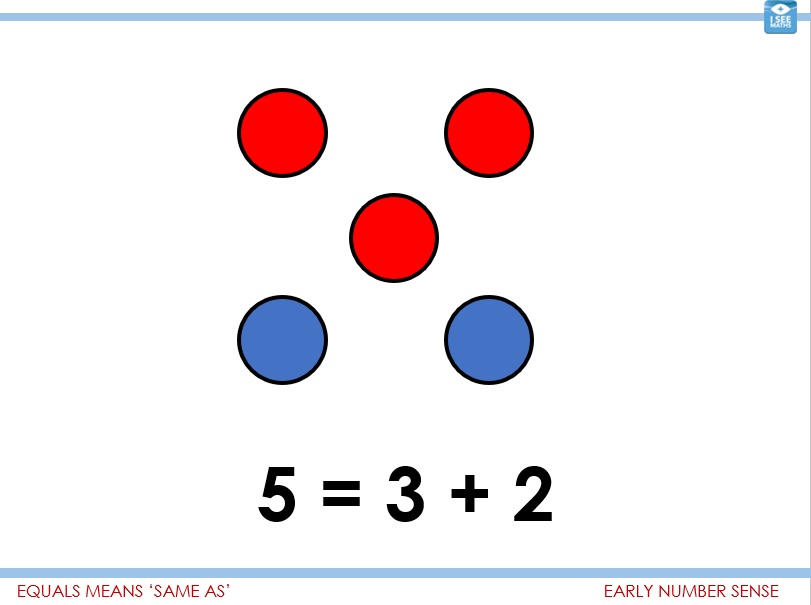
I’m in Y5, building up to a task which requires children to understand the meaning of the =, < and > signs. To help model this idea, I show the children an image that they may have seen in KS1 from the Early Number Sense I See Maths page: at first the circles are white; then we see them coloured red and blue:
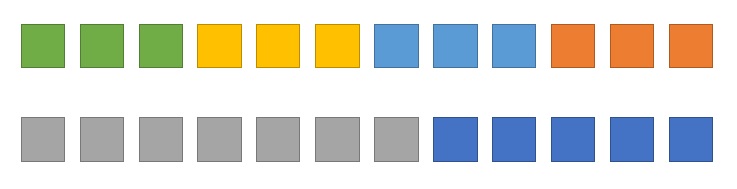
A range of other visual representations are used to show equivalence, including the image below to represent 4×3=7+5:
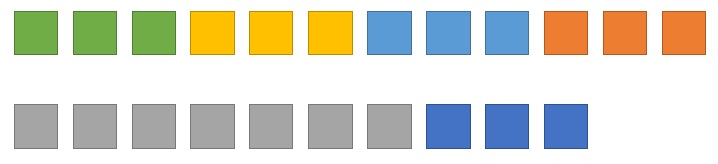
And this one to show 4×3>7+3:
Then the children write part-number sentences using different operations that are equal to 8, 10 and 12. They are positioned on the correct board. After that, children move the statements to make balancing number sentences, and sentences using the < & > signs:
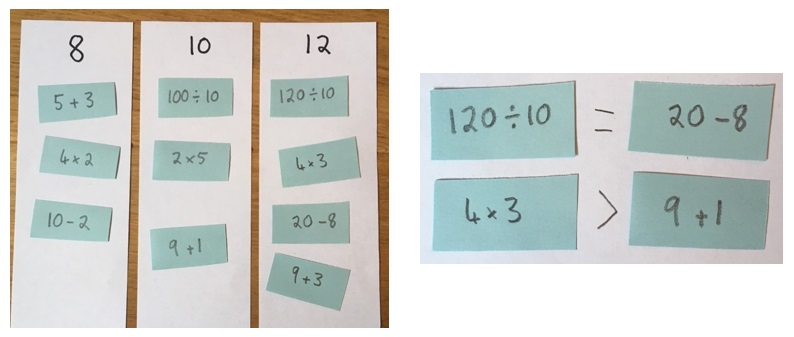
Now we are ready for the main task. The support feature gives a clue: start by thinking about where to position the 8. Some children progress to the explain task, spotting different mistakes:
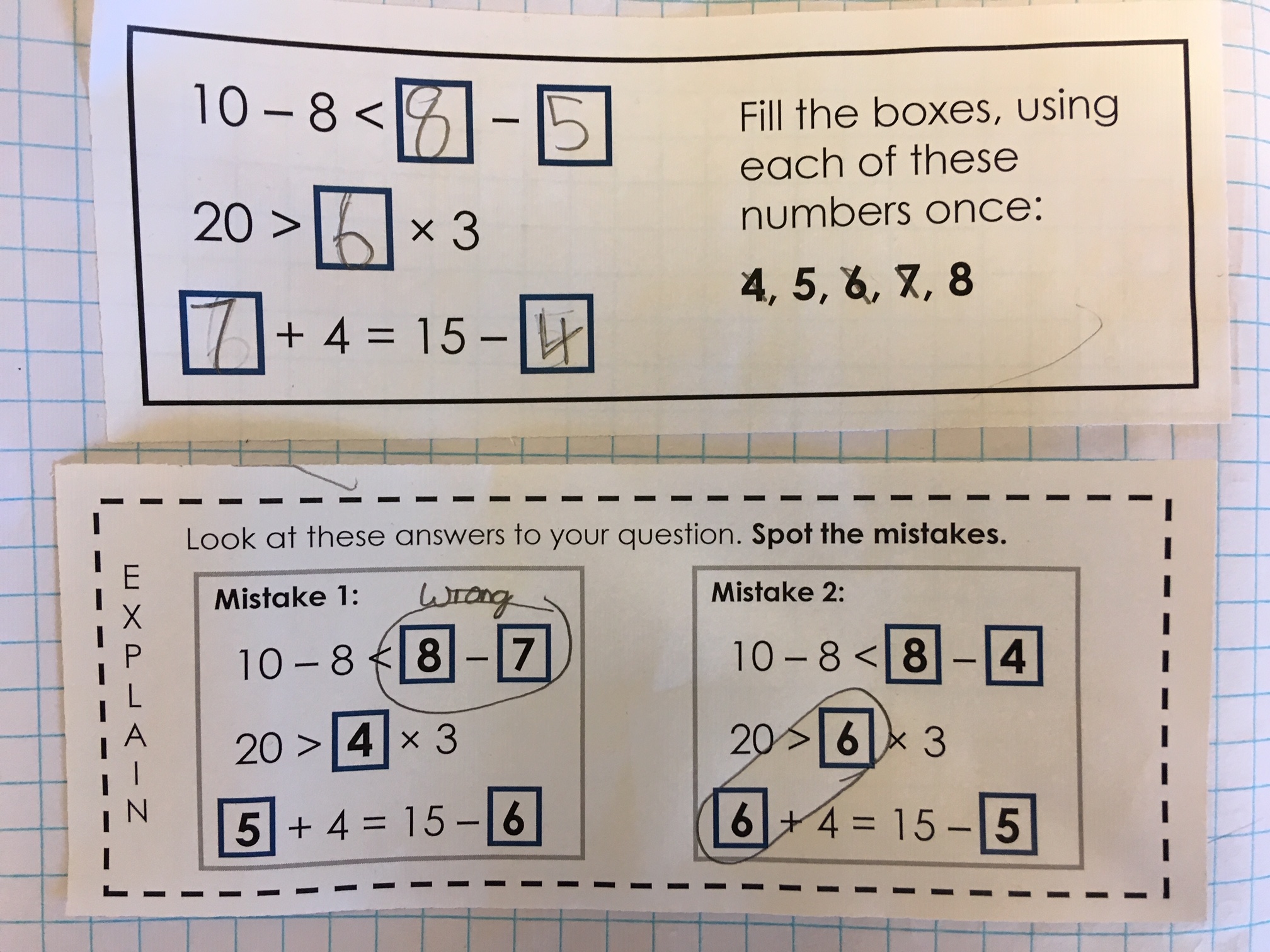
There is a super-challenging extend task that some children will get to tomorrow. We continue to model = as balance using scales and Numicon.
I’m trying to make problem-solving accessible for all children, whilst ensuring that every child is challenged. I hope you find I See Problem-Solving super-helpful. The LKS2 and KS1 versions are in production!
Also in this series:
Number Sequences and Negative Numbers
Sum of the Digits Place Value Challenge

 Gareth Metcalfe Primary Maths
2 thoughts on “Learning to Problem-Solve: equals means same as”