This is an exciting time to be involved in maths education, with positive steps being taken to make the curriculum deeper and more conceptual. There’s also a growing awareness that children need to develop a positive self-concept of themselves as mathematicians and problem-solvers. Our ambition to replicate the mathematical success of East Asian countries has been the driver behind these changes; without doubt there’s a lot that we can learn (and have learnt) from the teaching and learning of maths in these countries.
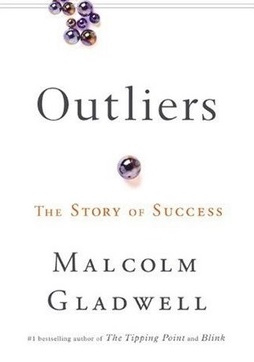
However, I believe that we can’t look at the success of these Asian nations in mathematics in isolation, without also considering the powerful influence of cultural norms within these countries. This was highlighted very thoughtfully by Malcolm Gladwell in Outliers, a book which studies the roots of success for individuals or groups of people whose achievements sit beyond normal parameters.
Gladwell looked specifically at six nations whose results topped the TIMSS international comparison tests for maths – Singapore, South Korea, China, Taiwan, Hong Kong and Japan. Historically, the culture of these five nations were built, Gladwell described, by the tradition and legacy of wet rice agriculture.
Growing rice required extraordinarily precise management of a paddy: irrigation systems needed to be built; water levels had to be precisely managed; the ground must be perfectly flat; seedlings had to be planted and cultivated with great precision. The variability of a yield could be great, and it would be determined by the management of the rice paddy. Gladwell argued that it was this legacy – a culture rooted in the principle of hard, complex work leading to rich rewards – that has led to the phenomenal subsequent success of these Asian countries in mathematics. But how was Gladwell able to draw these conclusions based on the results from the TIMMS tests?
The TIMMS international comparison tests are long and tiresome, being made up of 120 questions. As part of this analysis, the number of questions completed by participants from each country was also analysed. The results were startling. There was an incredibly strong correlation between the number of questions attempted and mathematical attainment. In fact, the results were almost identical: countries with the most successful mathematicians were those who persevered for the longest when completing the test, and vice versa. The data suggested that the willingness to persevere was an unbelievably powerful predictor of success, specifically in maths.
And which countries’ students persevered for the longest? Those whose tradition and culture were shaped by the lessons of rice cultivation. This attitude is neatly exemplified by the Chinese proverb ‘If a man works hard, the land will not be lazy.’ And how richly this principle applies to success in mathematics.
We clearly have a lot to learn pedagogically from the highest performing nations in maths. Importantly, though, I believe that we must also become increasingly proactive in developing positive attitudes towards maths, even if it’s just within our own small circles. After all, we might not be able to control attitudes towards maths at a macro level – but we do have a powerful influence within our own schools. Ultimately, this is a critical factor in determining the extent of children’s achievement in mathematics.
The blog below shows how we have tried to develop a positive mathematical culture within our own school: https://garethmetcalfe.wordpress.com/2014/08/25/establishing-a-mathematical-culture/


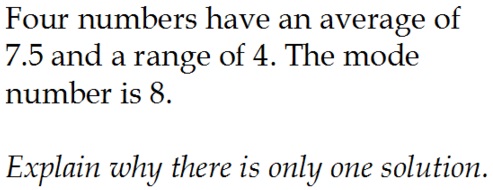
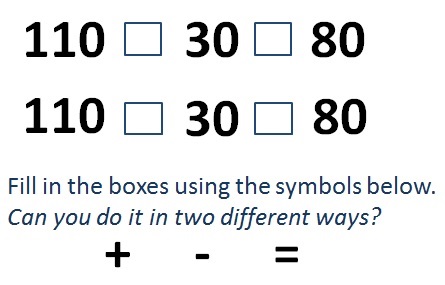 A question which is very accessible but can be extended by children working systematically to find all possible solutions: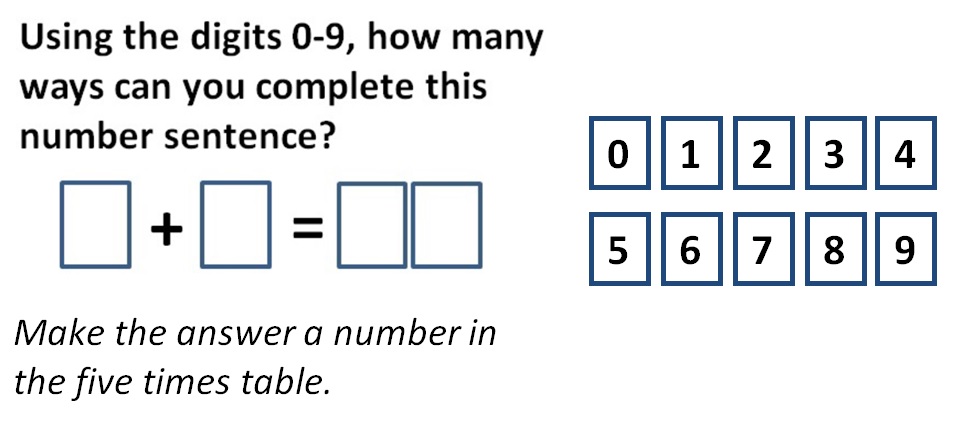
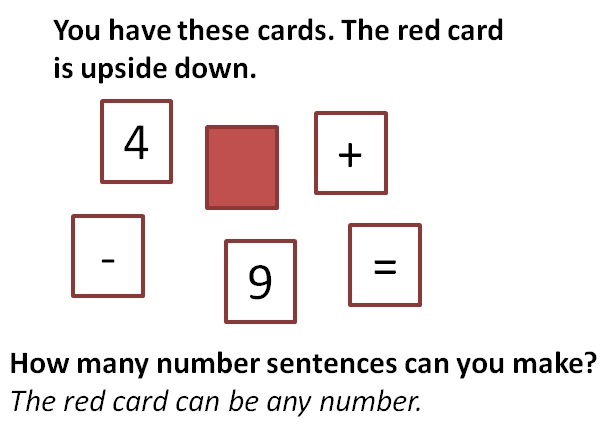



 Averages: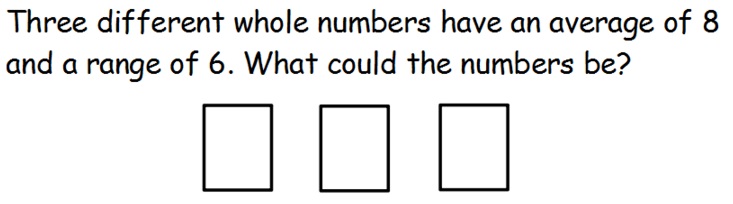
 Below is the visual representation used to unpick that final question:

 Gareth Metcalfe Primary Maths