I See Problem Solving – UKS2: providing challenge

I See Problem Solving – UKS2 is designed to transform the teaching of problem-solving in mathematics. Its design addresses Recommendation 3: teach strategies for solving problems from the recent EEF report. It will give all children the opportunity to understand and answer non-standard questions, whilst also providing appropriate challenge. This blog focuses on how extra challenge is provided to deepen and extend children’s learning in each task.

Each task begins with the main prompt question. For some children, answering this question may be their ‘Everest’; others will need more challenge.

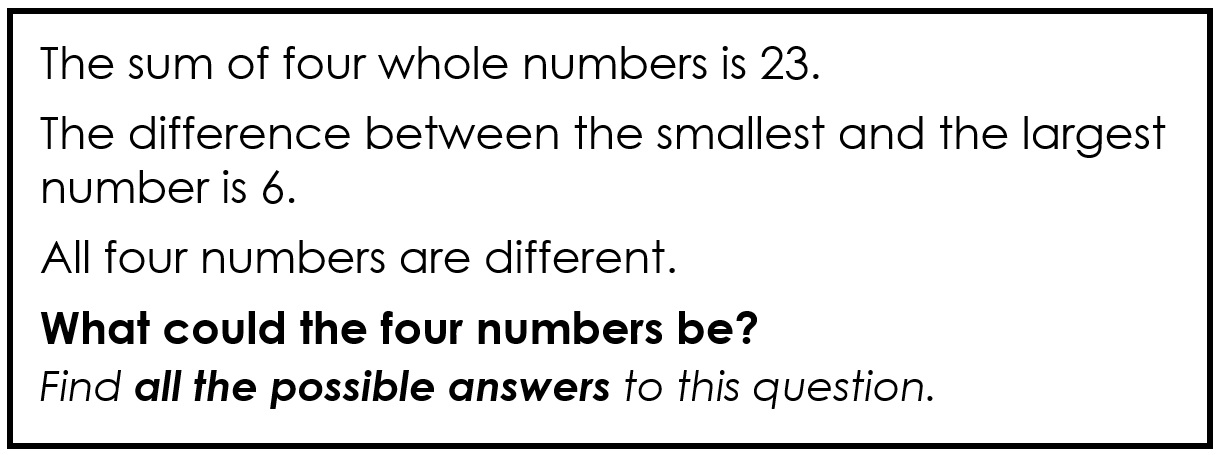
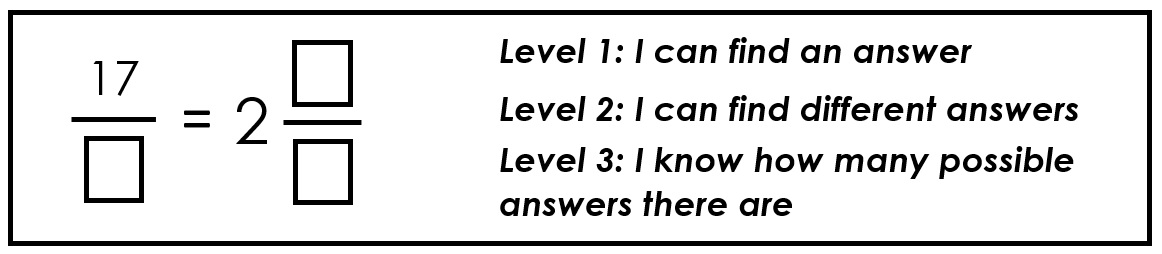
First of all, a number of the tasks include a ‘how many ways’ prompt, with the challenge coming from finding all possible answers. Here’s a typical example of a ‘how many ways’ task:

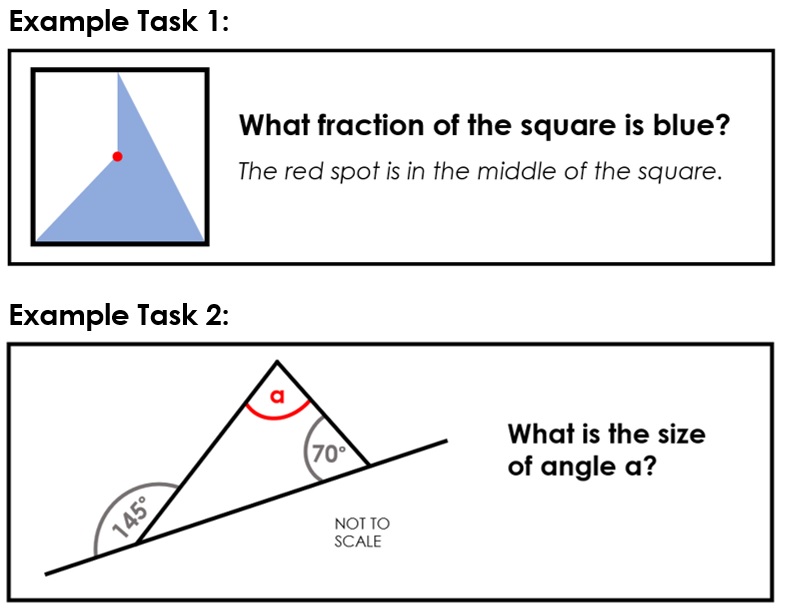
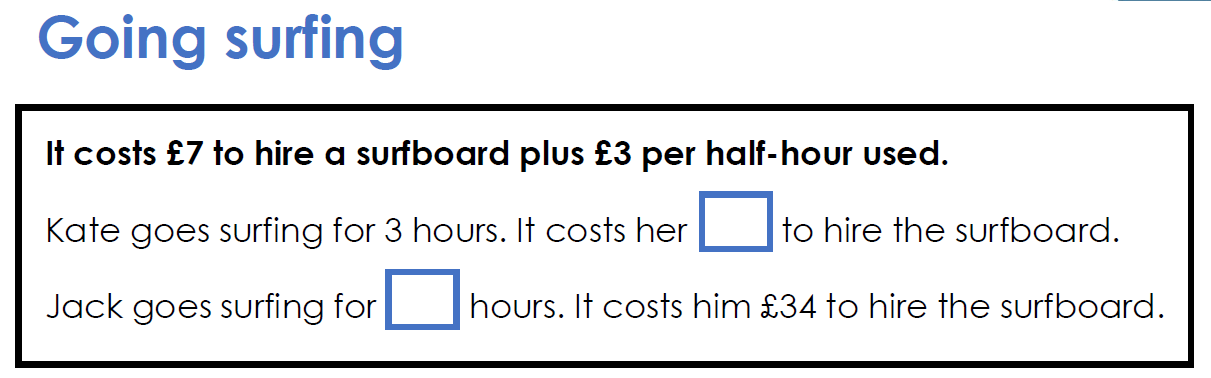
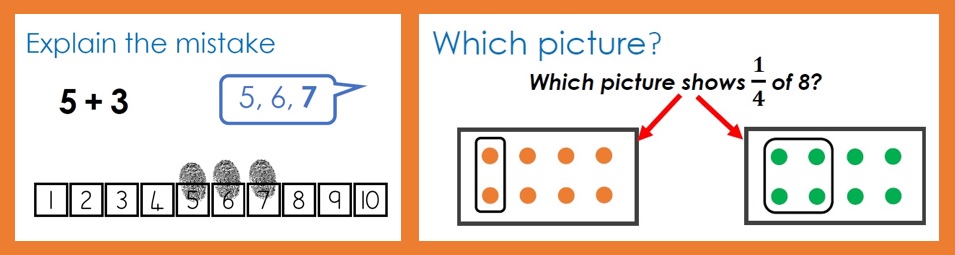
And here are two other initial prompts:

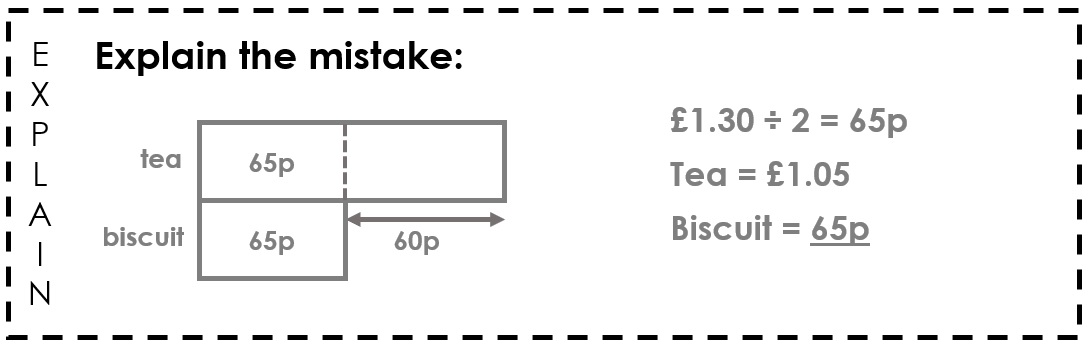
Each task comes with an Explain prompt, where children have to unpick likely misconceptions, solve related problems, rank questions by difficulty or agree/disagree with different opinions. The prompts here are similar to those from I See Reasoning – UKS2 and will extend the thinking from the initial prompt. Here are the Explain prompts for the above examples:

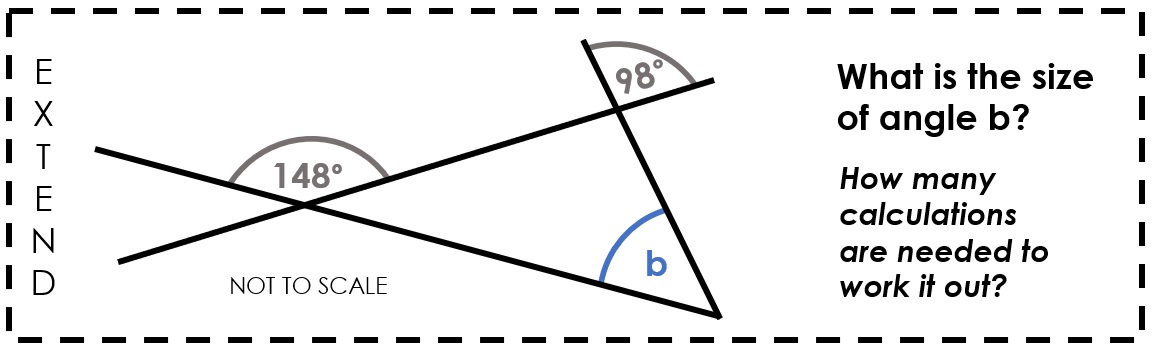
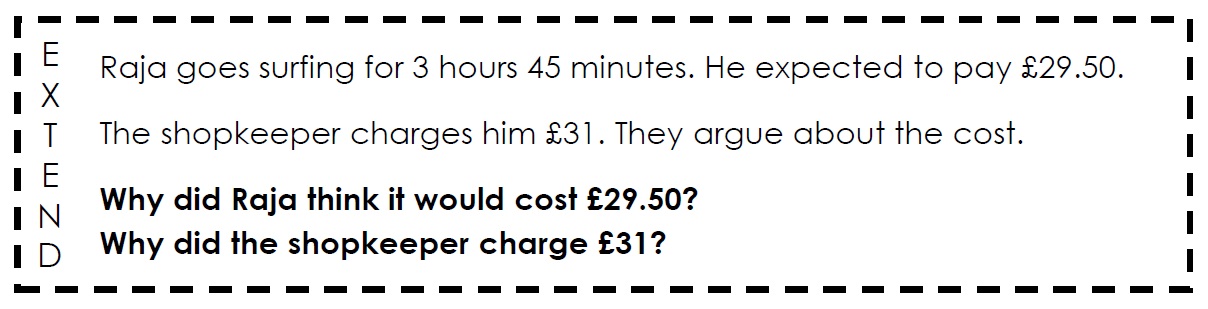
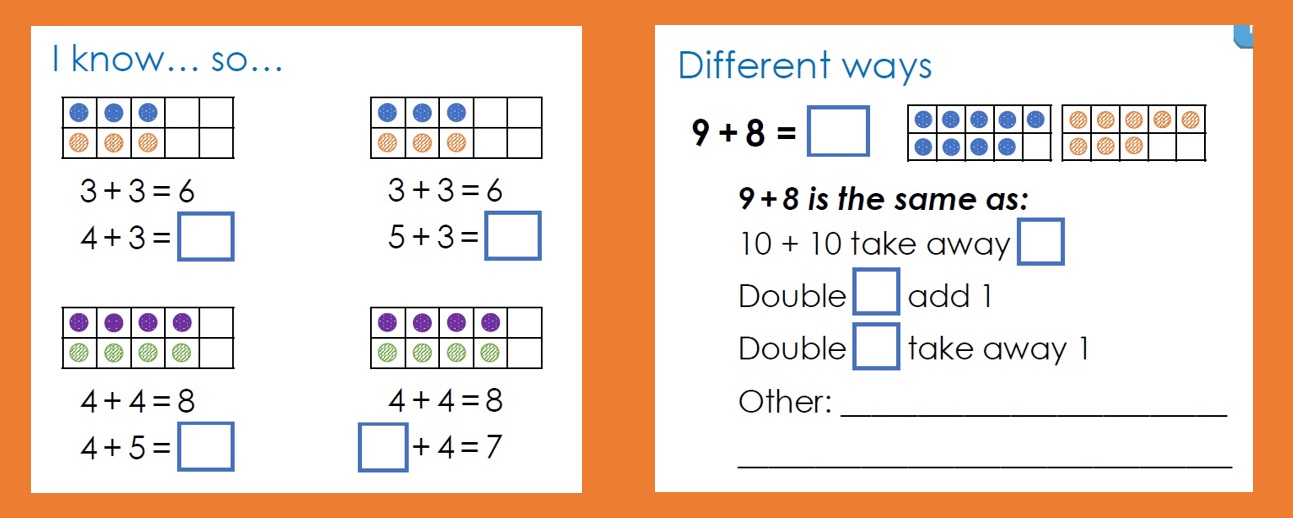
For many children, the real challenge will come from the Extend prompt for each task. These tasks are related to the initial prompt, but the challenge is taken to the next level. These are the corresponding Extend examples (and two of the friendlier ones!):

This blog explains how extra support is also provided in each task.

I See Problem Solving – UKS2 includes a huge range non-standard problem-solving tasks spanning right across the curriculum. It costs £24.98.

I See Problem Solving – UKS2: providing support

I See Problem Solving – UKS2 is designed to transform the teaching of problem-solving in mathematics. Its design addresses Recommendation 3: teach strategies for solving problems from the recent EEF report. It will give all children the opportunity to understand and answer non-standard questions, whilst also providing appropriate challenge. This blog focuses on how extra support is provided to help children to ‘see’ the structure of the problems and to experience success.

The tasks are designed to be used at the end of a sequence of lessons, so children have developed their basic skills in that curriculum area. To start with, children are given the initial prompt – a question where there is not an obvious ‘standard’ approach to work out the answer. Here are two examples of the initial prompts:

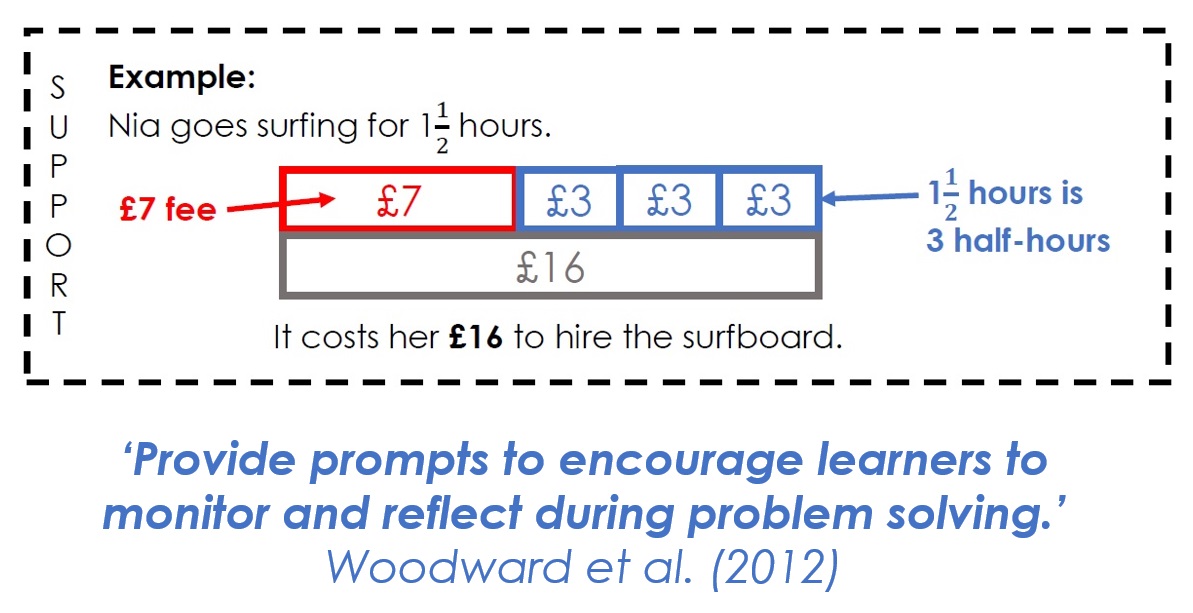
There is then a ‘support’ prompt for each task which the children may choose to use. This will help children to understand the mathematical structure of the task. It may show a part-completed bar model, give some suggestions or offer a ‘way into’ the task. This will help all children to access the task and be more likely to taste success.

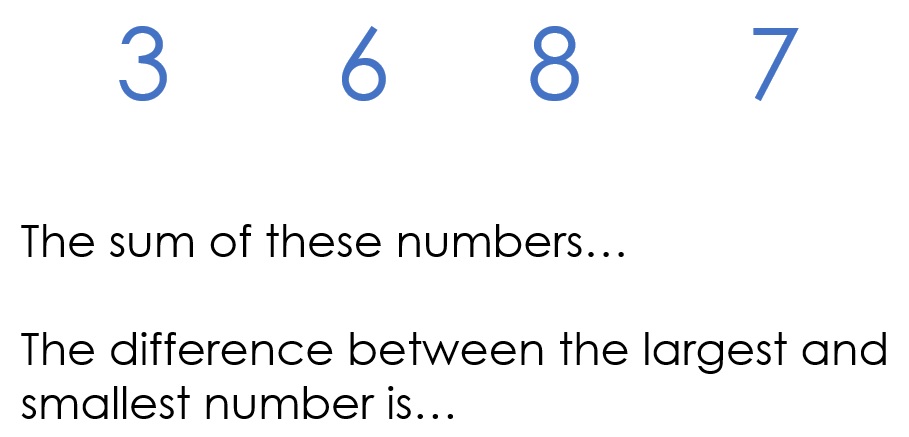
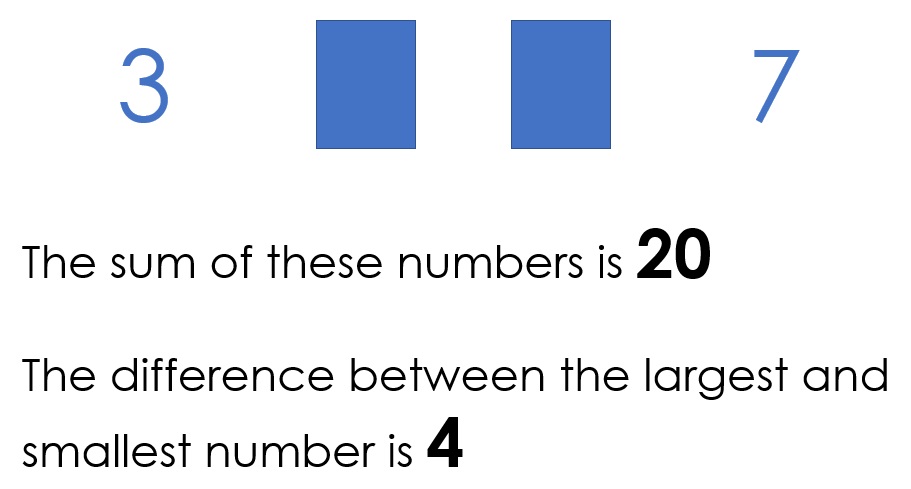
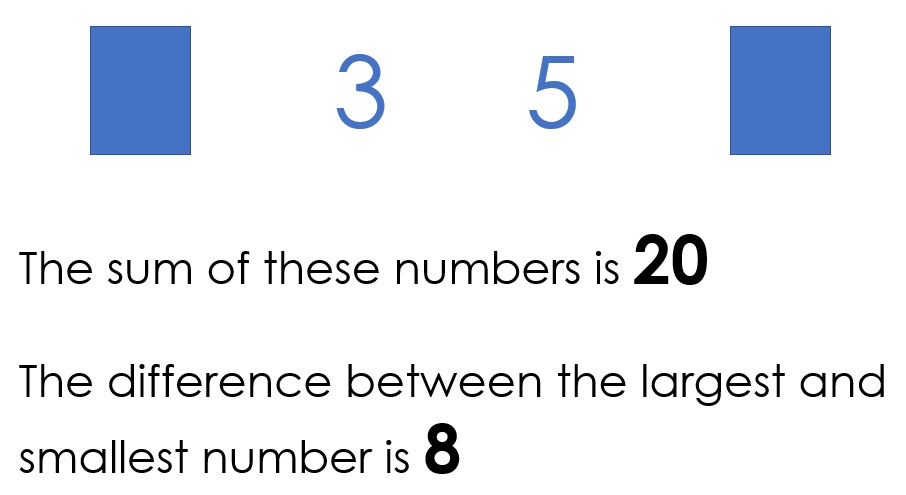
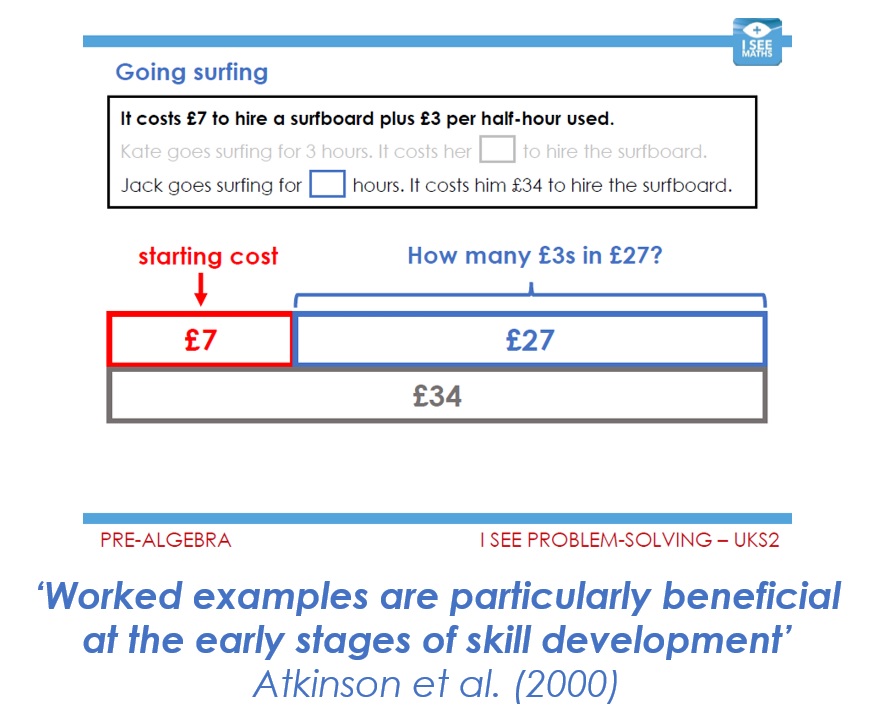
Then there is a ‘worked example’ to accompany each task. This is a series of images that shows the solutions modelled step-by-step, helping children to see the ‘deep structure’ of each problem. You will be able to download this for free as a PDF and/or as a PowerPoint file (available at iseemaths.com when the product is released). Here is a page from each of the worked examples from our two example tasks:


This blog explains how deeper levels of reasoning and extra challenge are then built into each task.

I See Problem Solving – UKS2 includes a huge range non-standard problem-solving tasks spanning right across the curriculum. It costs £24.98.

One of my favourite investigations

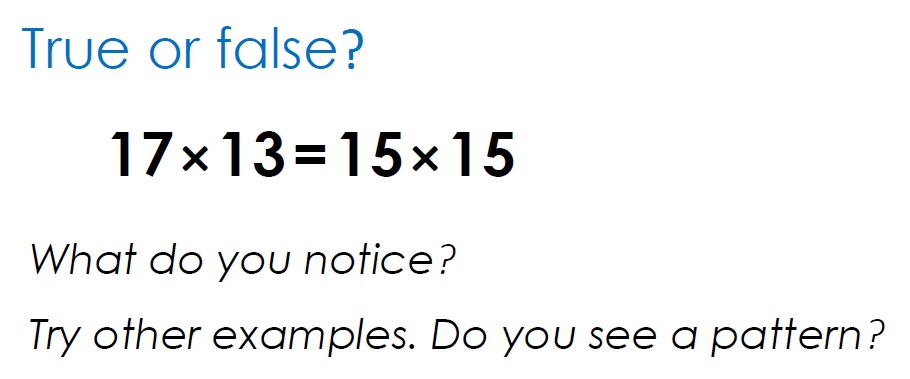
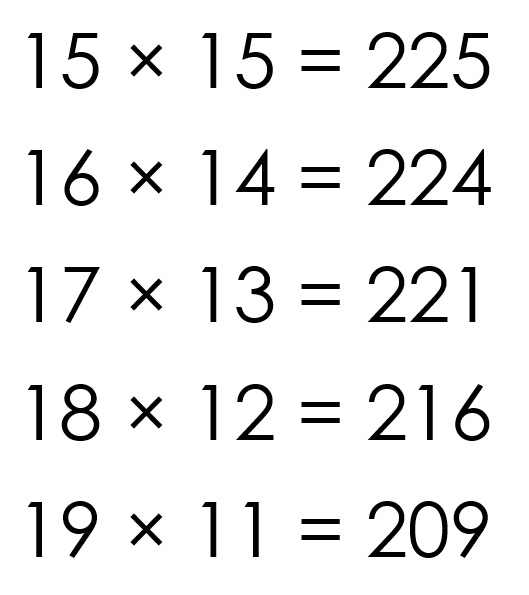
This is one of my very favourite mathematical investigations from I See Reasoning – UKS2: there’s a great pattern to explore. When I was in Y6 it was one of my ‘go to’ tasks for this time of year. Here’s our first discovery:

Despite having the same sum, the numbers give different products. And the further apart the numbers get, the smaller the product. But look at this:

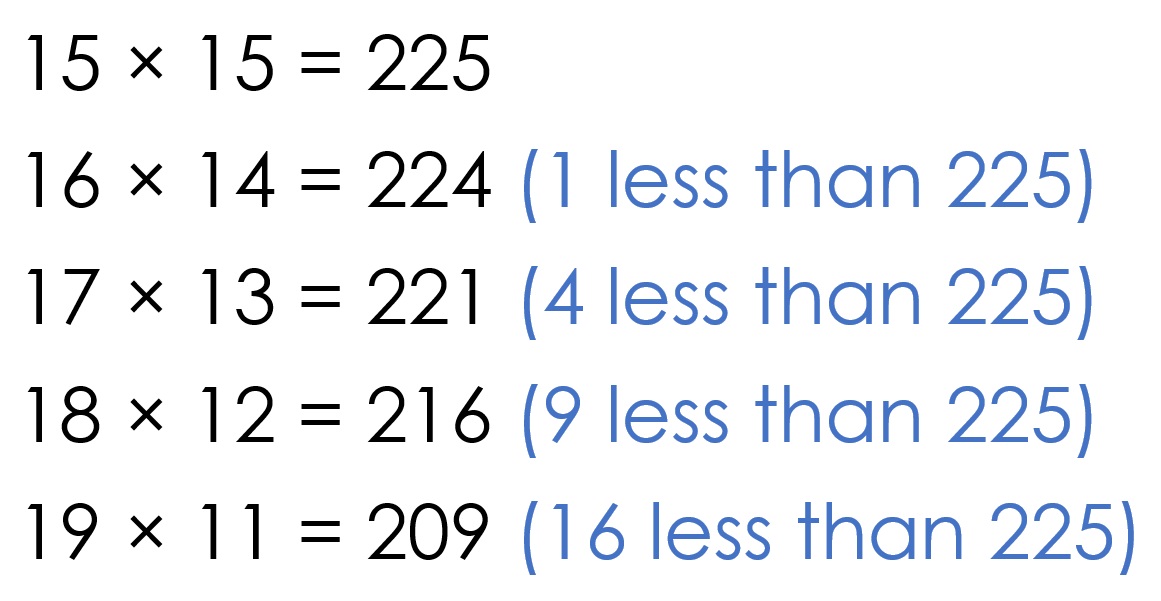
There’s a pattern to how the products decrease: 1 less, 4 less, 9 less, 16 less. This is a pattern of square numbers. How odd! I wonder… is this the case for this example only? Or would it work for any example where the sequence starts from a square number? So the exploration continues, and we see that the pattern is repeated (e.g. 10×10=100, 11×9=99, 12×8=96, 13×7=91).

Eventually, I would challenge the children to use this knowledge to perform calculations. For example, consider 23×17. We know 20×20=400, so it follows that 23×17=391 (9 less than 400).

A beautiful pattern to explore!


The Vision: I See Problem-Solving

My philosophy has always been simple: be firmly rooted in educational research; find ways to apply evidence-based principles in the classroom; share the ideas that work best with other teachers. This approach led to me write the I See Reasoning eBooks, and it has driven the creation of my next resource, I See Problem-Solving UKS2.

In reference to problem-solving in maths, the latest EEF research states:
‘Explicit training appears essential; these sub-skills do not appear to derive from practice without direction and oversight.’

It also says: ‘Teachers should deliberately select visual representations that are appropriate to the problem’ and continues ‘provide prompts to encourage learners to monitor and reflect during problem solving.’

My belief is that I See Problem-Solving UKS2 will help us to explicitly teach problem-solving skills, helping all children understand the mathematical structure of each question. The resource will unpick a wide range of multi-step problems from right across the UKS2 maths curriculum.

Each task centres on a main question, like the example below:

Tasks are made more accessible by the ‘scaffold’ prompt which children have the option of accessing. This might be a part-completed worked example, a related example or some other prompt to break down the question:

The ‘explain’ prompt will provide a context for deeper thought or discussion, for example using ‘explain the mistake’ examples:

There is also an ‘extension’ prompt to provide further challenge based on the same task:

The mathematical structure of the problem is shown step-by-step and very visually by the ‘worked example’. This will be made available as a PDF or as a PowerPoint file. The worked examples can be displayed like ‘flip books’, showing each stage of the problem. Click here to see the worked example for this task – click through the pages rather than scrolling up and down for maximum effect!

I See Problem-Solving UKS2 is currently in production. It is being trialled by a large team of teachers who are sending me feedback on how the tasks can be improved. To join the team, register here.

I’m writing the resource over the 2018 summer holidays, will trial a few tasks in early September then I will aim for a September release – watch this space!

Logic Squares: next move

Logic Squares is my favourite maths app: it helps children to learn that the = sign means ‘same as’ rather than ‘makes’ and it gets children using number facts with flexibility. Click here for more details and examples.

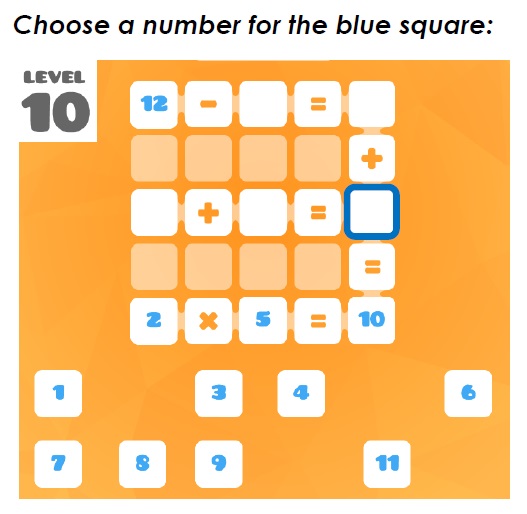
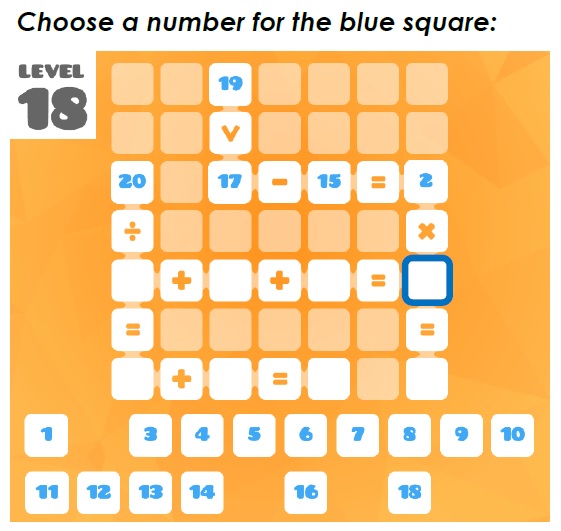
Here’s a free resource, helping to break down the thinking behind completing a level. I hope you’ll find it a thought-provoking activity whether or not you use the app.

You will find 10 part-finished example Logic Squares grids. On each grid one square is highlighted: children will then discuss and explain which number they would put in the highlighted square.

The selected squares are the key ones to completing each level – which of the remaining numbers can be used?
Can it be done in different ways? Children could then complete the level using the available numbers at the bottom.

Logic Squares, made by Alan Peat ltd, is available for iPad on the App Store.

I See Reasoning – KS1

I’m delighted to announce that I See Reasoning – KS1 has now been released! It arms teachers with 281 thought-provoking prompts for embedding reasoning in every area of the KS1 maths curriculum.

The eBook’s creation has been a personal odyssey, beginning 18 months ago teaching a quite wonderful year 1 class. I’ve always been passionate about the power of visual, rich tasks to engage children in deep mathematical thought; designing tasks that achieve this for children in KS1 has been an awesome challenge. It’s led me to work side-by-side with some great teachers and share many memorable classroom moments.

So here’s what to expect. First of all, there are loads of prompts that help children to distinguish between right and ‘likely wrong’, helping to generate meaningful talk. Words are kept to a minimum – simplicity is king!

There’s a raft of questions presented with visual supports that encourage non-counting calculation strategies. Scaffolds are provided to focus children’s thinking onto key ideas or strategies.

There are a wide range of challenges, giving children the opportunity to build conceptual understanding and apply their skills in various ways.

And questions are diverse, covering all areas of the curriculum.

I believe I See Reasoning – KS1 will help to enrich maths lessons on a day-to-day basis. It’s been a joy to write and it’s my great privilege to share. I hope it gives you many great classroom moments!

I See Reasoning – KS1 is a digital download (£14.99). Buyers receive their eBook (as a PDF file) attached to an email from Etsy. There is no need to have an Etsy profile.

To see more information about the resource and to get access to the free addition sample section click here.

Also check out I See Reasoning – LKS2 and I See Reasoning – UKS2.

Full details about my maths training can be found at www.iseemaths.com and you can follow me on social media at Gareth Metcalfe Primary Maths (Facebook) , @gareth_metcalfe (Twitter) and I See Maths on Pinterest.

Chance favours the connected mind…

My vision is to help children experience maths – visual, deep maths – in all its richness. To this end, I’m passionate about creating a range of user-friendly resources that will help time-pressured teachers to deliver great maths lessons on a day-to-day basis. And to make these resources truly outstanding I need your help!

Future plans, your help
I’ve recently finished writing the range of I See Reasoning eBooks. Much to my amazement, over 800 people signed up to trial I See Reasoning – KS1. The feedback that people gave was extremely helpful. Over the next few years I will write many more resources, and I want to involve as many teachers as possible in the creation of these products (this time with trial materials being sent from the earliest conception of a product). You tell me which tasks really work, and how each idea could be better. I’m working on these ideas next:

  • A resource which represents maths concepts visually using a sequence of clearly constructed, step-by-step images. The first versions of this will be aimed at KS2.
  • A resource helping children to become effective problem-solvers. It will be made up of my favourite problem-solving tasks, broken down with the necessary scaffolds and supports that help children to see the underlying mathematical structure of each problem.
  • A resource for EYFS that is a follow-up to the I See Reasoning range, but delivered in a format more suited to an Early Years provision.

I’m after a team of people who will trial these ideas in their classrooms, let me know what they think of them and tell me how they can be improved. No strings attached, it’s all free, there’s no obligation to reply. The ideas will be plentiful and thought-provoking. You may well get lots of free, useful tasks that never end up being published!

If you are up for it sign up here. Please share this blog too, it would be great to get as many educators on board as possible. Thanks!

I See Reasoning – LKS2

I am delighted to announce that I See Reasoning – LKS2 is now on sale! It will arm teachers with a range of visual and thought-provoking tasks for interweaving reasoning within day-to-day maths lessons.

I See Reasoning – LKS2, the little sister of the hit resource I See Reasoning – UKS2, is a PDF file received as a digital download. It is comprised of 240 questions for deepening mathematical thinking and encouraging purposeful peer discussions. It is a go-to resource for prompts that build understanding and tasks that allow for extended investigations. This blog showcases what to expect from the resource by looking at three typical example questions.

Prompts that show concepts visually

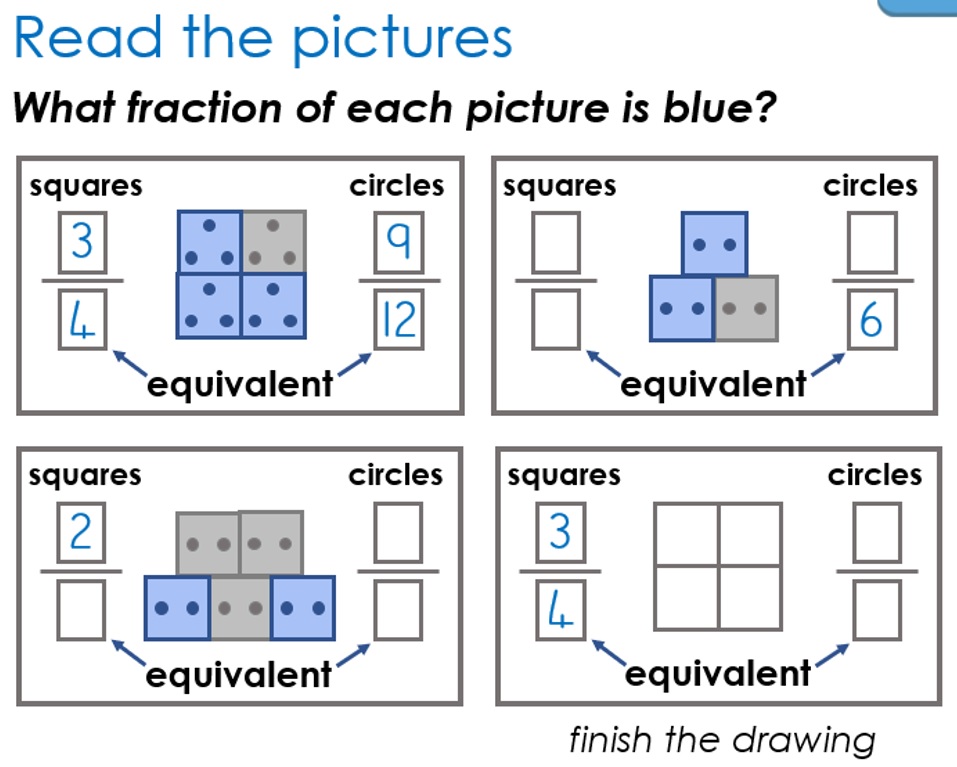
There are a wide range of questions that use visual representations to help children to make connections and develop a conceptual understanding of core concepts. There are lots of ‘read the picture’ examples like the one above, ideas are often represented with bar models and many other images are used.

Prompts that generate discussion around key ideas

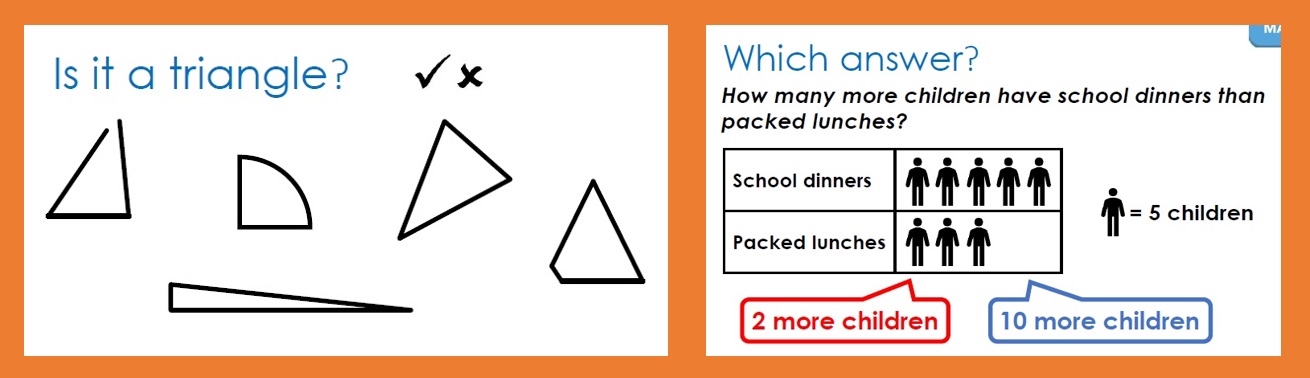
There are lots of examples that get children talking about key concepts and identify likely misconceptions. In this example, will children recognise that the size of the angle is represented by the amount of turn rather than the length of the lines? There are thought-provoking images from right across the LKS2 curriculum.

Opportunities for extended exploration

Many of the questions will ask children to calculate in different ways or find multiple solutions. This means challenge is added by getting children to explore the same type of question in more depth, working systematically and flexibly to find all possible answers.

It’s my belief that teachers generally agree on the principles of great maths teaching. However, time-pressured teachers need great resources at their fingertips. That’s what I attribute the unbelievable success of I See Reasoning – UKS2 to. It is ever-increasingly popular and has sold in 12 countries!

I have been so touched by the very many positive messages I have received in recent months. It’s my great pleasure to help teachers create meaningful and engaging maths lessons. I hope I See Reasoning – LKS2 is another piece of this jigsaw.

I See Reasoning – LKS2 is on sale via Etsy here. Information about the resource, plus the free multiplication section, can be accessed on this page.

For further information about training and resources, visit www.iseemaths.com

For me to improve… September ’17

This is my first blog post in the ‘For me to improve…’ series in which I explain what I’m doing to be a better maths teacher. This blog explains the thought process behind the series.

I’m always looking to use equipment and images to represent concepts, and I like my maths lessons collaborative and open. This makes my classroom management skills important so lessons teeter on the healthy side of organised chaos. My partner Y1 teacher last year was the maestro in seeing a logistical detail that I’d missed. I learnt a lot from her, and I also came across some interesting ideas reading Visible Learning for Mathematics. So here are my five targets for the new term:

Promote a learning action
In each lesson, identify one key ‘learning action’ to promote. My thought process will be ‘Which learning behaviour will improve the outcomes in this particular lesson?’ It could be as simple as turning your body to face your partner; it may be more complex like asking clarifying questions; it might be a maths-specific thing like finding different ways to answer a question.

Prepare individuals for the social demands of lessons
I’m a big fan of small-group pre-teaching to help all children access the big ideas of a lesson, breaking down barriers and predisposing misconceptions. It’s helped me to facilitate mixed-attainment groupings. However, for some children the barriers may be the social demands of a lesson. Perhaps Harry finds it harder to share resources; maybe Jade dominates group discussions. A quick conversation or organisational change beforehand might make a big difference.

Make discussions active
I liked this idea from VL for Mathematics: during a whole-class discussion, put your thumb up on your chest if you agree with the speaker and want to add something; put your fist against your chest if you have a different viewpoint. This encourages children to actively participate in discussions without being intrusive to the speaker.

Exit tickets
I’m going to make a clearer distinction between most questions and tasks, used to generate discussions, and short ‘exit ticket’ tasks that are completed independently and used to give more accurate AfL information. The nature of the marking may also vary depending on the conditions in which the work is completed. I’m hoping that this will help to keep children accountable for their own progress and avoid social loafing in group tasks.

Cognitive load and challenge in calculation
In some lessons, particularly early in a unit, I want the challenge to come from understanding the concept so I will minimise the challenge in the calculation. Consider 14 = 6 + ___ (WR Progress Check, Aut Y1, q4). We can learn the concept ‘= means same as’ using numbers within 5. Once that concept has been secured (a concept which tends to need more than a little reinforcement), the challenge within the calculation can be set at an age-appropriate level.

And as ever this year, I make the same vow to the children in my care:
‘I promise to learn alongside you.’

Experiencing 100 with Y1

Here’s an idea for helping children to experience numbers up to 100. I came across it in a NCETM video in October last year (not quite in time to use it with class).

On the video, a year 1 class had a display on which they count the school days in a year. The number of days was shown using dienes, Numicon and symbolically. The children described how many days there had been, for example, on the 27th day as two sets of ten days and 7 more. After 100 days the class held a 100-themed party to celebrate.

The children saw the number of days increasing gradually; they saw ten ones become one ten; quantities were represented using different visuals. It gave me an idea. We’ve just moved house, so I thought I’d count the first 100 days with my 5 year-old daughter – it’ll give us another opportunity for a party too!

As you can see, we’re going to record the day on a number line, using 10-frames, symbolically and on a diary. We’ve not unpacked yet, so I’ll need to find a better space for our poster than the kitchen table… I’m sure it’s also an idea that many teachers will consider using with their classes.

I hope you have a fantastic start to the new term. Look out for my upcoming ‘For me to improve…’ series of blogs, being written soon, where I will write about my weaknesses as a teacher and what I’m doing to address them. It promises to be a great year!