I See Reasoning – UKS2

We all want to be able to build reasoning into daily maths lessons. For a time-pressured teacher, that can be easier said than done. I See Reasoning – UKS2 provides rich tasks to deepen learning across the maths curriculum. It’s my ‘go-to’ resource when preparing lessons.

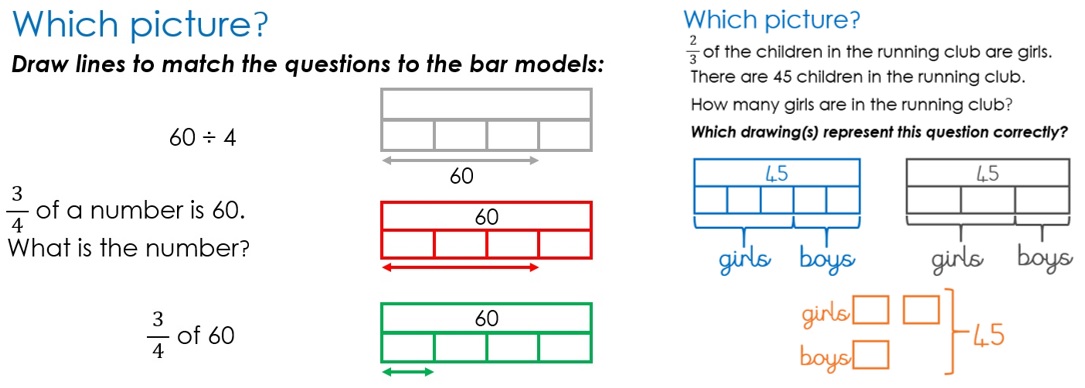
Concepts in I See Reasoning – UKS2 are often shown visually. In the Which picture? questions children match questions to a correct visual representation:
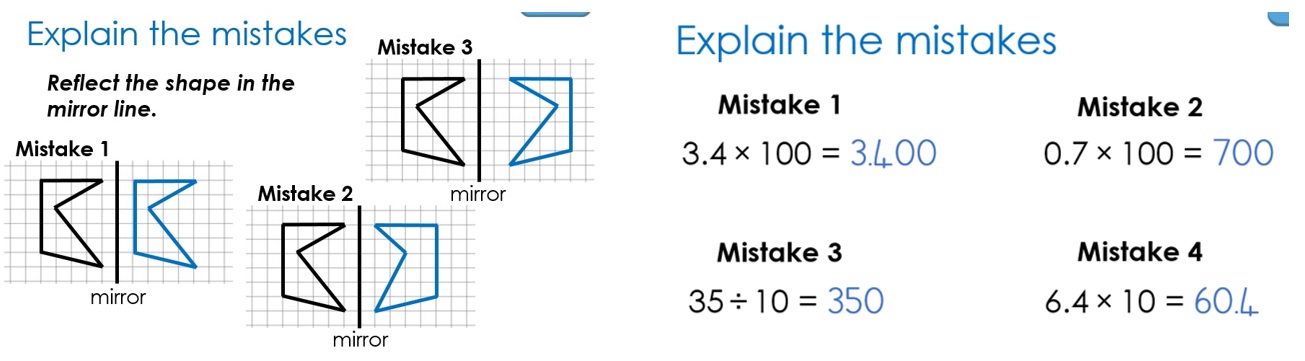
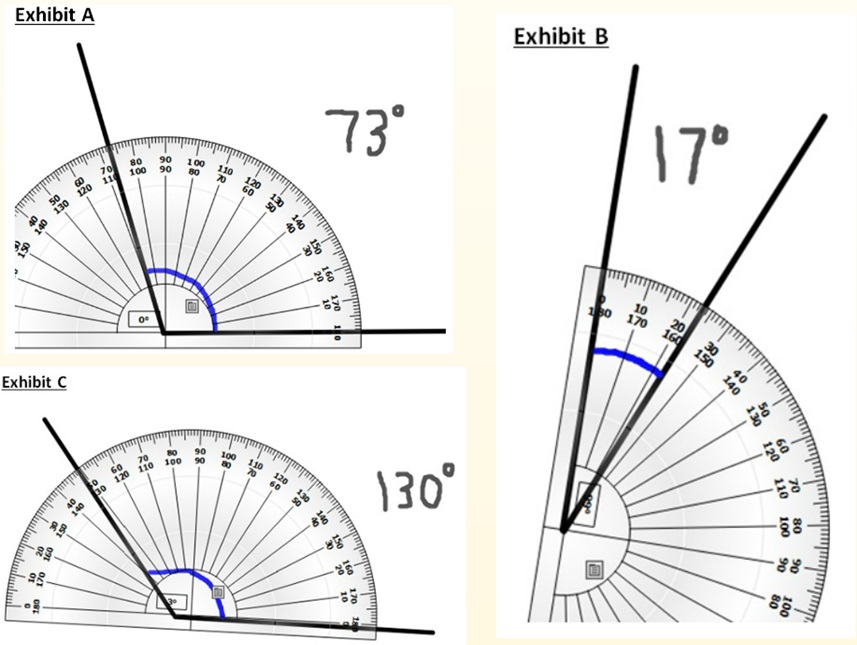
Explain the mistakes questions draw attention to likely errors:
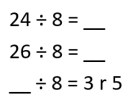
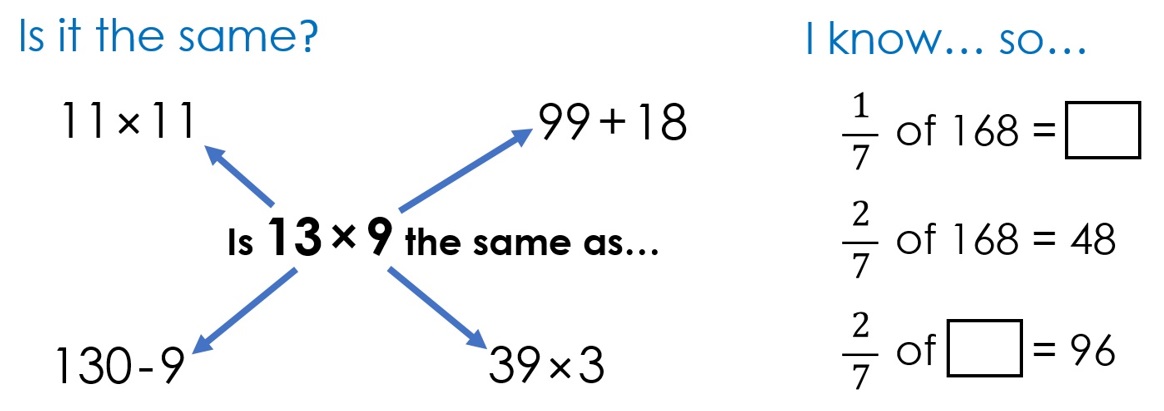
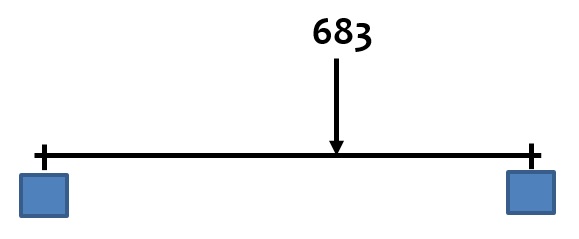
Questions encourage connections between related calculations:
Children are encouraged to find multiple solutions:
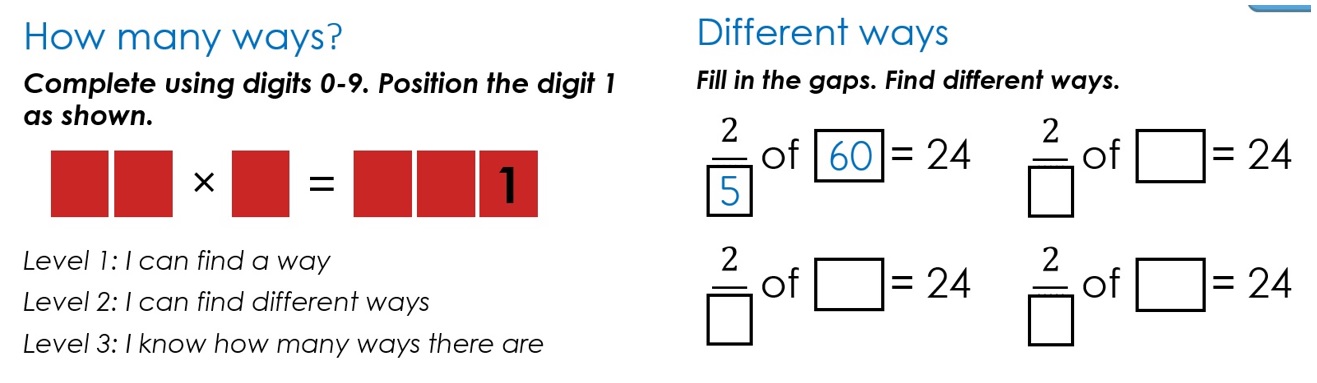
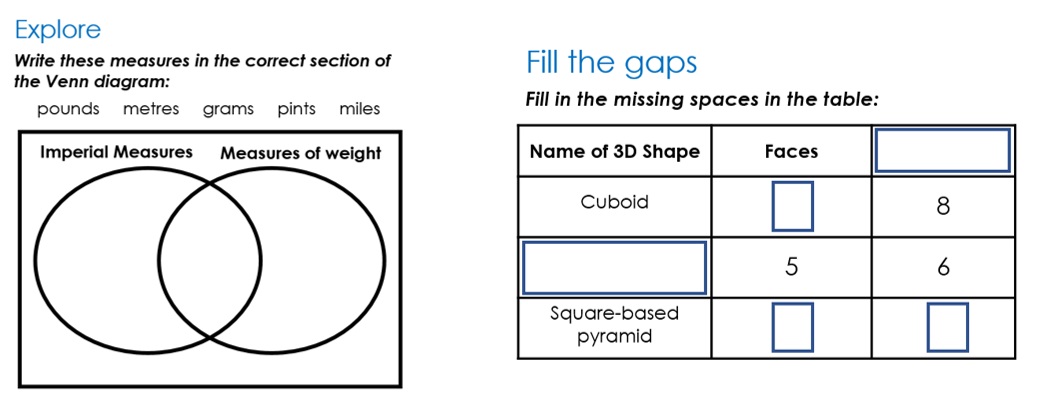
And there are a range of other question types besides:
I See Reasoning – UKS2 comes as a PDF file emailed direct to your inbox. You can then save the file in a location of your choice. You can view the file from an Etsy account if you have one (although you don’t have to make an account to receive the file by email). Circulation of the file is prohibited.

Screenshots can be taken to be used in presentations or printed for children’s work. There are 176 questions, all varied in form, with answers provided where necessary. I See Reasoning – UKS2 corresponds to US grades 4&5 and Australian year groups 5&6.

I believe that I See Reasoning – UKS2 can be used to supplement any scheme of work. I hope it helps to deepen the learning in your classroom; I also hope that it makes your life easier when planning at the end of a busy school day!
CLICK HERE TO BUY I SEE REASONING – UKS2

Training and Resources for Summer ’17

I set up I See Maths to help time-limited teachers create powerful learning experiences in maths, engaging children intellectually and emotionally. To that end, here’s what I’m offering this summer:

Training
I’m delighted to announce four new conference dates this summer: full conference details can be found here. Early Number Sense: Beyond Counting  will give a clear Nursery-Y2 vision for how children build a strong feel for number and learn to calculate using non-counting strategies. We will explore how mathematical play can be extended and how reasoning can be embedded. Reasoning and Depth in KS2 Maths will give an exciting and practical vision for deepening mathematical learning, including how images and resources can be used to build understanding.

If you are interested in this training, you may consider arranging a conference event at your school – all that is needed is a spare room. This is a very cost-effective and popular way of running training – for full details click on the top two links on this page.

Resources to Buy
I’m working hard on the I See Reasoning eBook range and hope to write the UKS2, LKS2 and KS1 versions this term (I may be dreaming!). This will give teachers a massive bank of questions and tasks that will open up discussions and encourage reasoning. I’m extremely excited about this project – this blog gives more detail.

The iPad app I See Calculation is also in the final stages of being built. It will show standard written methods for calculation one step at a time. A child could check their answer to a question with a calculator; with I See Calculation they will be able to check each step of their written calculation.

Free Resources
I’m intending to create a series of free ‘flipbook’ dot pattern games that will help children to visualise addition, subtraction and multiplication, opening up discussions about calculation strategies.

Full details about my INSET training and in-school support can be found by clicking the links. I’m a NCETM Charter Standard provider of CPD and, being a class teacher, still very au fait with the realities of teaching in the classroom.

I hope that, in some way, my work can help you in the daily challenge of delivering great maths lessons. Enjoy the summer term!

I See Reasoning – In Production!

I’m passionate about creating maths tasks that get children thinking in new ways and generate curiosity. I’ve spent many enjoyable hours dreaming up such tasks: open-ended prompts that promote discussion; images that build understanding; questions that get children exploring big mathematical ideas in depth.

This summer I’m releasing all of my favourite tasks in a series of eBooks called ‘I See Reasoning’ – there will be UKS2, LKS2 and KS1 versions. I believe these tasks will become a ‘go to’ resource for primary teachers as they plan lessons, giving a range of thought-provoking questions and prompts for each maths topic. This isn’t another bank of SATS-style questions – tasks are more visual, more extended and much more open-ended.

First released will be ‘I See Reasoning – UKS2’. For each topic expect:

Prompts that facilitate open discussion

Explain the mistakes (above left), less information (above right), rank by difficulty and ‘broken calculator’ are common structures.

‘Minimally different’ questions
Varying the structure of questions very slowly. All of a child’s working memory is focused on the mathematical concept being developed – a structure I suggest using early in a sequence of learning.

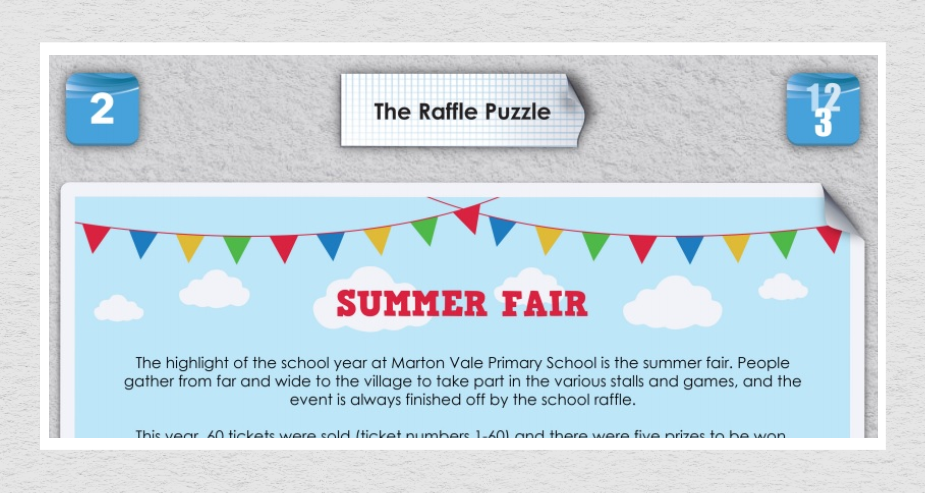
Tasks providing variation and deep exploration
A wide array of varied question structures and ideas. Think visual, open and extended, often making use of structures like ‘how many ways’ or ‘always, sometimes, never’ and a range of games using digit cards 0-9.

A place value activity using digit cards 0-9


Sorting quadrilaterals branching database task 

I’m aiming to release the eBooks every 4 weeks. They will be view-able from different devices, making them user-friendly. I hope they help save teachers’ time in preparing lessons, supplementing your current resources.

Alongside First Class Maths and Maths Outside the Box, I believe that the ‘I See Reasoning’ eBooks will help children to engage in mathematics intellectually and emotionally.

More updates to follow!

Designed to Thrill: Maths Outside The Box

There’s so much to applaud about the way primary maths education is changing. Equipment and images are being used to build understanding; open questions allow children to explore ‘big ideas’ in depth; fixed mindset views are being challenged and changed.

I want to see one more piece added to this jigsaw: children becoming more emotionally engaged in mathematics, the kind of mathematics that I love. Rich, diverse and intriguing tasks that fire the imagination, the kind that you don’t want to put down. That was the vision behind Maths Outside The Box.

The 15 Maths Outside The Box tasks will broaden children’s experience of maths and give them interesting, extended contexts in which to apply their skills. I trialled the resource with a group of high attaining Y4 children (we had so much fun); I also used the tasks with all but my most able Y6s. Challenge comes more from the application of logic than the difficulty of calculations, so tasks aren’t specifically designed for children in a particular year group.

There are four Number Challenge tasks: for example, in The Raffle Puzzle the challenge is to work out the five winning raffle ticket numbers by piecing together the information from the six clues:
raffle

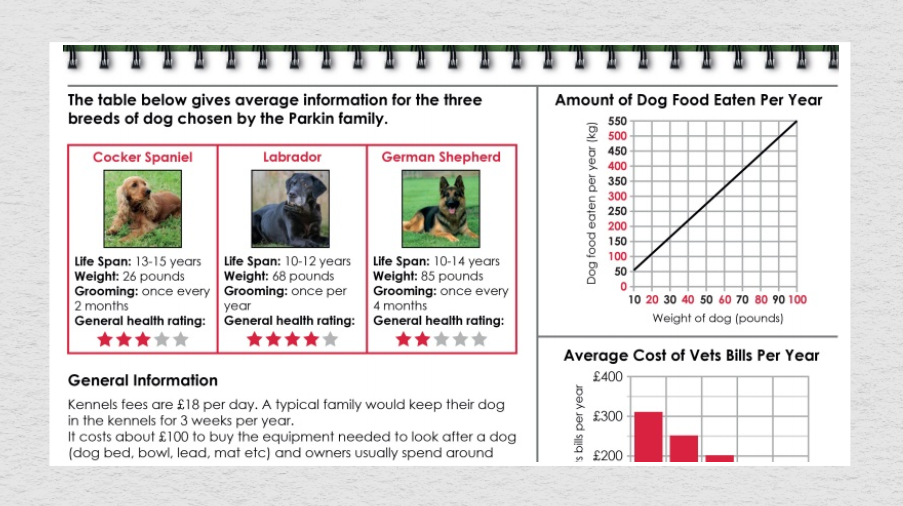
One of the three Data Cruncher tasks is Can We Have a Dog? where a range of information and graphs are used to estimate the cost of owning different breeds of dog over the course of their lifetimes:
dog

The Mountain Pass is one of four mind-bending Logic Puzzle tasks: can you piece together the information to work out how the four walkers can all cross Gravely Gorge before sunset?
gorge

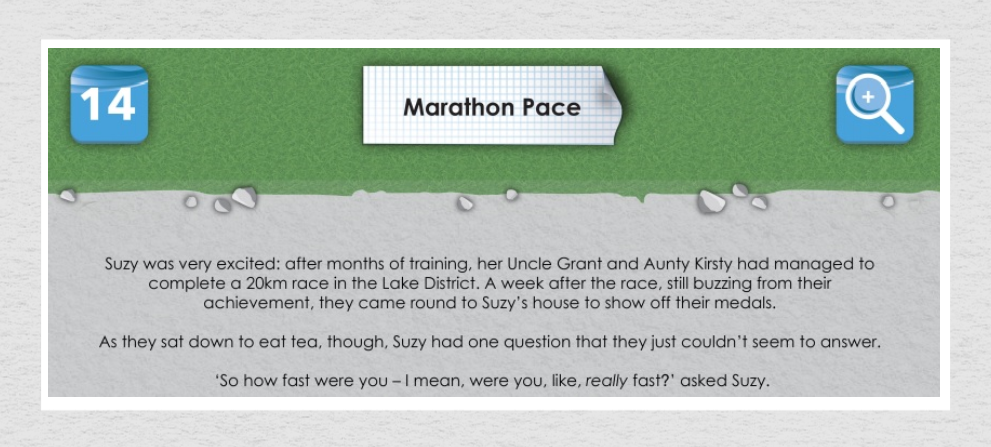
I love the Investigation tasks. The Human Ruler allows children to explore the relationship between different body parts and I will always remember trialling Marathon Pace: the children tried to replicate the exact running speed of Uncle Grant and Aunty Kirsty on the school field!
marathon

I’m extremely proud that my resources are published by Alan Peat ltd. I first attended one of Alan’s training sessions in 2006 and was absolutely blown away by the quality of his ideas. Alan and Julie also happen to be 24 carat gold as people too. They have given me unconditional support, are fiercely principled and are great company. Amy Doorbar also deserves great praise for her amazing graphic design on the resource.

I hope Maths Outside The Box inspires many: on sale here!

Calculation Flipbooks

I’m really excited to release my first range of Calculation Flipbooks – an initiative designed to support children in KS2 becoming fluent in written multiplication and division calculation.

Each flipbook shows a written calculation modelled step-by-step, with visuals or links to other methods shown to support an understanding of the calculation process.

This short video shows the calculation flipbooks being used:

Calculation Flipbooks from I See Maths on Vimeo.

These flipbooks can be downloaded and used by children so they have a ‘live model’ which they can view on a tablet device, for example to view methods or to check their own calculations. They can also be shared with parents to show standard methods of calculation in KS2.

The 16 flipbooks are free to download from this page: http://www.iseemaths.com/visual-supports/

And why no addition and subtraction examples? Simple! The place value feature on iPad app I See Addition and Subtraction models vertical methods for addition and subtraction step-by-step. It’s available on the App Store here: https://itunes.apple.com/gb/app/i-see-addition-subtraction/id1097967938?mt=8

If you use the calculation flipbooks in your classroom I would love to hear from you: specifically, is there anything about their design (big or small) that can be improved? I’d be delighted to get your thoughts and ideas. Send me an email at gareth.metcalfe@hotmail.co.uk

I hope they help your children to become fluent in carrying out written calculations!

A Christmas Competition

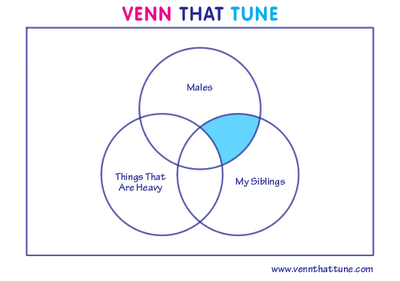
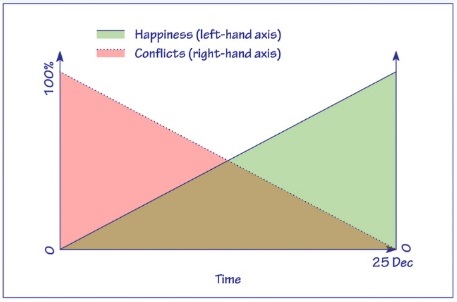
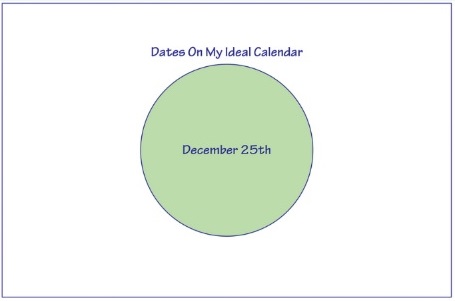
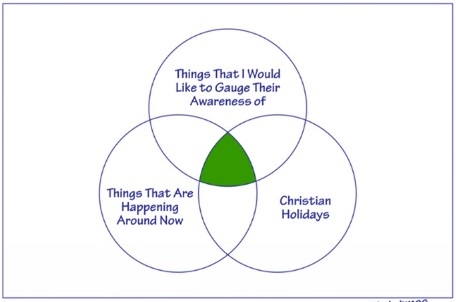
I was given a book called ‘Venn That Tune’ by my sister-in-law a few Christmases ago. The idea is that you identify the song title by looking at the graph:
vttAfter all, who doesn’t love a good Venn diagram?  Well, yesterday I was emailed these three Venn That Tune’s for Christmas songs:

venn-christmas-1 venn-christmas-2 venn-christmas-3

Answers at the bottom!

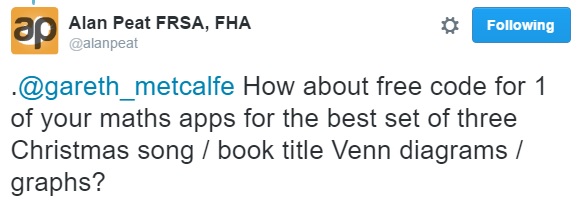
Then the main man Alan Peat saw the graphs and had a great idea:

ap-tweet

So there we have it: the best set of three Christmas song graphs (by teachers, children and any others) emailed to gareth.metcalfe@hotmail.co.uk or tweeted to @gareth_metcalfe wins a free app. We will share as many entries as possible. Should be fun – join in!

Happy Xmas, War Is Over; I Wish It Could Be Christmas Every Day; Do They Know it’s Christmas Time At All?

Plans for maths, 2016-2017

This is a great time to be involved in maths education: there’s a collective movement towards developing deep, conceptual and varied learning experiences; teachers are being proactive in promoting positive attitudes towards maths; maths hubs are growing in their influence.

I’m excited to play my part in this movement. Put simply, I spend hours thinking about and trialling ways to get children involved in maths tasks that are collaborative, open and (wherever possible) visual. I want children to become engrossed in maths; to experience its agonies and thrills, engaging emotionally as well as intellectually.
mission

Here’s what you can expect from me in 2016-2017:

Resources:
I can’t wait to release Maths Outside the Box, the natural follow-up to First Class Maths. The 15 tasks (logic puzzles, multi-dimensional tasks and investigations) will give children challenging, quirky contexts in which to apply their learning. The perfect way to end a unit of work – it’s been SO much fun writing and trialling.
motb

I See Multiplication and Division for iPad is also coming soon. It allows teachers to create a range of visual images to represent calculations, including proportionally sized bar models, area models, dot patterns and arrays. It’s the natural follow-on to ‘I See Addition and Subtraction’.

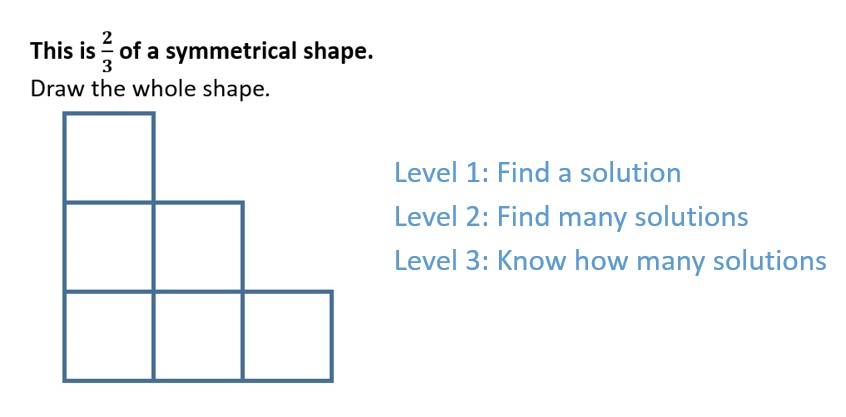
I hope to write a range of open, visual questions that allow children to explore maths ideas in depth. Questions a bit like this:
shape-two-thirds

I’m also planning on sharing lots of free resources, including (time permitting) videos for improving the quality of parent interaction in maths. Watch this space.

Training:
It’s a privilege being able to visit schools to share this passion. Here is the information about my training.

Conference events are scheduled for Manchester and Dudley with a KS2 focus. Expect future dates for bith KS2 and EYFS/KS1 training in the Spring and Summer terms. I am also soon to announce a 2-day training event in London (mid-November) and my first half-day TA training event in South Manchester.

Otherwise:
I’m totally committed to my 2 days teaching my amazing Y1 class this year: I hope they can learn as much from me as I will from them. I’m always happy to promote the good work of other people & look for ways to collaborate, so be in touch.

I’ve got more plans than time, and more ambition than realism, but hopefully in one way or another I can play my part in enriching primary maths. I will also keep posting as many bits as possible on my social media feeds in the distant hope that it will inspire someone somewhere.

Have a great 2016-2017 school year!

Questions and Images for Deepening, part 4

Each half-term I’ve been blogging questions and images used to deepen learning in maths (hope they’ve been useful). Next year I’m going to write a resource for each year group made up of lots of these types of questions. I hope they’ll be the ultimate ‘go to’ tool for building deep mathematical thinking into daily lessons, enabling teachers to stretch children’s thinking in all areas of the curriculum.

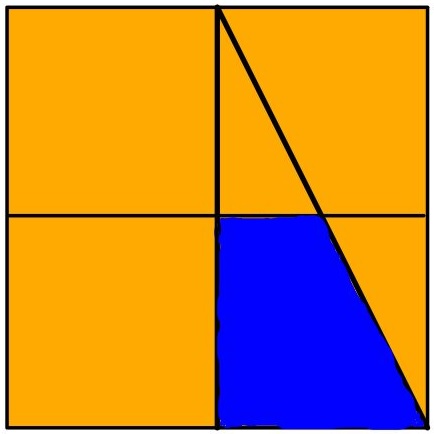
This half-term I’ve been mainly based in my class, so the questions here are primarily from year 6.  To begin with, finding the fraction of the shape that is blue where the shape is divided into differently sized pieces:
fraction shape

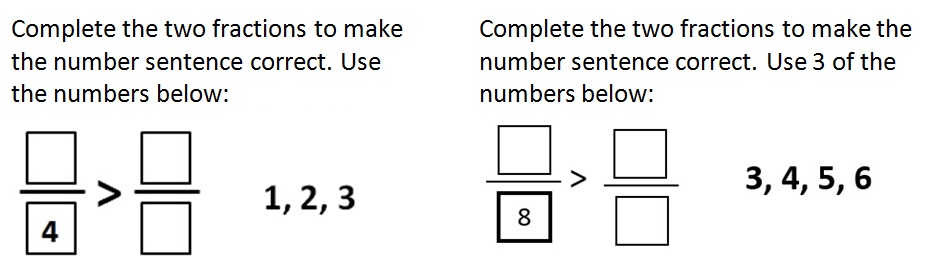
Then a question structure, used in two ways, that allows children to explore the size of fractions:
fractions qs

With negative numbers, we used spatial reasoning to estimate the size of the covered numbers:
-ve 1

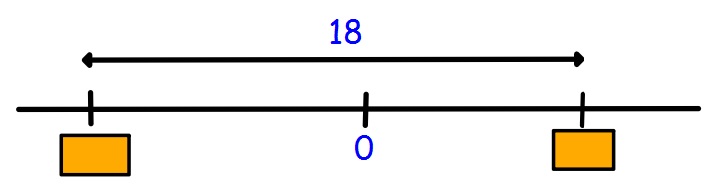
Here is a simple negative number question structure:
-18 difference 1

And a visual representation to provide a scaffold where necessary:
-18 difference 2

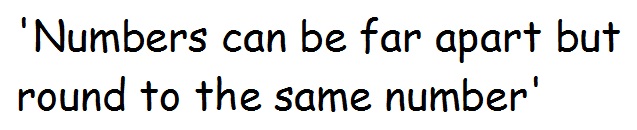
Looking at rounding numbers, here’s a simple statement that children can explore and exemplify:
Rounding 7

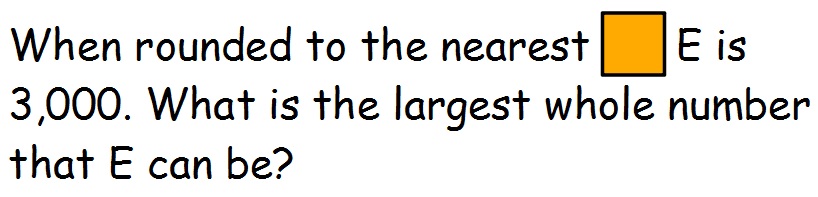
And another that leads to exploring patterns in rounding (adjust the number under the orange box):
Rounding 4

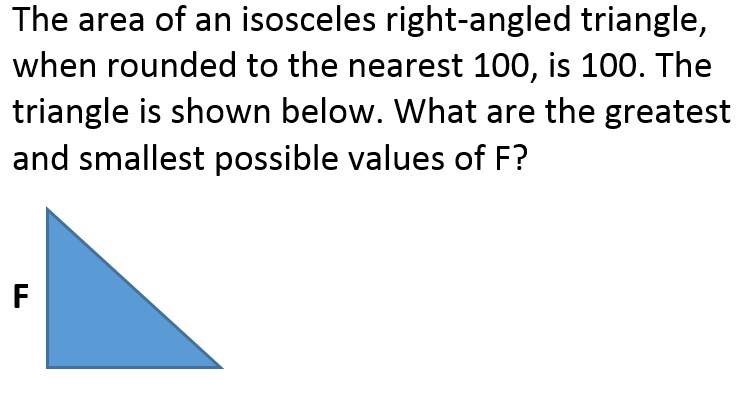
To deepen, a question drawing together an understanding of rounding and finding the area of a right-angled triangle:
Rounding 9

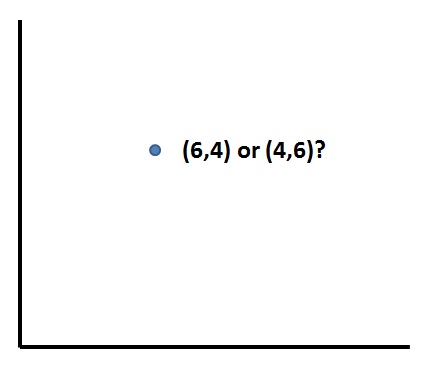
Finally, a question used in year 4 where spatial reasoning is used to identify a coordinate point:
Coordinates

This link gives information about the INSET training and school support that I can offer.

Improving reasoning at the point of answer

Here’s a simple, cost-free, whole-school idea for improving mathematical reasoning – when children give an answer to a question, don’t tell them (or infer to them) in that moment whether the answer right or wrong.

Here are two reasons. First of all, we want to communicate that what we value is children’s thinking, their justification, their strategy; not simply whether they have the correct answer. In doing so, especially when this is a whole-staff approach, I believe that children become less anxious about making mistakes.

Also, by creating a moment of doubt at the ‘point of answer’ we give children the space to check their thinking and explain their thought process. Generally speaking, the greater the child’s certainty, the greater the seed of doubt I try to plant. This can be great fun, and it certainly gives children an incentive to justify and explain.

I always liked Jo Boaler’s three levels of reasoning:

I can convince myself
I can convince a friend
I can convince a sceptic

And don’t be surprised if more able children can find it harder to explain their thinking in certain contexts. I remember Mike Askew saying that if children have found an answer without much of a ‘grapple’, they are likely to have almost automatised that thought process. This can make it harder (but still very important) for a child to explain their solution.

I hope this principle gives you many great classroom moments – it certainly has for me!


Introducing the Challenging Concept

In the process of learning, we are quite literally making links between, building on and extending what we already know. Our existing schemas are slowly being adapted in the light of new experiences. As such, when I’m trying to introduce a new mathematical concept – or when addressing a misconception – I often try to progress very slowly and explicitly between what children already know and what I want them to learn.

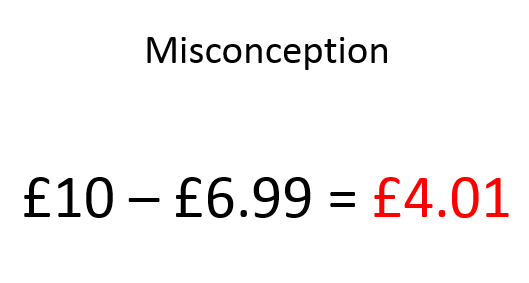
Below are two examples. In example 1 I look at addressing the misconception £10 – £6.99 = £4.01, and in example 2 at introducing letters to replace unknown numbers.

Example 1 – subtraction misconception:
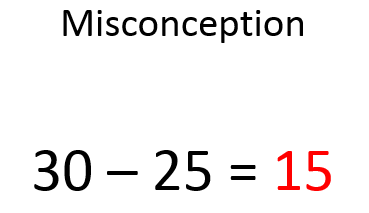
Ask the children to explain the misconception in red. How has the (fictitious) child ended up with this answer? How do you know this is incorrect?
Misc1

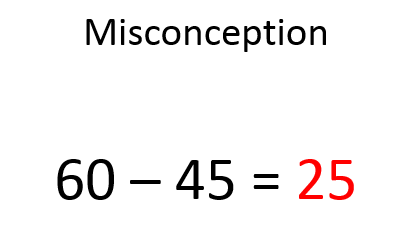
In my experience, children intuitively know that the answer is wrong, and with support can explain the misunderstanding. Then I make an exact copy of the screen, then subtly change the example:
Misc2
The process from before is repeated but using an example where the misconception is less glaring. Having discussed these two examples, with the key learning points unpicked, the children are now in a position to tackle the original misconception:
Misc3
Hopefully the children now have a deeper understanding of the link between addition and subtraction.

This structure can also be used when introducing a new concept. In example 2, I was moving the class on from calculating the inside and outside angles of a triangle to using letters to replace unknown numbers.

Example 2 – introducing algebraic notation:
By this point, the children had a secure understanding of how to find the two missing angles below.
Tri 1

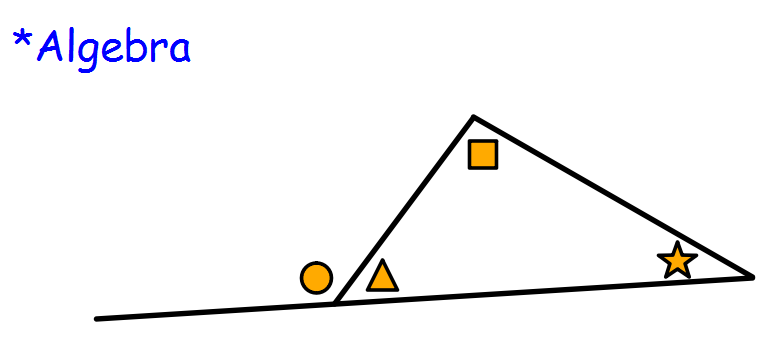
Again, I copy and pasted the screen and made small adaptations so that the angles were changed into shapes. The children were then asked to write number sentences using the shapes (I used shapes as a ‘bridging’ jump to using letters):
Tri 2

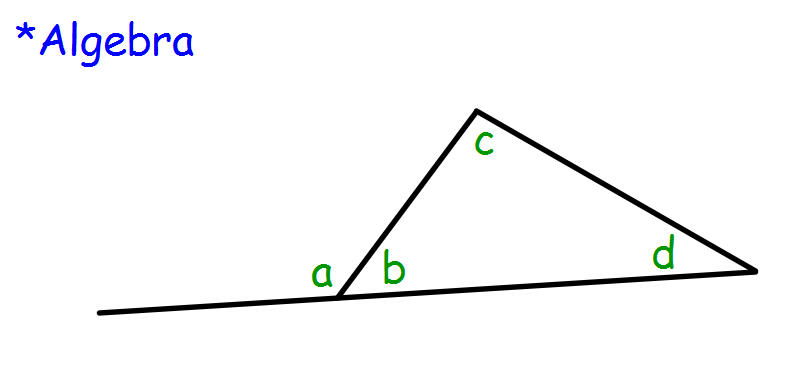
By the time the third image was introduced, the children were no longer overawed by the idea of using letters to represent unknowns:
Tri 3

Of course, with algebra there are lots of routes ‘in’ – I just found this one timely with the structure of our units of work.

Once concepts are more embedded, I would expect children to make wider and more advanced links between different areas of mathematics. But to introduce potentially challenging subjects, or as a means to address specific misconceptions, this ‘slow movement’ approach can be particularly effective.