I See Reasoning – Y1 and Y2: Exploring Concepts, Creating Reasoning Habits

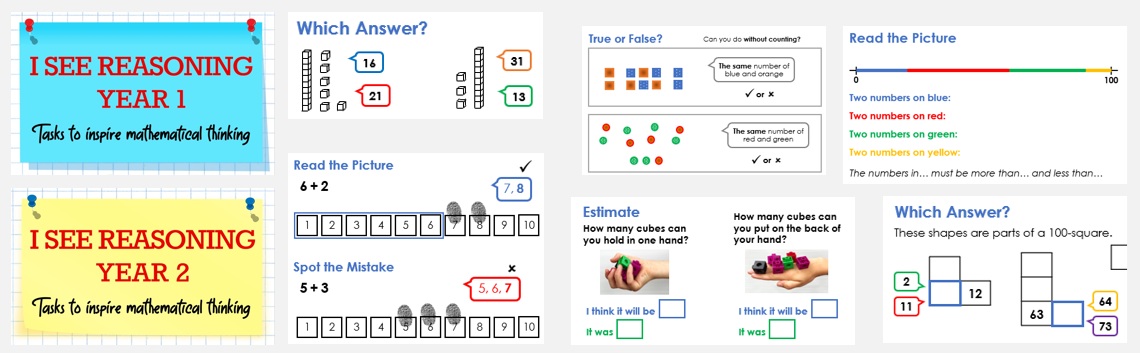
We want KS1 children to develop a deep understanding of Y1 & Y2 maths content. We also want young children to be able to explain their thinking, identify common errors, estimate, explore ideas and think creatively. The tasks in the I See Reasoning – Y1 and I See Reasoning – Y2 eBooks help to give children these experiences, inspiring a wide range of mathematical conversations and explorations.

These new eBooks have replaced I See Reasoning – KS1. They follow the same format as the original eBook, but include many, many more examples (365 tasks in the Y1 eBook and 392 tasks in the Y2 eBook) and they have a range of new types of reasoning questions. Here are some of the key ideas:

Non-counting strategies, estimation, reasoning

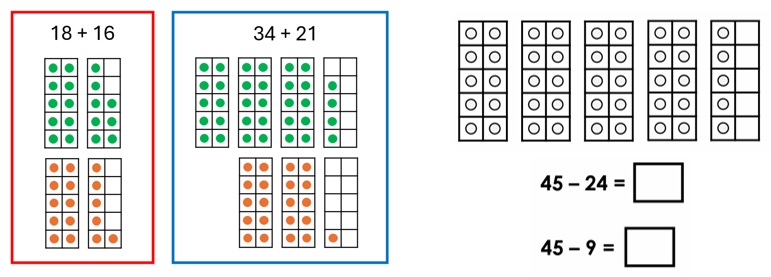
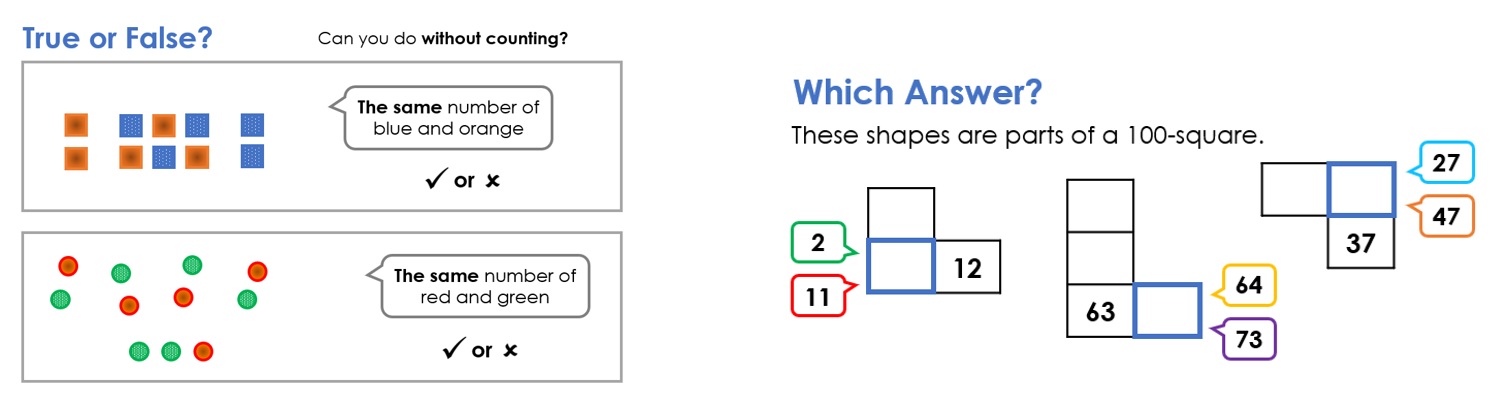
A HUGE focus is placed on children explaining answers using non-counting strategies. This includes ‘how many dots’ questions, where children describe their non-counting strategies. It involves calculations that border 10 or subtractions with small differences. The emphasis is not ‘what’s the answer?’ but instead ‘how did you know?’ or ‘what do you visualise?’ The questions are highly visual and don’t require too much reading.

Misconceptions, visuals, patterns

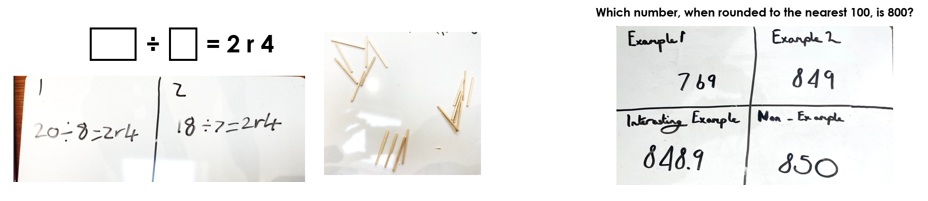
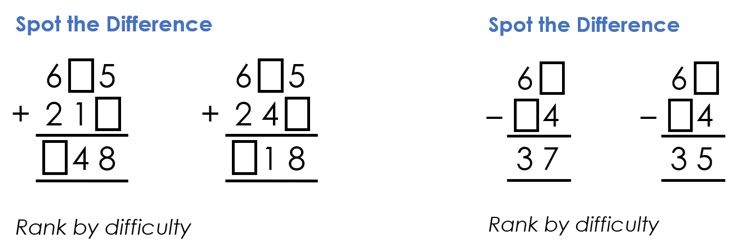
The questions introduce the key I See Reasoning question structures. Children will learn to spot mistakes, explain mistakes, compare questions and spot patterns. They will be challenged to explain what they noticed and find all of the answers. In doing so, children will be trained in the routines of thinking mathematically, routines that can be extended in KS2. This will help to build reasoning tasks into every maths lesson, giving schools a progressive approach to how reasoning is taught.

Exploration

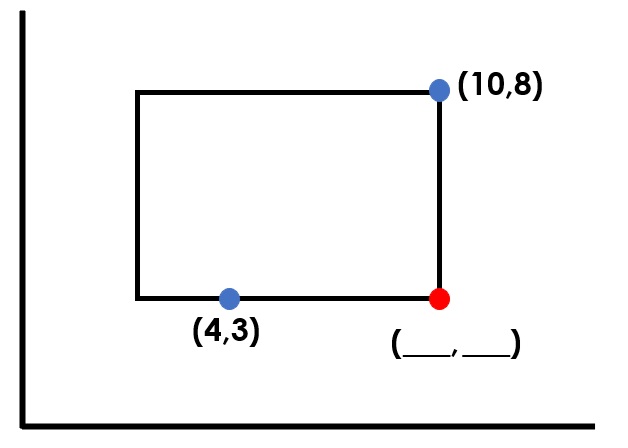
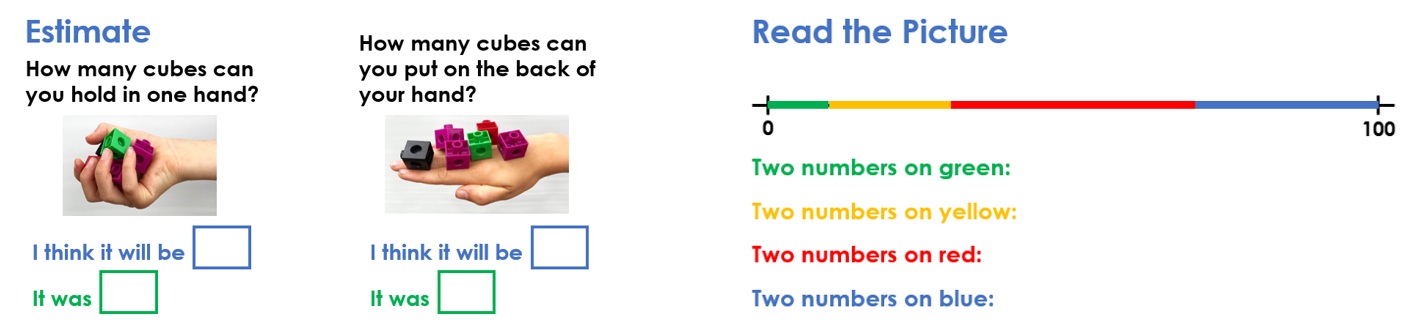
There are lots of questions, of many different forms, for exploring mathematics. This includes estimation tasks, open challenges or questions with different possible answers. There are also a range of spatial reasoning tasks, for children being able to visualise items from different perspectives.

Depth

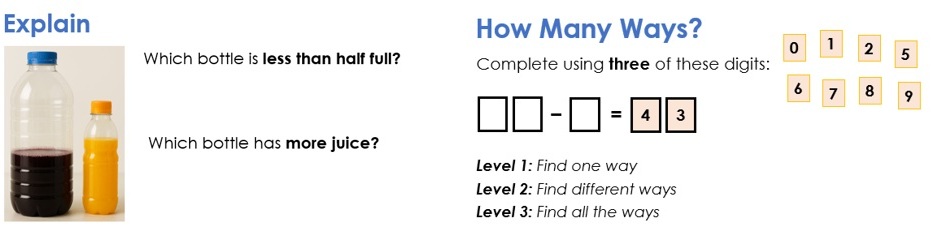
There are also a wide range of tasks to add challenge! These are very diverse and sometimes require children to find multiple answers or explain their thinking. These tasks are highly varied depending on the area of the maths curriculum that they cover.

The introductory price of the eBooks is £30 each (including VAT). From 1st January 2026, they will cost £35 each (including VAT).

I See Reasoning – Y1 and I See Reasoning – Y2 lay the foundations for children to experience maths as a thinking, exploring, explaining subject. If you click on the links, you can view a sample section of each resource. I hope that they inspire the children in your class and give you many fantastic classroom moments!

Learning content, developing habits of thinking

I’ve taken a lot from listening to Dylan Wiliam speaking over the years. One of his insights has particularly resonated with me: the idea that the improvement in learning that a child derives from being in the class of a highly effective teacher extends well beyond the time that the child is in that teacher’s class. For example, if a child experiences expert teaching in Y3, they are likely to make more rapid progress in Y4 and beyond too.

It is, therefore, hard to judge the true effectiveness of teaching from end-of-year maths assessments. It might give an indication of progress made in the content goals for that year but it won’t give the full story of the long-term impact of that teaching. The lens is too narrow. If all our efforts are placed on getting children to achieve their ‘content goals’ for the current day/block/year, we may always be limited in our impact. We want out teaching to help children to learn the content and to build children’s capacity to learn other new content.

I have come to think of each maths lesson as an opportunity to develop a child’s content knowledge and their habits of thinking. Of course, surface knowledge is important as reasoning doesn’t happen in a vacuum. However, I generally look at the content of the lesson as the context through which I will build the mathematical habits of mind. This may involve helping children to represent ideas visually, explain misconceptions or spot patterns. Perhaps children will be challenged to create their own examples. Or maybe a task will require an element of perseverance and self-regulation. This approach may have a short-term cost in the speed at which content knowledge is acquired, but this is likely to be a worthwhile investment. It can give the children a richer experience of being a mathematician.

My simple encouragement is to be aware of the need to develop content knowledge and build mathematical habits of mind. To focus on the detail as well as being aware of the bigger picture. Content knowledge is more tangible and it is easier to assess. The habits of thinking that are developed, though, will play a powerful role in children’s long-term mathematical success. We want all children to develop these habits, not just pupils whose attainment is already relatively strong. It will also require us to make thoughtful choices about what we don’t teach. Where time is limited, content is usually prioritised.

A starting point might be to establish What, as a school, do you consider to be your ‘mathematical habits of mind’. What are the characteristics that you want to build within children over time? How are they explicitly taught and made visible? And how do we promote and celebrate children’s progress is developing these habits? My aim, of course, with the I See Reasoning eBooks is to write questions and tasks that help children to develop these habits. Schools generally have a clear plan for how children learn their number bond facts. I want schools to have the same clarity in how children reason mathematically and grow as creative, independent thinkers.

If you have any thoughts on this blog, please share them with me by emailing iseemaths@hotmail.com or commenting below – Gareth.
Plans for maths, 2016-2017

This is a great time to be involved in maths education: there’s a collective movement towards developing deep, conceptual and varied learning experiences; teachers are being proactive in promoting positive attitudes towards maths; maths hubs are growing in their influence.

I’m excited to play my part in this movement. Put simply, I spend hours thinking about and trialling ways to get children involved in maths tasks that are collaborative, open and (wherever possible) visual. I want children to become engrossed in maths; to experience its agonies and thrills, engaging emotionally as well as intellectually.
mission

Here’s what you can expect from me in 2016-2017:

Resources:
I can’t wait to release Maths Outside the Box, the natural follow-up to First Class Maths. The 15 tasks (logic puzzles, multi-dimensional tasks and investigations) will give children challenging, quirky contexts in which to apply their learning. The perfect way to end a unit of work – it’s been SO much fun writing and trialling.
motb

I See Multiplication and Division for iPad is also coming soon. It allows teachers to create a range of visual images to represent calculations, including proportionally sized bar models, area models, dot patterns and arrays. It’s the natural follow-on to ‘I See Addition and Subtraction’.

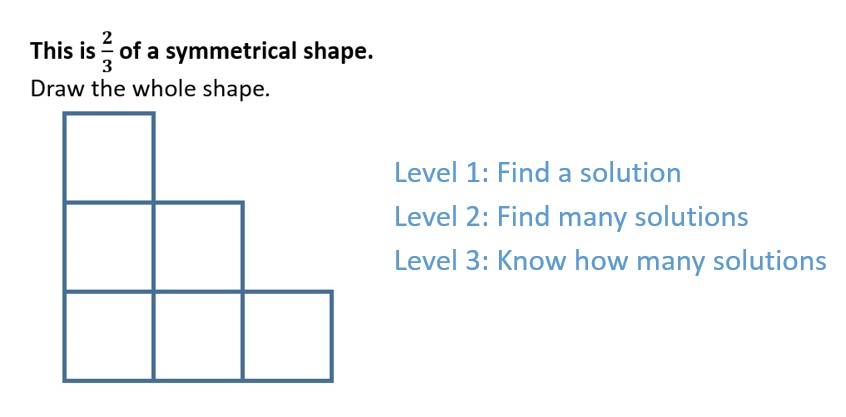
I hope to write a range of open, visual questions that allow children to explore maths ideas in depth. Questions a bit like this:
shape-two-thirds

I’m also planning on sharing lots of free resources, including (time permitting) videos for improving the quality of parent interaction in maths. Watch this space.

Training:
It’s a privilege being able to visit schools to share this passion. Here is the information about my training.

Conference events are scheduled for Manchester and Dudley with a KS2 focus. Expect future dates for bith KS2 and EYFS/KS1 training in the Spring and Summer terms. I am also soon to announce a 2-day training event in London (mid-November) and my first half-day TA training event in South Manchester.

Otherwise:
I’m totally committed to my 2 days teaching my amazing Y1 class this year: I hope they can learn as much from me as I will from them. I’m always happy to promote the good work of other people & look for ways to collaborate, so be in touch.
I’ve got more plans than time, and more ambition than realism, but hopefully in one way or another I can play my part in enriching primary maths. I will also keep posting as many bits as possible on my social media feeds in the distant hope that it will inspire someone somewhere.

Have a great 2016-2017 school year!

Introducing the Challenging Concept

In the process of learning, we are quite literally making links between, building on and extending what we already know. Our existing schemas are slowly being adapted in the light of new experiences. As such, when I’m trying to introduce a new mathematical concept – or when addressing a misconception – I often try to progress very slowly and explicitly between what children already know and what I want them to learn.

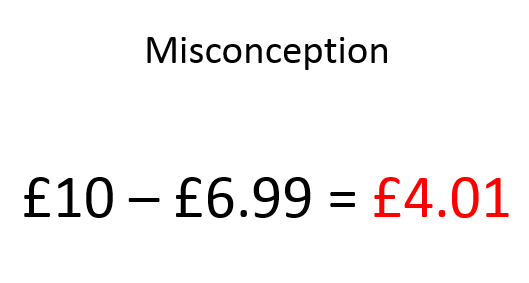
Below are two examples. In example 1 I look at addressing the misconception £10 – £6.99 = £4.01, and in example 2 at introducing letters to replace unknown numbers.

Example 1 – subtraction misconception:
Ask the children to explain the misconception in red. How has the (fictitious) child ended up with this answer? How do you know this is incorrect?
Misc1

In my experience, children intuitively know that the answer is wrong, and with support can explain the misunderstanding. Then I make an exact copy of the screen, then subtly change the example:
Misc2
The process from before is repeated but using an example where the misconception is less glaring. Having discussed these two examples, with the key learning points unpicked, the children are now in a position to tackle the original misconception:
Misc3
Hopefully the children now have a deeper understanding of the link between addition and subtraction.

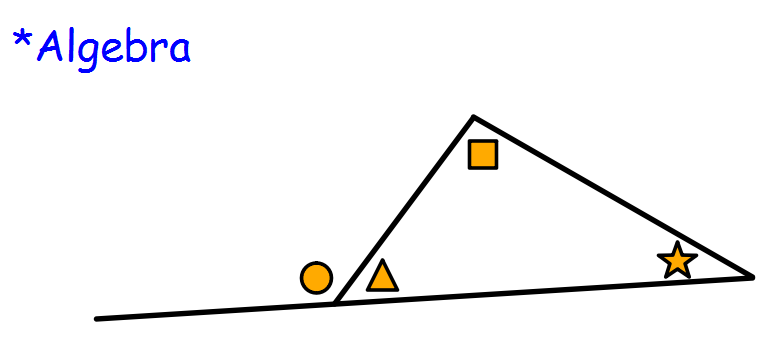
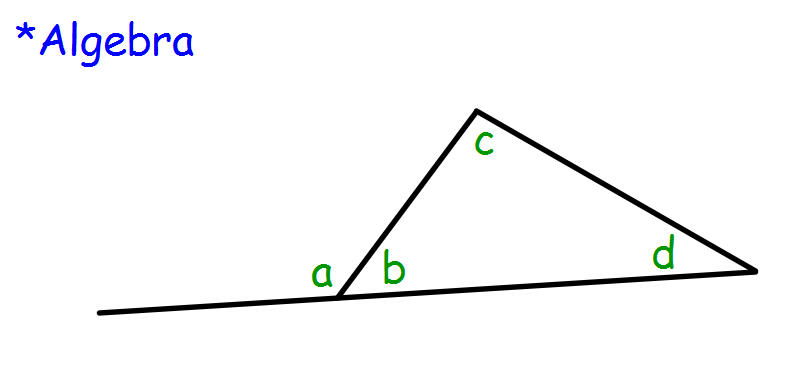
This structure can also be used when introducing a new concept. In example 2, I was moving the class on from calculating the inside and outside angles of a triangle to using letters to replace unknown numbers.

Example 2 – introducing algebraic notation:
By this point, the children had a secure understanding of how to find the two missing angles below.
Tri 1

Again, I copy and pasted the screen and made small adaptations so that the angles were changed into shapes. The children were then asked to write number sentences using the shapes (I used shapes as a ‘bridging’ jump to using letters):
Tri 2

By the time the third image was introduced, the children were no longer overawed by the idea of using letters to represent unknowns:
Tri 3

Of course, with algebra there are lots of routes ‘in’ – I just found this one timely with the structure of our units of work.

Once concepts are more embedded, I would expect children to make wider and more advanced links between different areas of mathematics. But to introduce potentially challenging subjects, or as a means to address specific misconceptions, this ‘slow movement’ approach can be particularly effective.

Questions and Images for Deepening, Part 3

This school year I’ve been blogging example activities, questions and images that I’ve used to extend mathematical reasoning with my class. Here goes for Spring 1:

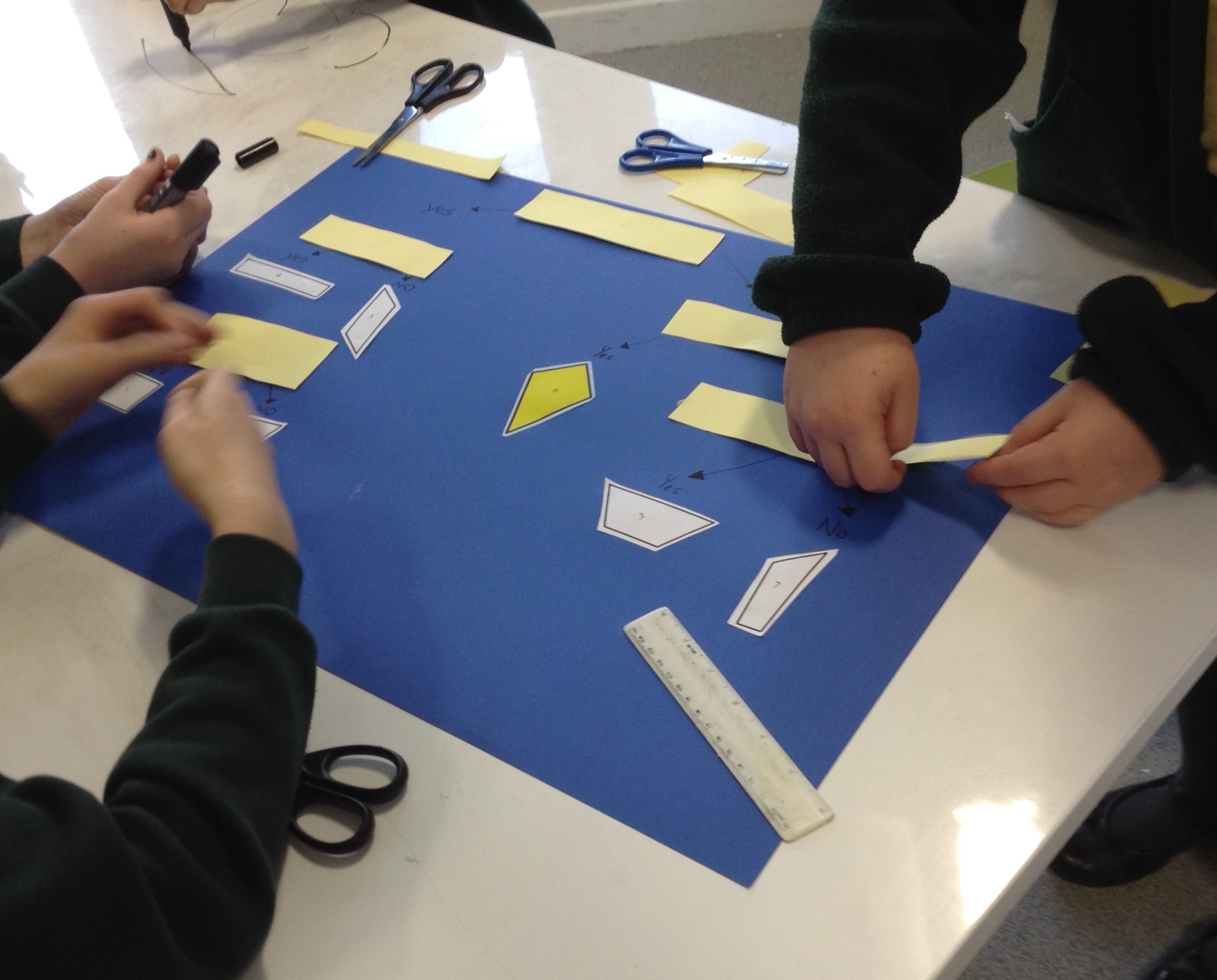
Sorting shapes using a branching database. Children create questions to sort, position the shapes then cover their questions. Other groups have to work out what their sorting questions are. This structure could easily be adapted and used with numbers.
Branch d

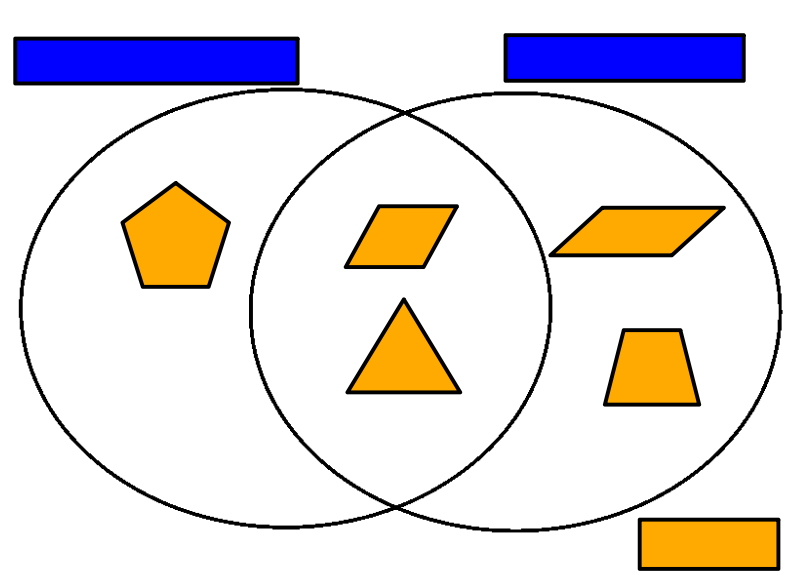
Similarly, classifying shapes in a Venn diagram, with children deducing the headings:
Venn shapes
‘All sides the same length’ and ‘At least 2 acute angles’.

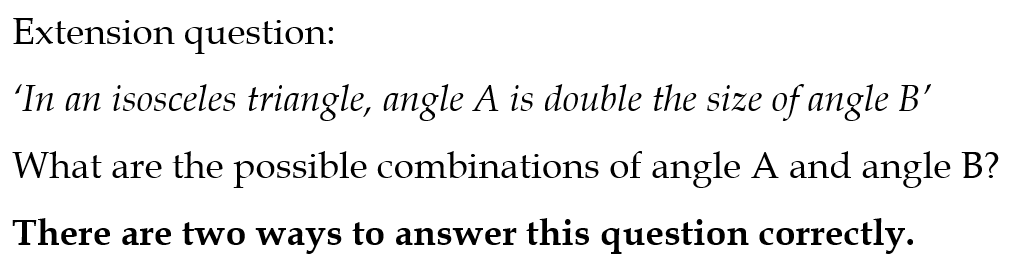
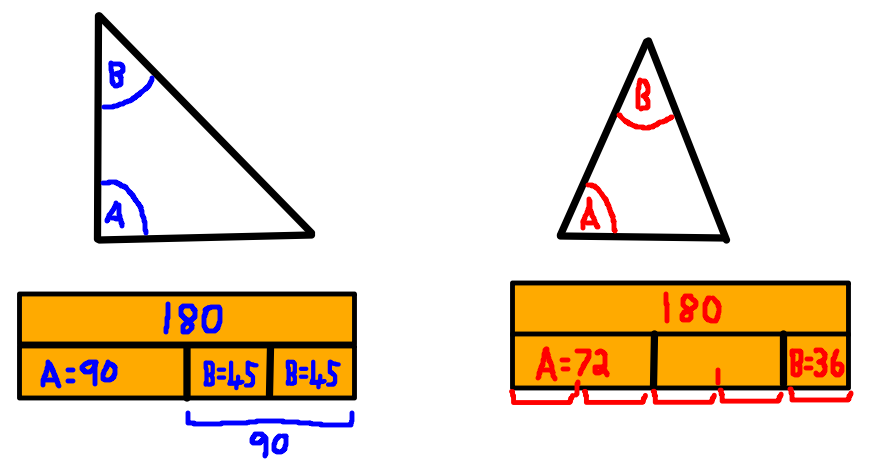
Here’s a reasoning question based on finding missing angles in an isosceles triangle, with two possible solutions represented visually:
Isosc tri q

isosc visual rep

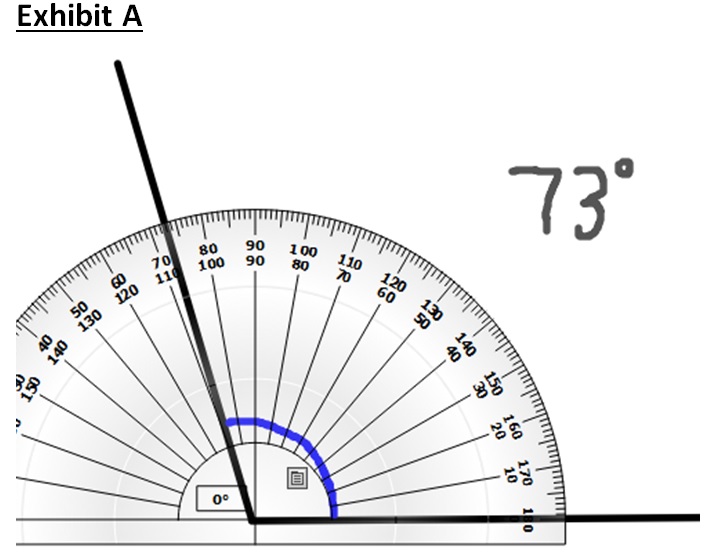
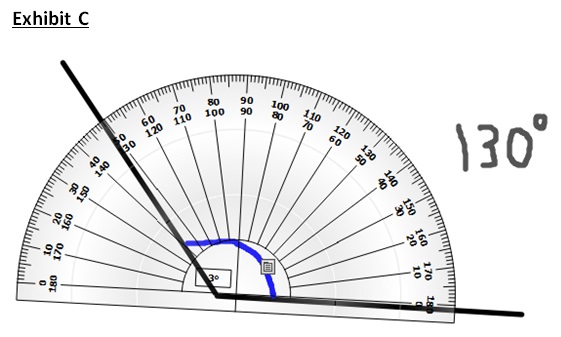
The following exhibits were used to allow children to unpick and explain the most common misconceptions when measuring angles:
Angle A Angle B Angle C

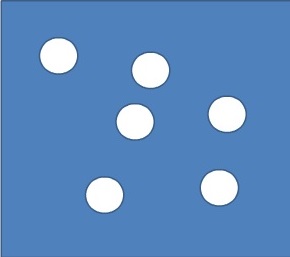
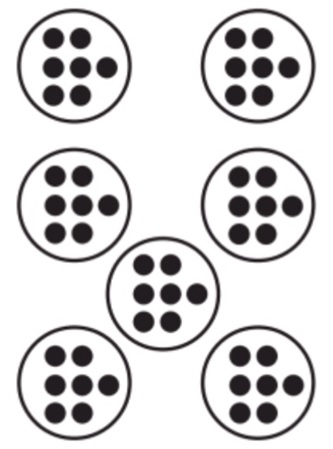
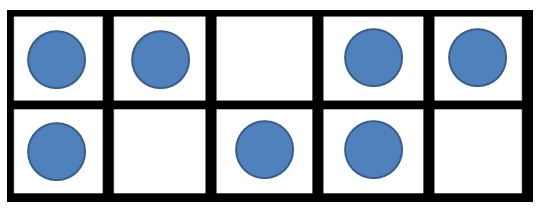
And finally I’ve posted various images of dot patterns that I’ve found for subitizing games. Children are asked to recognise without counting how many dots are in the given pattern (selected age-appropriately). The different ways in which the children visualised and broke down the number of dots in each image can be explored.

dots 1

10-frame image

dots

Since January I’ve also shut myself away and, as I’ve promised myself for ages,  finally spent time writing the Y4/Y5 follow-up to First Class Maths. I am 3 tasks (and a stack of trials/edits) away from completing it, which I’m very excited about – more updates to follow on this one soon. Have a great Spring 2!

Frozen Saltwater and Negative Numbers

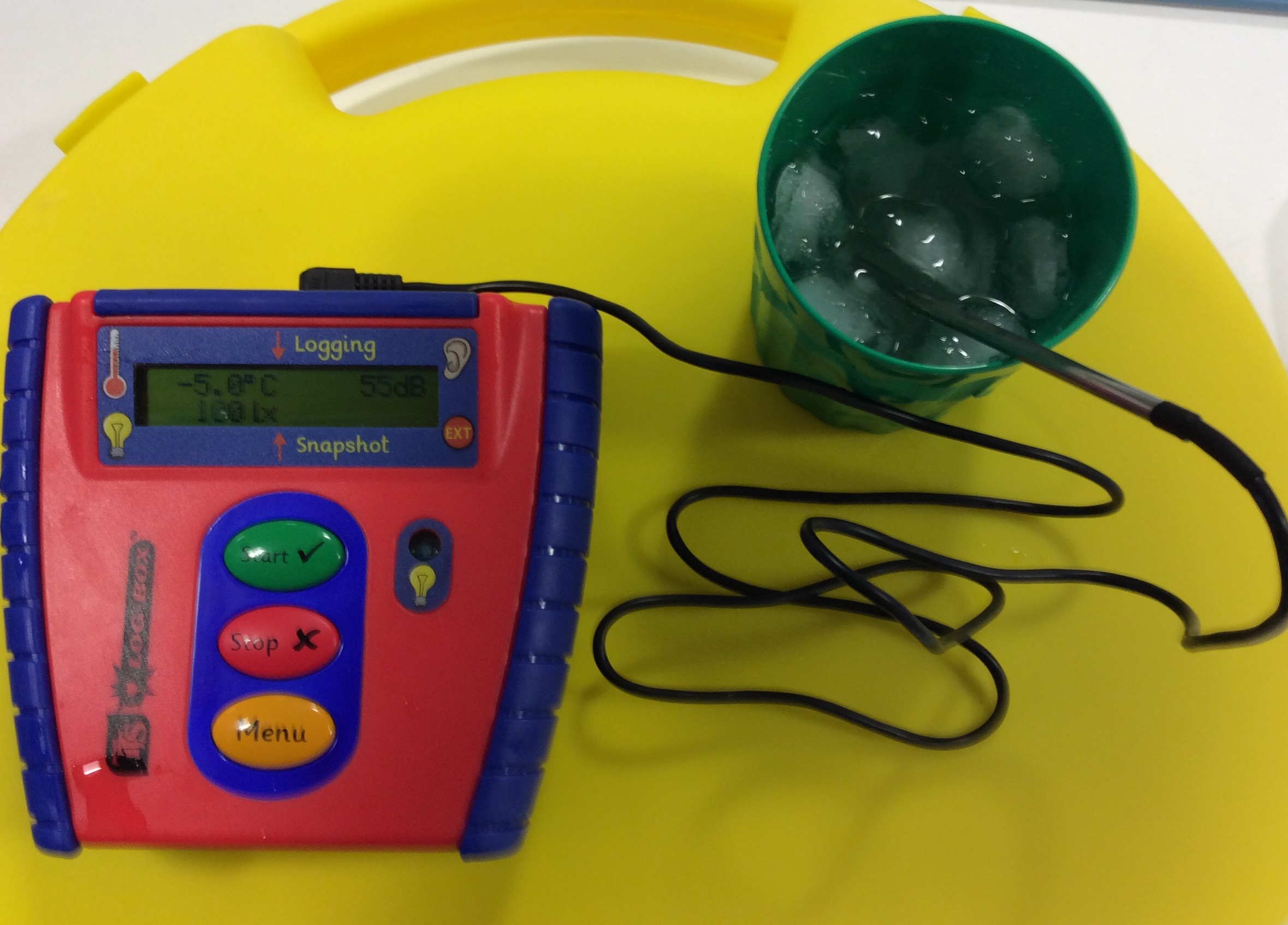
Much emphasis is now being placed on representing mathematics practically and visually (and quite rightly). For obvious reasons, it’s harder to do this with negative numbers. Here’s a classic activity that I came across on my first Primary Science Teaching Trust conference for showing children negative numbers in context. It can also be used to answer the question ‘Why do we put salt on the roads when it’s icy?’

Salt

Have a container filled with icy water and add quite a lot of salt. By putting the temperature probe into and out of the icy solution, the children will be able to see how the temperature changes (and how numbers change from positive to negative and vice versa) as the temperature goes above and below 0 degrees. Most dataloggers come with software that will allow you to graph this pattern as well as displaying the temperature.

By adding the salt, the freezing point of the solution becomes lower. At the maximum level of saturation for salt (according to Google), the freezing point for a saline solution is -21 degrees Celsius. This demonstrates that the salt doesn’t make the water hotter, as I’ve heard children suggest, but that it changes the freezing point. It’s also worth noting that if the temperature were to fall below -21 degrees it would be pointless to grit the roads.

This context could be used simply as a demo of negative numbers, or it could lend itself to a more extended scientific enquiry. Let’s just hope that thawing ice on the roads isn’t a subject that is too topical for too long!

The Learning in Logic Squares

There are lots of maths apps on the market: most are visually appealing and allow children to rehearse key mental maths skills. What more does Logic Squares have to offer? This blog gives six reasons why Logic Squares takes children’s learning to a deeper level.

Accessible challenge
Accessible 4
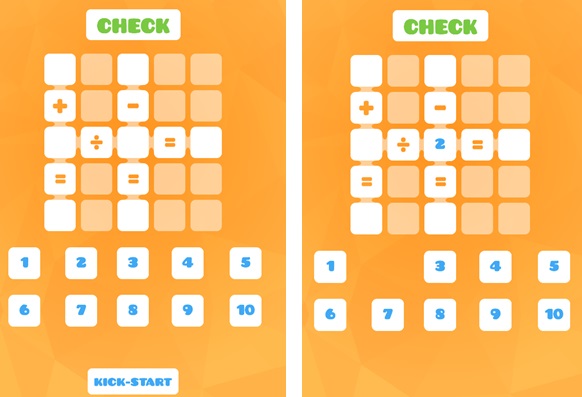
At the start of each level, the player can select ‘kick-start’. This will put one of the numbers into position, giving a significant clue to help the player to unlock the level. In doing so, the levels are made more accessible for children of different abilities. There are a range of solutions for each level.

Useful feedbackIMG_1719
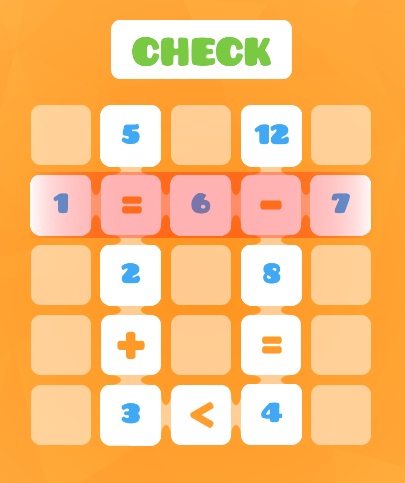
When the player clicks ‘check’ any lines that are incorrect are highlighted in red. Then the player can re-position the numbers having seen their mistake(s), allowing them to address any misunderstandings in a non-threatening way.

High thresholdchallenge 2
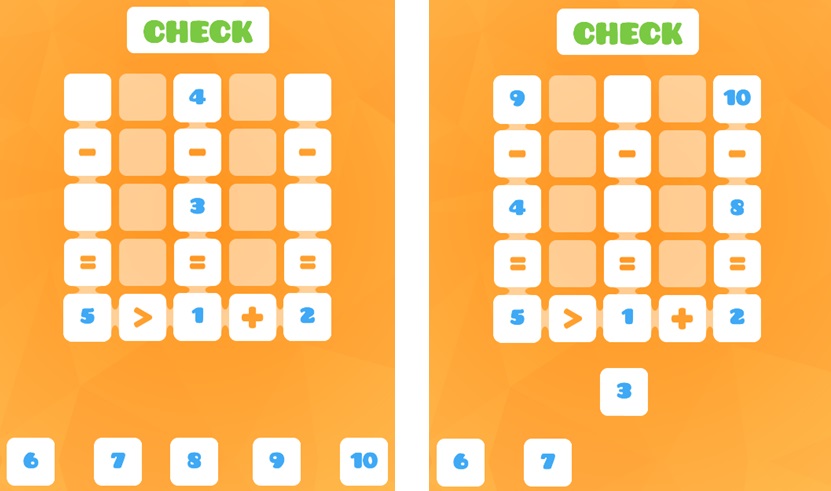
By the end the levels will stretch even the most able primary child. Take level 18 (using 1-20). Can the children reason as to why the number positioned has to be a 2? Children have to identify the lines with fewer possible solutions and learn to complete these parts first.

Supports understanding of = and > signs
equality
Children’s understanding of = as ‘same as’ rather than ‘makes’ will be secured. The example on the left shows how the common structure ___ – ___ = ___  is reversed to ___ = ___ – ___. The grids from level 16 onwards are 7×7, allowing for two numbers either side of the equals sign. < and > sings are used throughout.

Subtraction as difference
subtraction
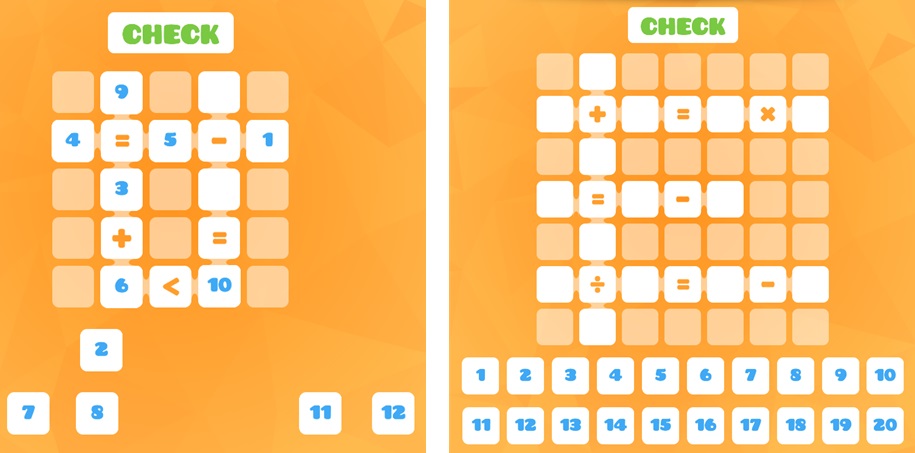
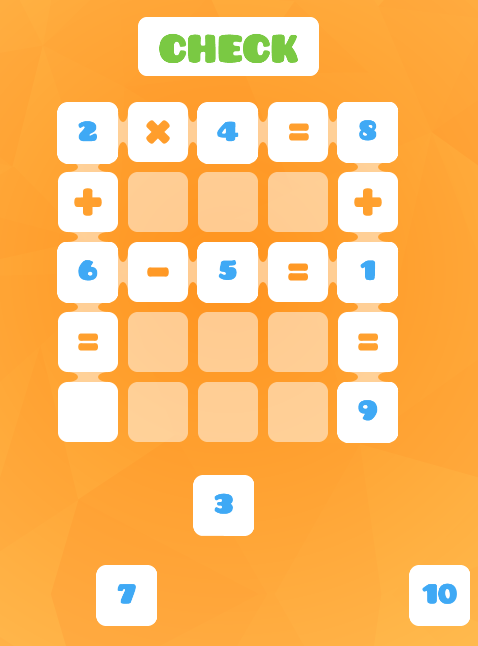
Let’s assume the children start level 11 by filling in the bottom line. They may complete a vertical line using the most straightforward calculation that comes to mind (4-3=1). Soon they’ll realise that they need to be more selective in their use of the smaller numbers; larger numbers can be used in subtractions, considering differences.

Understand how to manipulate numbers in calculations
IMG_1711
On level 12 the player has got to this point and has realised they are unable to complete the last line. Which is the first line to try to alter?The vertical line on the right hand side? Unlikely to work. The middle horizontal line? The 6 and 5 aren’t interchangeable; also, neither number could be used in the position of the 1. But switch around the 4 and the 2 and we have a solution!

So that’s how Logic Squares gets children playing with numbers and exploring key mathematical concepts in a fun, non-threatening way.

To see level 10 in detail, read the blog:
https://garethmetcalfe.wordpress.com/2015/08/31/logic-squares-the-strategy-maths-app/

Logic Squares for the iPad is on sale in English: