Home Learning Lessons: plans for the summer

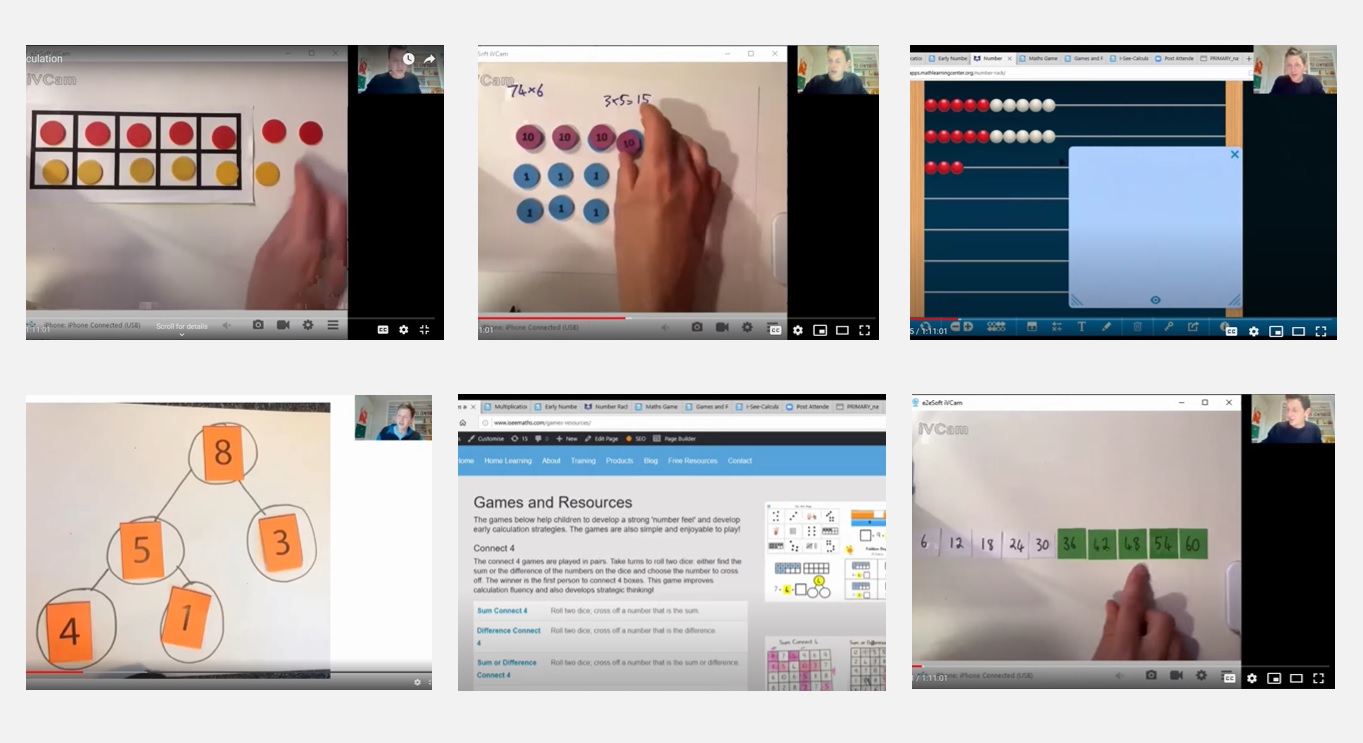
It’s been a wonderful start to the home learning project, the vision for which is described in this short video. During the school closures, I want children to experience rich, emotionally engaging maths learning. I also wanted them to feel as if they are part of a vibrant, real community of children.
Each day, I post a video lesson for Y3/4 children (all Y3/4 lessons here), and a separate video lesson for Y5/6 children (all Y5/6 lessons here). Each video explores a big mathematical idea in small steps and a range of independent tasks are set for children to complete. Everything is free. In the first six weeks, the videos have had 335k views!

Here’s the outline plan for the rest of the school year. I will continue making the videos for the duration of the UK school closures (however long that lasts):
18th – 22nd May: Measures: Money and Time
1st June – 5th June: Data Handing
8th June – 19th June: Fractions
22nd June – 3rd July: Flexible Calculation
6th July – 17th July: Mathematical Puzzles

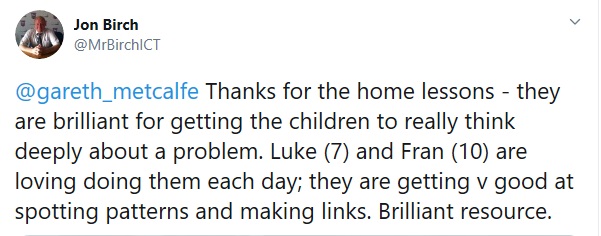
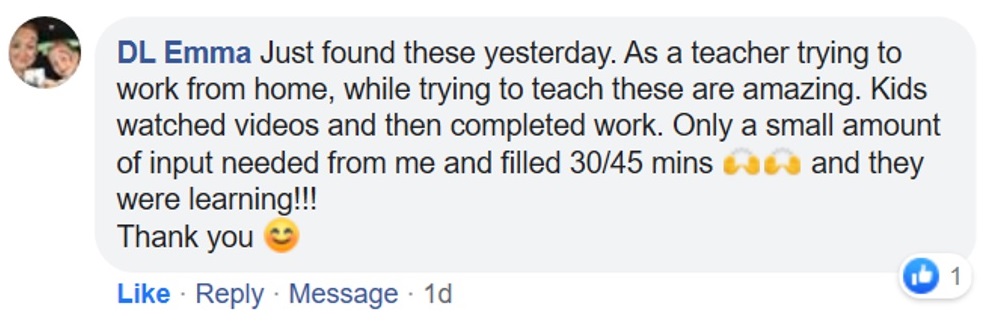
It’s been thrilling to hear how much the children have loved the lessons and how it’s helped time-pressured parents too:

I want as many teachers and parents to find out about this project as possible. Tell friends, share with colleagues! Lessons can be uploaded onto school websites; many schools retweet my evening tweets each day from their Twitter feeds. Also, if you like the videos it really helps if you give them a thumbs up on YouTube! Here’s the first Y3/4 lesson and here’s the first Y5/6 lesson – they will give a taste of what the lessons are like!

I have also compiled maths games to play with KS1 and KS2 children and I have been running a series of online training sessions for teachers.

I hope you are all keeping well,
Gareth

The Plan: Primary Maths Lessons During School Closures

Here’s the plan for the online maths lessons that I will run over the period of the Covid-19 school closures. I hope it will help many children to engage in rich, thought-provoking maths learning during this time. I hope they will be uplifting too!

Every weekday at 9am, two new lesson will be posted on this page via YouTube: one aimed at children in Y3&4 and another for Y5&6. Each video will help children to build the skills needed for the main task. Then children will complete the main task – a challenge or short series of questions – working individually or with adult support. These tasks can also be downloaded from this page by clicking the relevant links. Answers will be provided! The first videos/tasks will be uploaded on Monday 23rd March.

Underneath each video is a short description of the key calculation skills for each lesson. Children may benefit from practising these skills before watching!

A series of games that can be played with children aged 5-8 will also be shared. The first of these videos will be published here on Tuesday 24th March and I plan to release two of these videos per week. I’ve got some great, easy-to-use games to show.

An introductory video has been put together to explain the project – please share this with children and parents. The videos will run until 3rd April (my health permitting), then there will be a two-week break over Easter. I will share a range of games that can be played during that period. Then, all being well, the daily videos will recommence for the duration of the school closures.

I am hoping to be able to run these lessons as ‘live lessons’ soon. I’ve not quite got the technology or expertise for that yet! But watch this space, I’m working on it – I’d love to introduce this and make the lessons more interactive and real.

How you can help
I also want to make the lessons engaging and personal. I’d love to end each video with a message, a joke or a thought from a range of teachers, parents or people from the community. Let’s make the videos feel like ours – help the children feel loved by the wonderful teaching community. Please email, tweet or FB message me with your personal message! And keep sending ideas for maths challenges to include. Spread the word far and wide…

Best wishes
Gareth

I’m looking into ways that I could deliver free, 45-minute tutorials for parents to show how they could use some of my maths resources at home. If you might be interested, email iseemaths@hotmail.com

I am also exploring possible ways to deliver maths training sessions online to Primary teachers during school closures. Email iseemaths@hotmail.com for more information. 

A favourite multiplication investigation

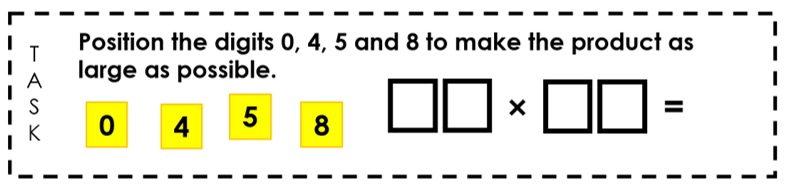
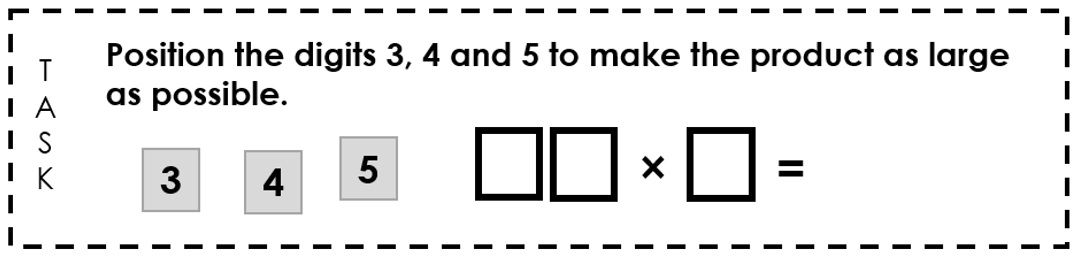
Here’s a multiplication investigation that I used with a mixed-age Y5/6 class. Before the task we recapped on the grid method (it will become apparent why the grid method was used). Then, the main task was introduced:

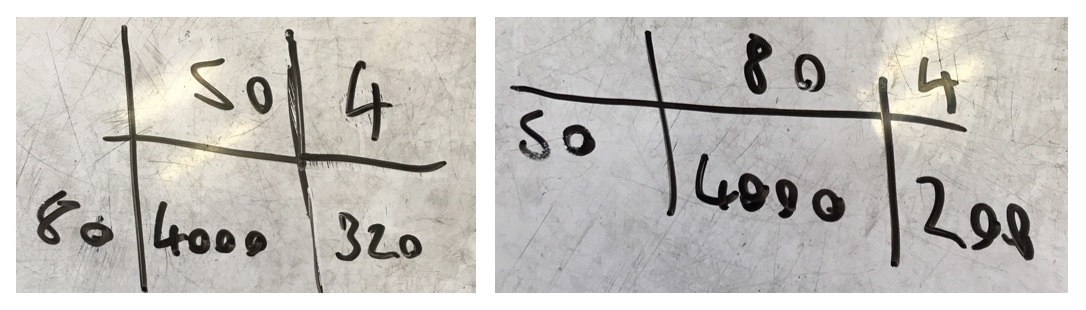
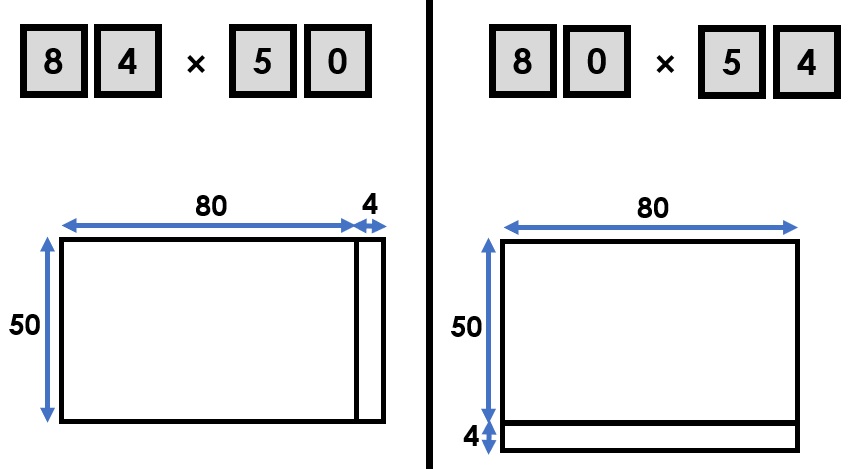
Immediately, the children positioned 8 in one of the tens columns and 0 in one of the ones columns. Some children tried 85 x 40, but then we established that the larger digits (8 and 5) need to be placed in the tens columns and the smaller digits (4 and 0) in the ones columns. But where, then, should the digits 4 and 0 be positioned? Which gives the larger product: 84 x 50 or 80 x 54? Will these two calculations give the same answer? This was explored:

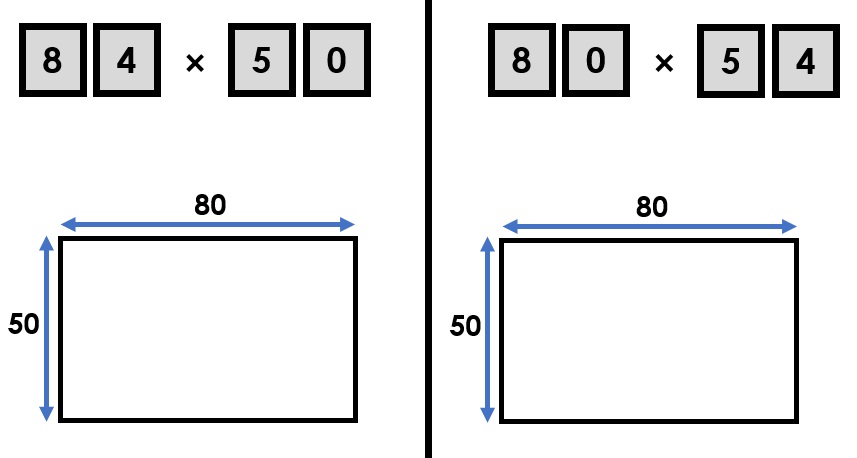
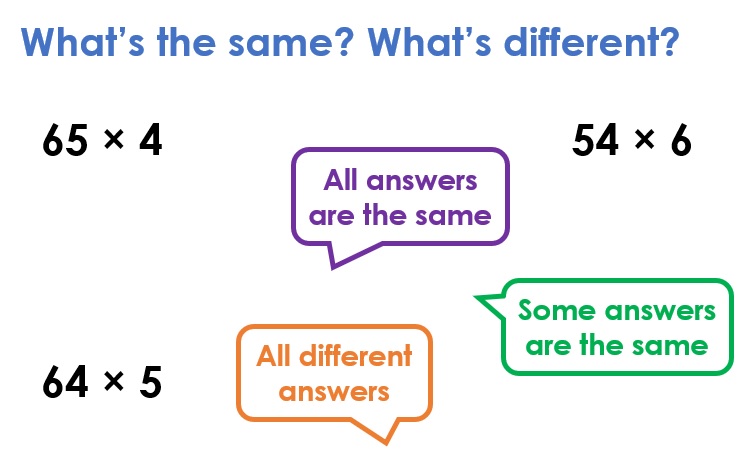
We compared these two calculations and asked ‘What’s the same? What’s different?’ The grid method helps to show that multiplying the tens values gives 4000 in both calculations. However, the TO x O parts of the calculation are different. We saw that 80 x 54 gives the largest product. One child even said ‘The short method for multiplying is quicker, but the grid method is better for showing what’s the same and what’s different.’ I show the children an area model to help them to understand the difference between 84 x 50 and 80 x 54:

In the image above, we see the TO x TO part of the calculation. We ask the children to visualise how each image will be changed when the TO x O part of the calculation is also shown (see below):

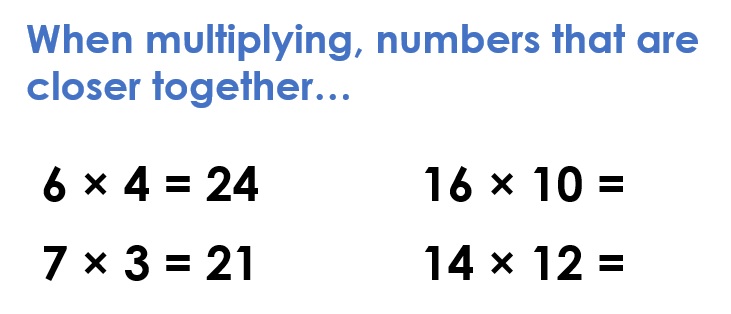
Of the two calculations, 80 x 54 gives the larger product because we are multiplying a larger tens value by the 4. I also commented that the pair of numbers that are relatively closer together gave the larger product. Then we look at the examples below, comparing pairs of numbers with the same sum that are multiplied:

We see that the pairs of numbers which are closer together have the greater product.

I have run a very similar investigation using a TOxO calculation. Here’s an opening prompt:

And it led into the I See Problem-Solving investigation below. It’s one of the free sample tasks that can be found here:

If you have a go at these investigations or something similar, I’d love to hear about how you get on!

I See Problem-Solving – UKS2 and I See Problem-Solving – LKS2 give a huge bank of rich tasks. There are Worked Examples and Support, Explain and Extend features that help to deepen children’s understanding.
Information can be found here about INSET/Twilight training on developing reasoning and problem-solving. Bookings are currently being taken from late February onwards. For very cost-effective training, you may consider hosting a training event, or running example lessons in your school. 
I See Problem-Solving – LKS2: Support and Challenge

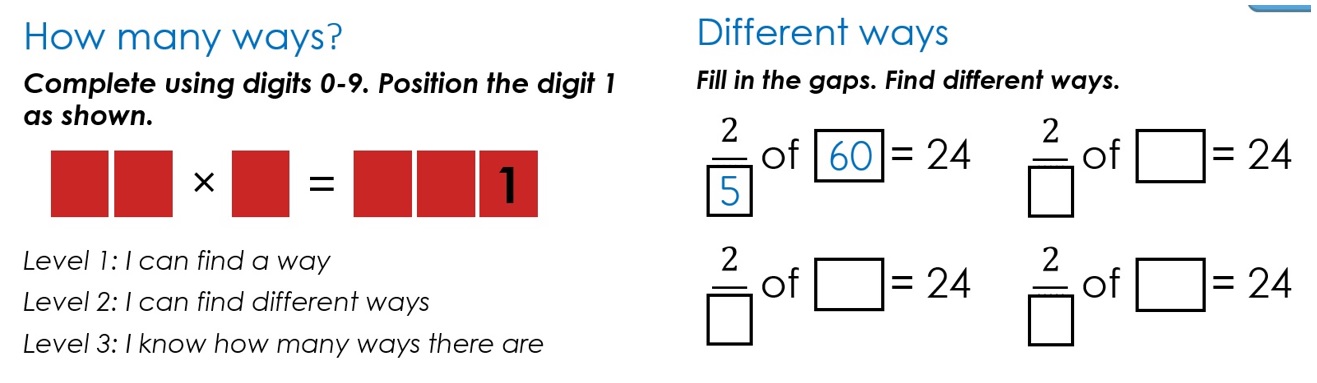
I’m delighted to have released I See Problem-Solving – LKS2. It’s a resource that I’ve lived and breathed in the classroom over the last 10 months! The aim is to help all children to access rich problem-solving tasks, whilst ensuring that all children are challenged and engaged. It is the practical outworking of the research on solving problems from this EEF report (see point 3). 

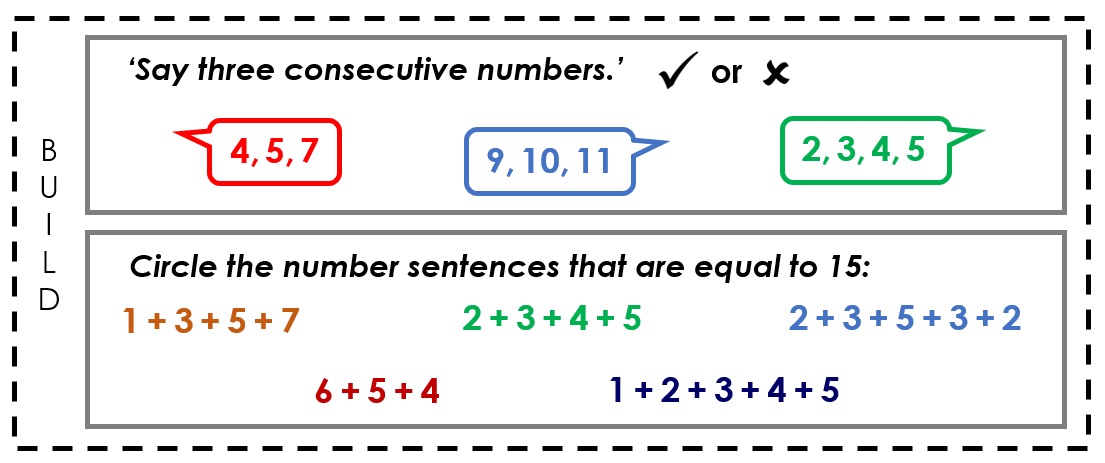
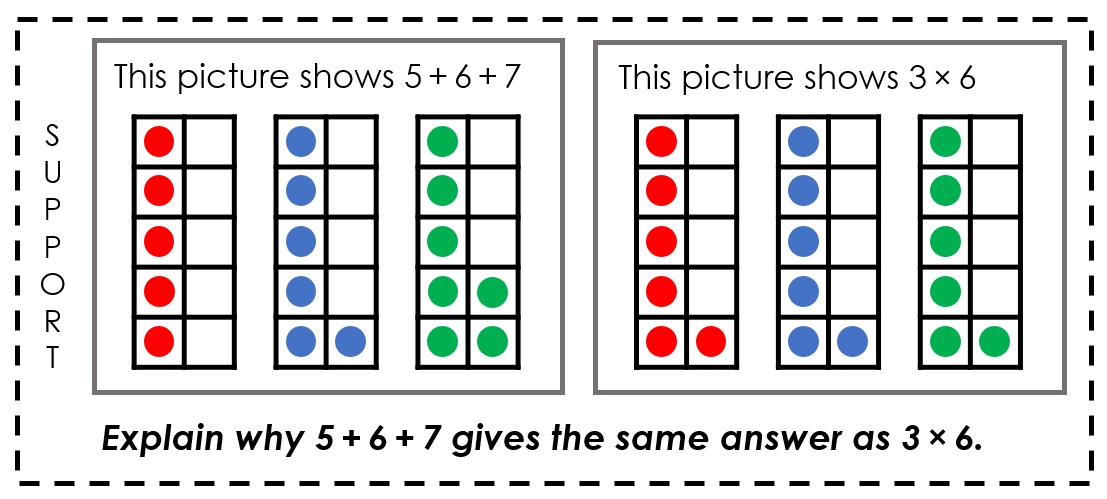
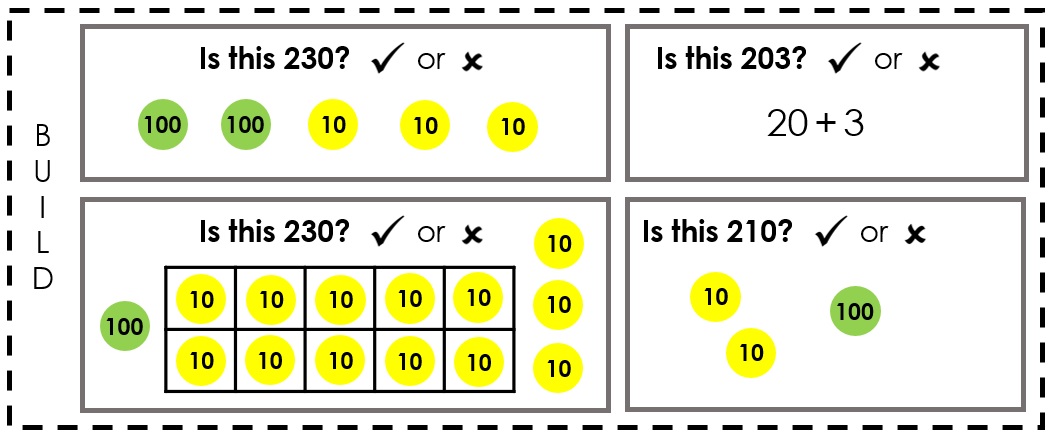
I See Problem-Solving – LKS2 is comprised of 54 tasks. Each task gives various challenges: the Build prompt introduces the key themes and concepts, before the main Task is presented. Then, there is a Support prompt to help children access the task. The Explain and Extend challenges give rich opportunities for extended exploration.  Here’s an example task, starting from the Build prompt:

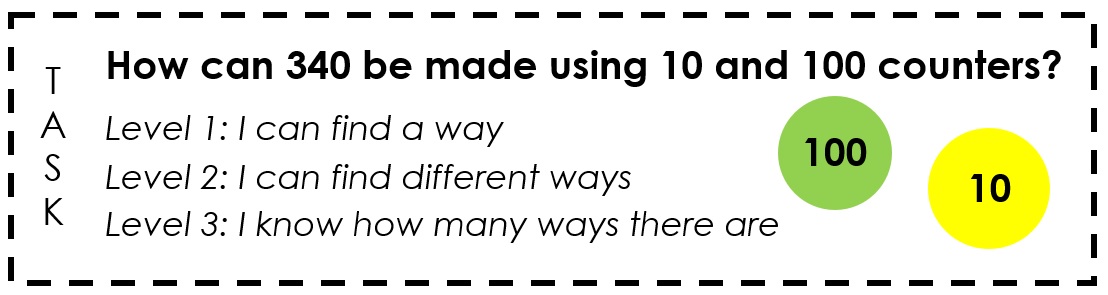
This introduces some of the key language that the children will need to understand before they access the main task. Here is the Task:

Children might choose 1, 2 and 3; they could work with 21, 22 and 23. Either way, we can all explore this idea and visual representations can be used to help. If children are need help, they can look at the Support prompt:

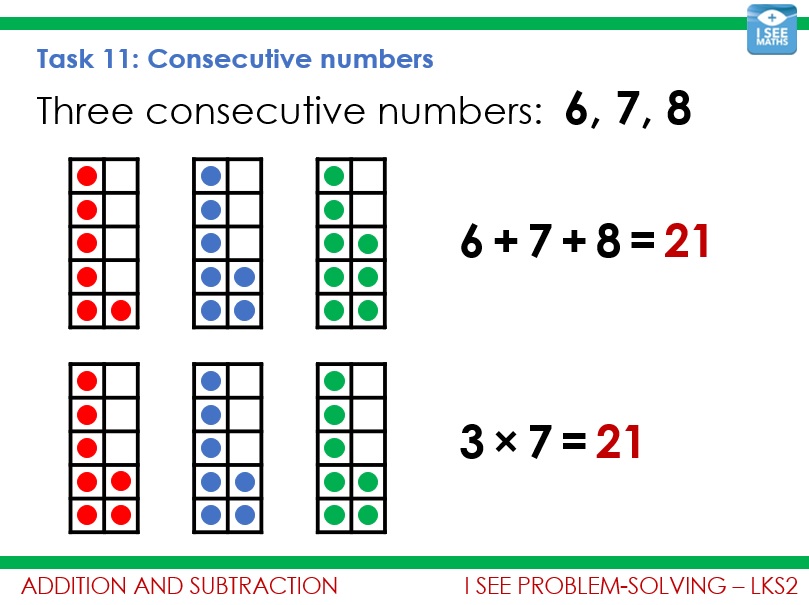
The Worked Example shows the solution to the main task step-by-step. The Worked Example can be viewed as a PowerPoint or as a PDF:

To deepen the challenge, the Explain and Extend prompts provide related challenges:

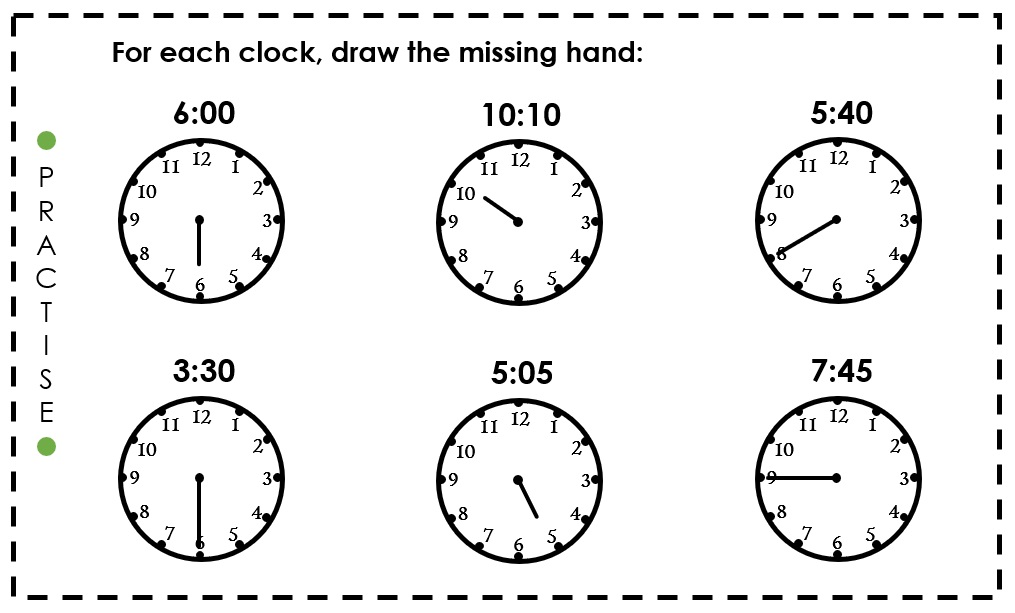
Not all the tasks follow this exact format. Sometimes there are Practise questions:

And there are always questions that extend the challenge:

Information about the resource, plus a link to the Etsy page to buy the resource, is found on the I See Problem-Solving – LKS2 page. There are 5 free example tasks to use too. It costs £24.98 and is available as a digital download of the PDF file. I hope you find this resource super-helpful for engaging children in meaningful problem-solving. It’s certainly given me many great classroom moments already!
 

Place Value: Seeing the Relative Size of Numbers

In place value, children learn about the value of each digit in a number (e.g. that the 5 in 153 represents 5 tens) – the Deepening Understanding in Column Value blog gives some ideas for extending thinking in these lessons. However, to give children a more complete understanding it’s important that they can also reason about the relative size of numbers. In this blog I will explore how I’ve used a blank number line to develop this form of understanding and look at the wealth of opportunities for reasoning that it can provide.

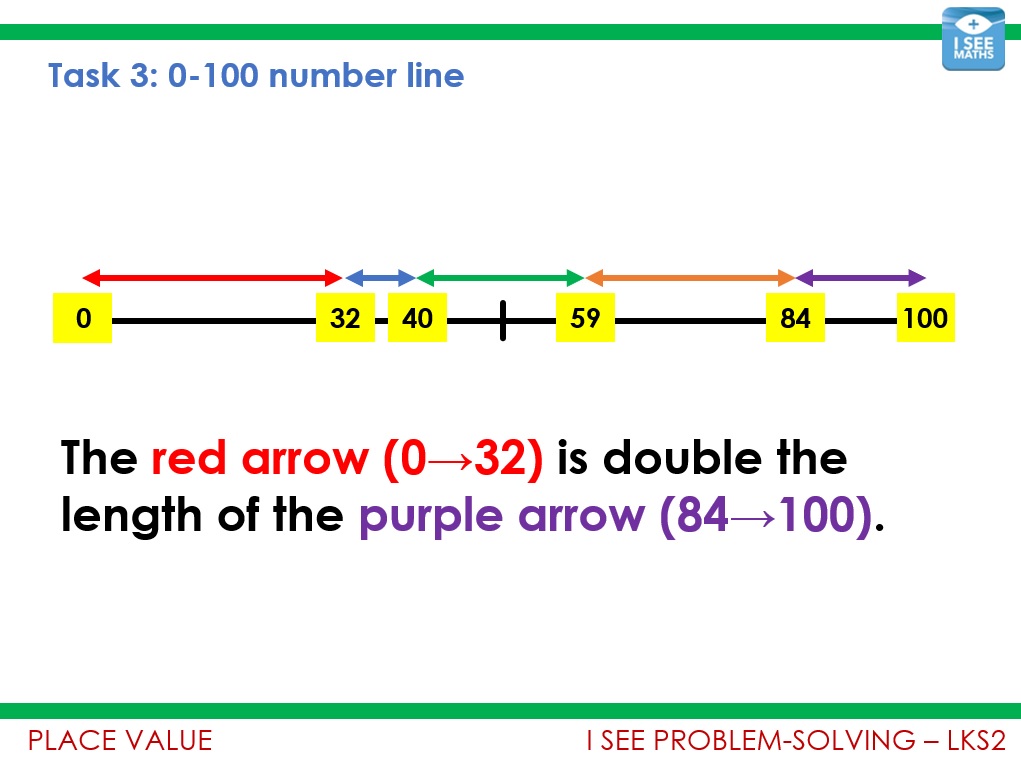
Consider this task. Children are given a long number line with 0 and 100 at either end and are asked to position 31, 39 and 84 accurately on the number line. Children are challenged to think about whether the lengths between the numbers are appropriately sized.

I have found that children are generally able to order numbers, but that the common mistake is to make the spaces between numbers too similar. In this example, I may ask children to compare the distance between 31 & 39 with the distance between 0 & 31 (which is almost four times longer) and the distance between 84 & 100 (which is exactly twice as long).

In a similar task, children have positioned 4, 7 and 9 on a 0-10 number line. It’s common for children to position 4 by counting four small ‘steps’ on from zero (placing 4 far too close to zero) rather than thinking about the position of 4 relative to the half-way point of the line. Similarly, 7 and 9 are often positioned by counting back from 10, leaving an overly large gap between 4 and 7. With careful modelling, and by looking at the number lines in the classroom, children learn to reason spatially with greater precision.

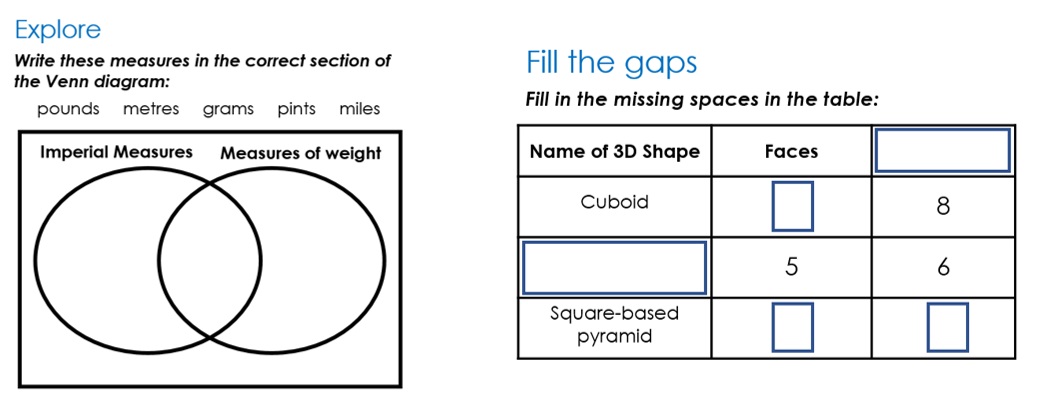
I’ve included two such tasks in I See Problem-Solving – LKS2 (click on the link for sample tasks), which is due to be released on 29th September. Here’s one of the pages from the Worked Example:

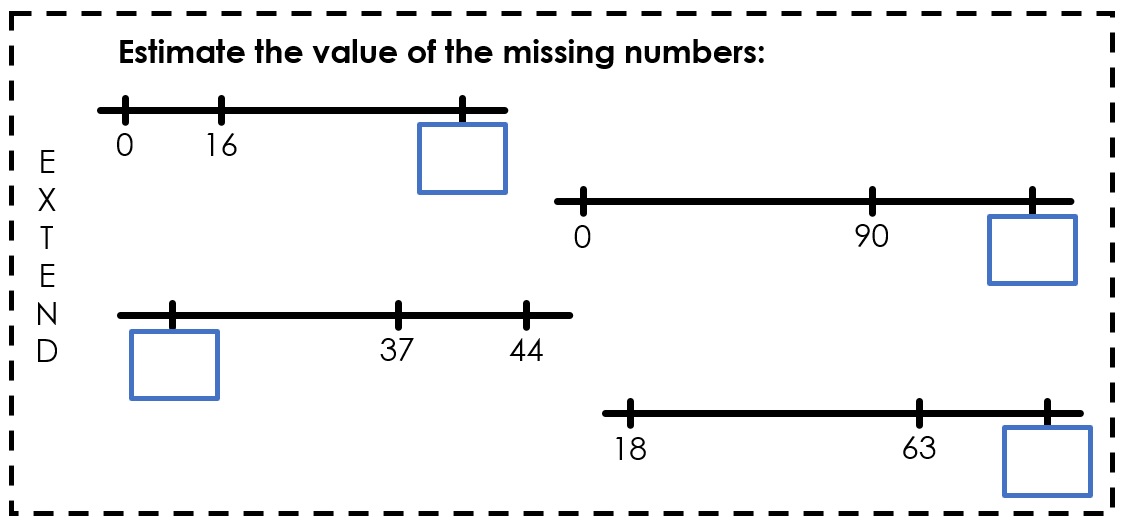
And here is the extension prompt for the task. There’s so much additive and multiplicative reasoning that go into estimating the value of the missing numbers:

I would love to hear about any practical examples of how you are outworked these ideas in the classroom. The blog Deepening Understanding of Column Value gives some more ideas for how to deepen the challenge in place value. Have a great term!

For information about NCETM-accredited training by Gareth Metcalfe, please visit www.iseemaths.com – bookings are being taken from Spring term 2020 onwards.

Deepening Understanding of Column Value

When learning about place value, an emphasis is placed on the column value of each digit. For example, the value of the digit 7 in 273 is 70. In this blog I will look at two ways to extend this understanding of place value. In the blog Seeing the Relative Size of Numbers I explain another important building block in children’s knowledge of number.

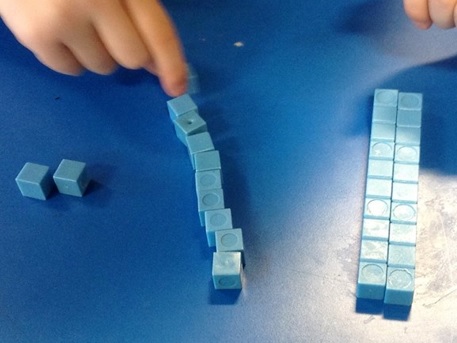
A child is asked to show 32 using dienes blocks. They get three tens and two ones. I ask the child to show me 32 in another way. Do they recognise that they can use 32 ones? Given two tens, I ask ‘How many more ones make 32? We see that 32 is also two tens and twelve ones.

This basic idea is the foundation for many place value investigations. For example, the I See Reasoning – Y5 question ‘How many ways can 0.42 be made using 0.1 and 0.01 coins?’ One of the I See Problem-Solving – LKS2 tasks also explores this idea: it’s one of the free sample tasks which can be downloaded from this page. The ‘build’ task introduces the idea of making 230 in different ways:

The main task presents this challenge:

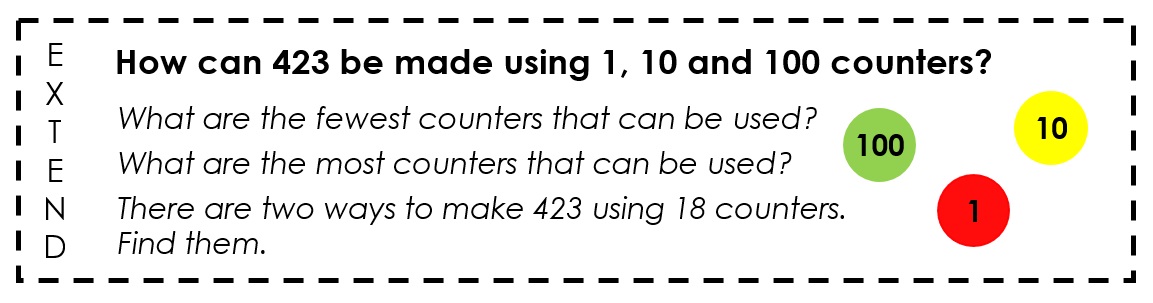
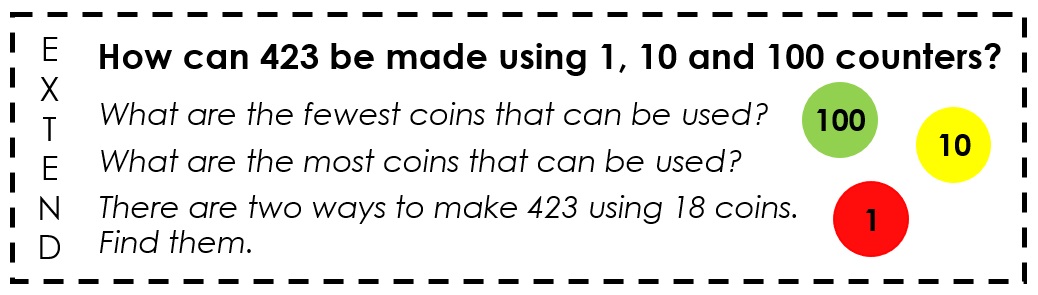
There are ‘support’ and ‘explain’ tasks. Here’s the ‘extend’ prompt:

Of course, 423 can be made with four 100s, two 10s and three 1s. It can be made with 423 ones. There are so many combinations beyond that to be explored.

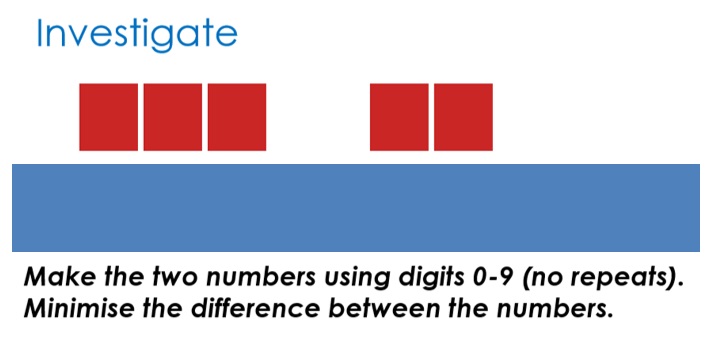
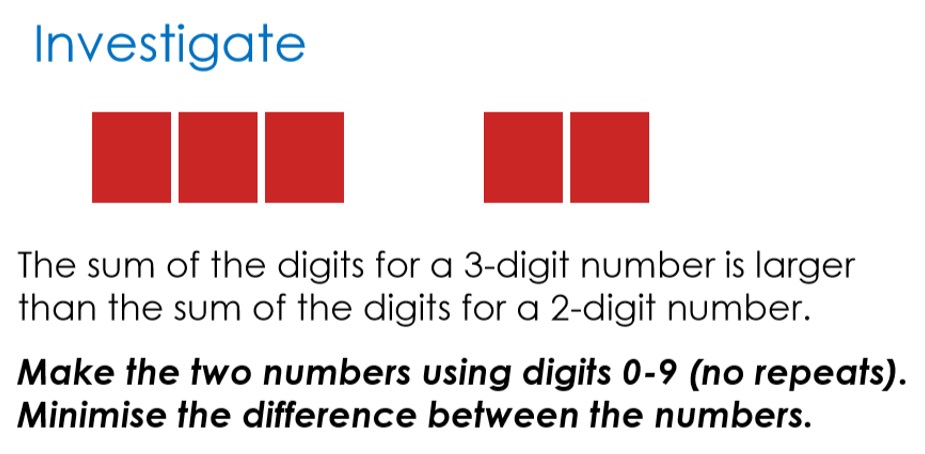
Another of my favourite types of investigations are ‘sum of the digits’ tasks – this blog gives an example from I See Problem-Solving – UKS2. Here’s how you can introduce a sum of the digits question. To start off with, present this question from I See Reasoning – Y6, but with part of the instruction covered up:

The correct answer is 102 and 98. Then the sum of the digits element of the question can be uncovered:

Children have to find ways to increase the digit sum for the 3-digit number without increasing its size too much (e.g. increasing the ones value), and how the sum of the digits for the 2-digit number can be reduced without making the number significantly smaller. Should the 9 be used in the ones column for the 3-digit number or the tens column for the 2-digit number? It’s one of my favourite tasks!

The blog Deepening Understanding of Column Value gives more ideas for how to develop children’s understanding of large quantities. I would love to hear from you if you use any of these ideas or questions in your classroom. I hope you enjoy getting to know your new class!

For information about NCETM-accredited training by Gareth Metcalfe, please visit www.iseemaths.com – bookings are being taken from Spring term 2021 onwards. Online training is available this term.

I See Reasoning – LKS2

I am delighted to announce that I See Reasoning – LKS2 is now on sale! It will arm teachers with a range of visual and thought-provoking tasks for interweaving reasoning within day-to-day maths lessons.

I See Reasoning – LKS2, the little sister of the hit resource I See Reasoning – UKS2, is a PDF file received as a digital download. It is comprised of 240 questions for deepening mathematical thinking and encouraging purposeful peer discussions. It is a go-to resource for prompts that build understanding and tasks that allow for extended investigations. This blog showcases what to expect from the resource by looking at three typical example questions.

Prompts that show concepts visually

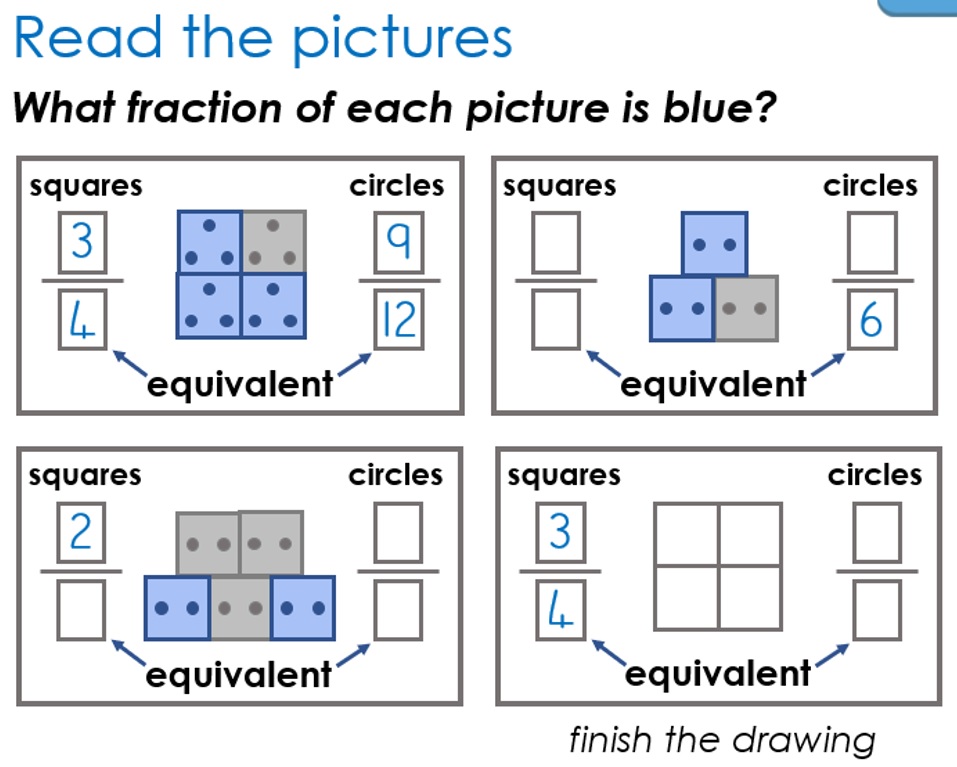
There are a wide range of questions that use visual representations to help children to make connections and develop a conceptual understanding of core concepts. There are lots of ‘read the picture’ examples like the one above, ideas are often represented with bar models and many other images are used.

Prompts that generate discussion around key ideas

There are lots of examples that get children talking about key concepts and identify likely misconceptions. In this example, will children recognise that the size of the angle is represented by the amount of turn rather than the length of the lines? There are thought-provoking images from right across the LKS2 curriculum.

Opportunities for extended exploration

Many of the questions will ask children to calculate in different ways or find multiple solutions. This means challenge is added by getting children to explore the same type of question in more depth, working systematically and flexibly to find all possible answers.

It’s my belief that teachers generally agree on the principles of great maths teaching. However, time-pressured teachers need great resources at their fingertips. That’s what I attribute the unbelievable success of I See Reasoning – UKS2 to. It is ever-increasingly popular and has sold in 12 countries!

I have been so touched by the very many positive messages I have received in recent months. It’s my great pleasure to help teachers create meaningful and engaging maths lessons. I hope I See Reasoning – LKS2 is another piece of this jigsaw.

I See Reasoning – LKS2 is on sale via Etsy here. Information about the resource, plus the free multiplication section, can be accessed on this page.

For further information about training and resources, visit www.iseemaths.com

For me to improve…

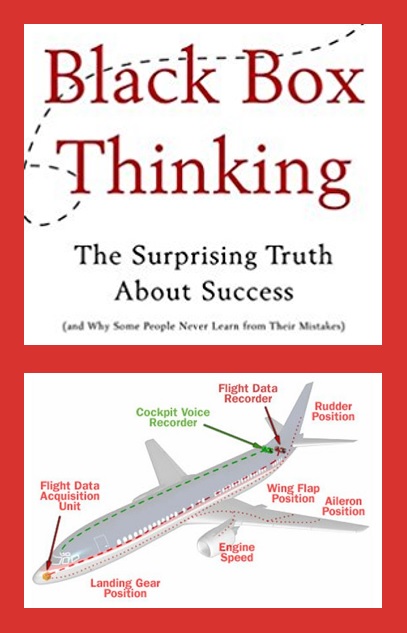
No book has had a more powerful effect on me as a teacher than Black Box Thinking by Matthew Syed. My summary below doesn’t do the book justice.

Inside every aircraft there are two practically indestructible black boxes: one box records flight information, the other records the dialogue between the pilot, co-pilot and air traffic control. In the event of an accident, the black boxes are hunted down and scrutinised so that the exact causes (or contributory factors) behind a crash can be examined. Crucially, in the aviation industry mistakes are viewed as precious opportunities for improvement. Processes are in place so that these lessons can be shared across the industry. Little wonder that you are infinitely safer in an aircraft than driving to an airport.

Black Box Thinking goes on to examine the cultures that exist in some of the world’s most innovative organisations. It also looks at the damage that can be caused when an attitude of fear, or an unwillingness to learn from mistakes, exists within a profession.

It made me reflect personally. Did I actively seek out my own weaknesses? Was confirmation bias making me blind to my shortcomings? When I started teaching (back in 2004) I really struggled and needed to find ways to improve to maintain some degree of sanity. Since then I’ve always been driven to keep getting better, but my processes for improvement could, well, improve. I made three simple commitments:

  • Broaden my experience.
  • Showcase the weakest (rather than the strongest) aspects of my teaching.
  • Make others feel comfortable to suggest how I can get better.

I think that my greatest responsibility as an experienced teacher isn’t to teach the best lessons, but to model the best processes for self-improvement. That, for me, is about being comfortable with (and even enjoying) vulnerability, and about empowering the people around me.

To that end, each term I’m going to write a blog called ‘For me to improve…’. It will chronicle the mistakes I’ve made and the aspects of my teaching that I’m trying to get better. I’m sure I’ll pick up lots of great advice along the way – episode 1 is coming soon!

I See Reasoning – UKS2

We all want to be able to build reasoning into daily maths lessons. For a time-pressured teacher, that can be easier said than done. I See Reasoning – UKS2 provides rich tasks to deepen learning across the maths curriculum. It’s my ‘go-to’ resource when preparing lessons.

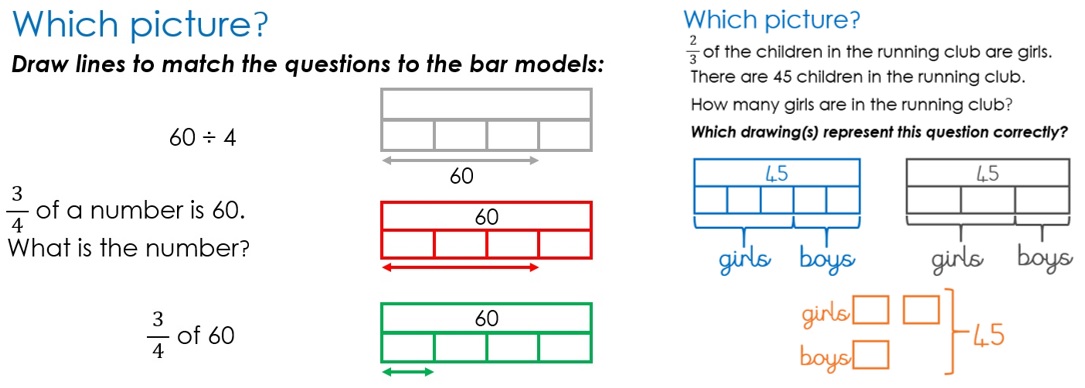
Concepts in I See Reasoning – UKS2 are often shown visually. In the Which picture? questions children match questions to a correct visual representation:

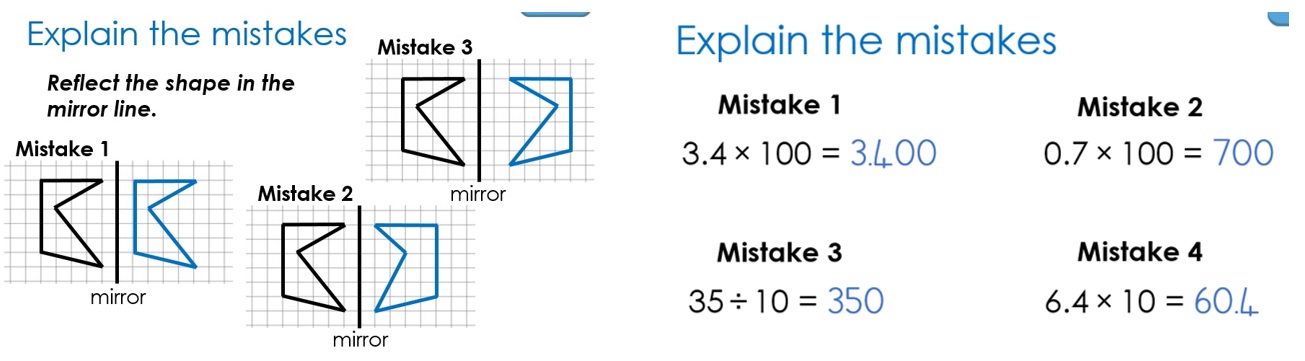
Explain the mistakes questions draw attention to likely errors:

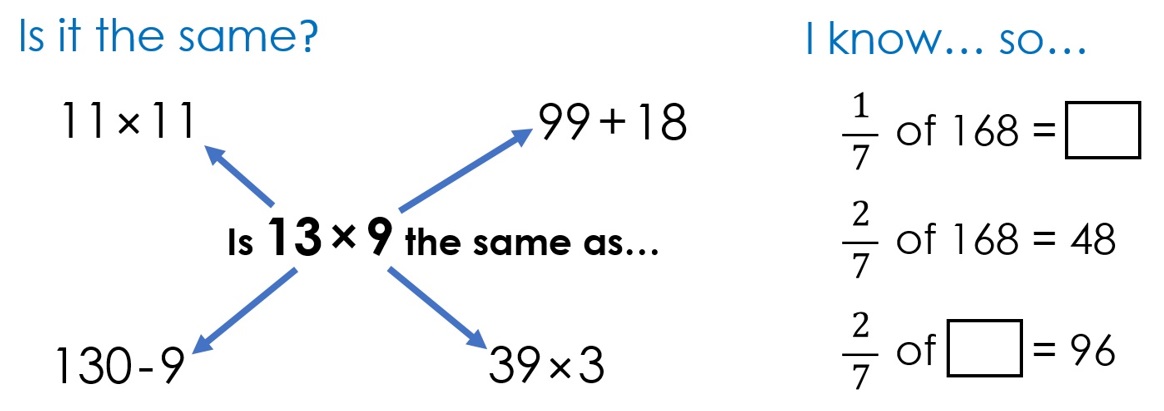
Questions encourage connections between related calculations:

Children are encouraged to find multiple solutions:

And there are a range of other question types besides:

I See Reasoning – UKS2 comes as a PDF file emailed direct to your inbox. You can then save the file in a location of your choice. You can view the file from an Etsy account if you have one (although you don’t have to make an account to receive the file by email). Circulation of the file is prohibited.

Screenshots can be taken to be used in presentations or printed for children’s work. There are 176 questions, all varied in form, with answers provided where necessary. I See Reasoning – UKS2 corresponds to US grades 4&5 and Australian year groups 5&6.

I believe that I See Reasoning – UKS2 can be used to supplement any scheme of work. I hope it helps to deepen the learning in your classroom; I also hope that it makes your life easier when planning at the end of a busy school day!

CLICK HERE TO BUY I SEE REASONING – UKS2

Training and Resources for Summer ’17

I set up I See Maths to help time-limited teachers create powerful learning experiences in maths, engaging children intellectually and emotionally. To that end, here’s what I’m offering this summer:

Training
I’m delighted to announce four new conference dates this summer: full conference details can be found here. Early Number Sense: Beyond Counting  will give a clear Nursery-Y2 vision for how children build a strong feel for number and learn to calculate using non-counting strategies. We will explore how mathematical play can be extended and how reasoning can be embedded. Reasoning and Depth in KS2 Maths will give an exciting and practical vision for deepening mathematical learning, including how images and resources can be used to build understanding.

If you are interested in this training, you may consider arranging a conference event at your school – all that is needed is a spare room. This is a very cost-effective and popular way of running training – for full details click on the top two links on this page.

Resources to Buy
I’m working hard on the I See Reasoning eBook range and hope to write the UKS2, LKS2 and KS1 versions this term (I may be dreaming!). This will give teachers a massive bank of questions and tasks that will open up discussions and encourage reasoning. I’m extremely excited about this project – this blog gives more detail.

The iPad app I See Calculation is also in the final stages of being built. It will show standard written methods for calculation one step at a time. A child could check their answer to a question with a calculator; with I See Calculation they will be able to check each step of their written calculation.

Free Resources
I’m intending to create a series of free ‘flipbook’ dot pattern games that will help children to visualise addition, subtraction and multiplication, opening up discussions about calculation strategies.

Full details about my INSET training and in-school support can be found by clicking the links. I’m a NCETM Charter Standard provider of CPD and, being a class teacher, still very au fait with the realities of teaching in the classroom.

I hope that, in some way, my work can help you in the daily challenge of delivering great maths lessons. Enjoy the summer term!