Place Value: Seeing the Relative Size of Numbers

In place value, children learn about the value of each digit in a number (e.g. that the 5 in 153 represents 5 tens) – the Deepening Understanding in Column Value blog gives some ideas for extending thinking in these lessons. However, to give children a more complete understanding it’s important that they can also reason about the relative size of numbers. In this blog I will explore how I’ve used a blank number line to develop this form of understanding and look at the wealth of opportunities for reasoning that it can provide.

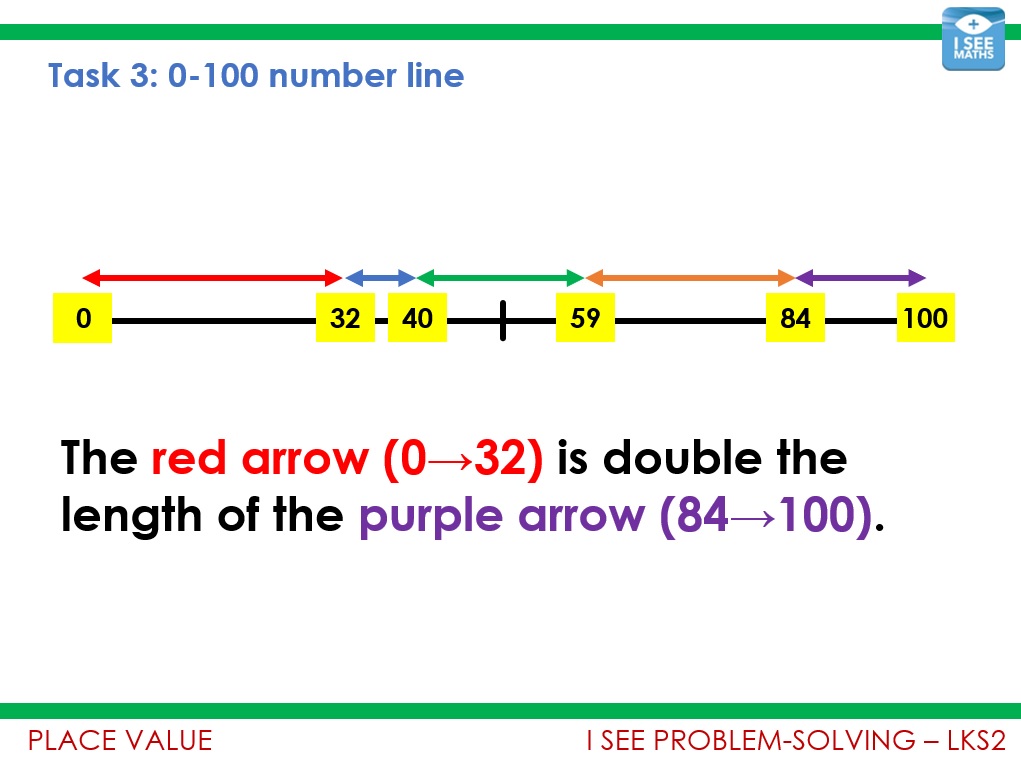
Consider this task. Children are given a long number line with 0 and 100 at either end and are asked to position 31, 39 and 84 accurately on the number line. Children are challenged to think about whether the lengths between the numbers are appropriately sized.

I have found that children are generally able to order numbers, but that the common mistake is to make the spaces between numbers too similar. In this example, I may ask children to compare the distance between 31 & 39 with the distance between 0 & 31 (which is almost four times longer) and the distance between 84 & 100 (which is exactly twice as long).

In a similar task, children have positioned 4, 7 and 9 on a 0-10 number line. It’s common for children to position 4 by counting four small ‘steps’ on from zero (placing 4 far too close to zero) rather than thinking about the position of 4 relative to the half-way point of the line. Similarly, 7 and 9 are often positioned by counting back from 10, leaving an overly large gap between 4 and 7. With careful modelling, and by looking at the number lines in the classroom, children learn to reason spatially with greater precision.

I’ve included two such tasks in I See Problem-Solving – LKS2 (click on the link for sample tasks), which is due to be released on 29th September. Here’s one of the pages from the Worked Example:
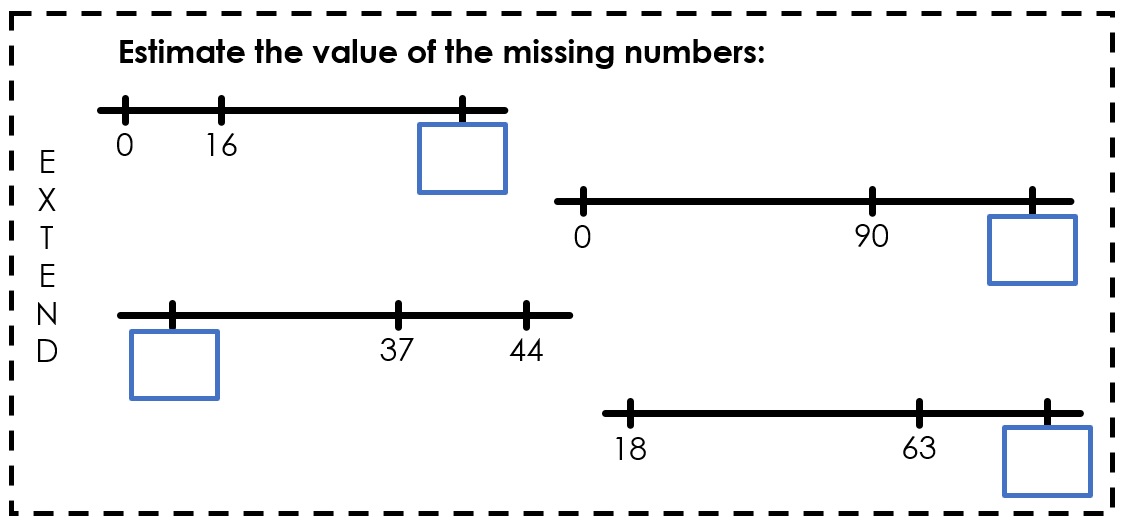
And here is the extension prompt for the task. There’s so much additive and multiplicative reasoning that go into estimating the value of the missing numbers:
I would love to hear about any practical examples of how you are outworked these ideas in the classroom. The blog Deepening Understanding of Column Value gives some more ideas for how to deepen the challenge in place value. Have a great term!

For information about NCETM-accredited training by Gareth Metcalfe, please visit www.iseemaths.com – bookings are being taken from Spring term 2020 onwards.
Deepening Understanding of Column Value

When learning about place value, an emphasis is placed on the column value of each digit. For example, the value of the digit 7 in 273 is 70. In this blog I will look at two ways to extend this understanding of place value. In the blog Seeing the Relative Size of Numbers I explain another important building block in children’s knowledge of number.

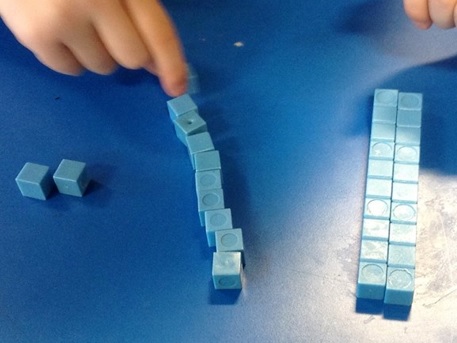
A child is asked to show 32 using dienes blocks. They get three tens and two ones. I ask the child to show me 32 in another way. Do they recognise that they can use 32 ones? Given two tens, I ask ‘How many more ones make 32? We see that 32 is also two tens and twelve ones.

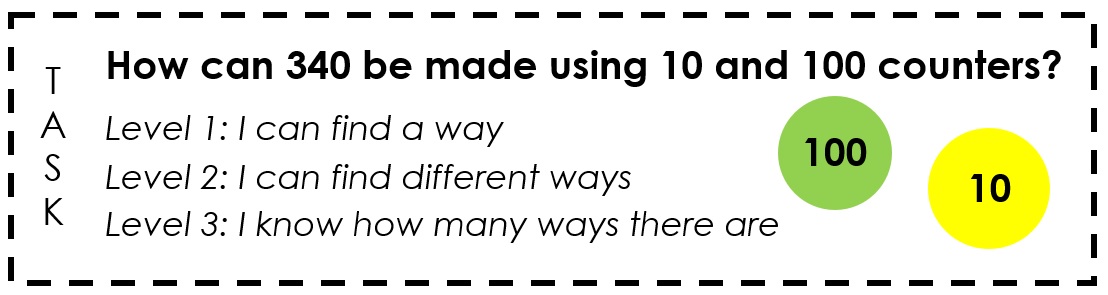
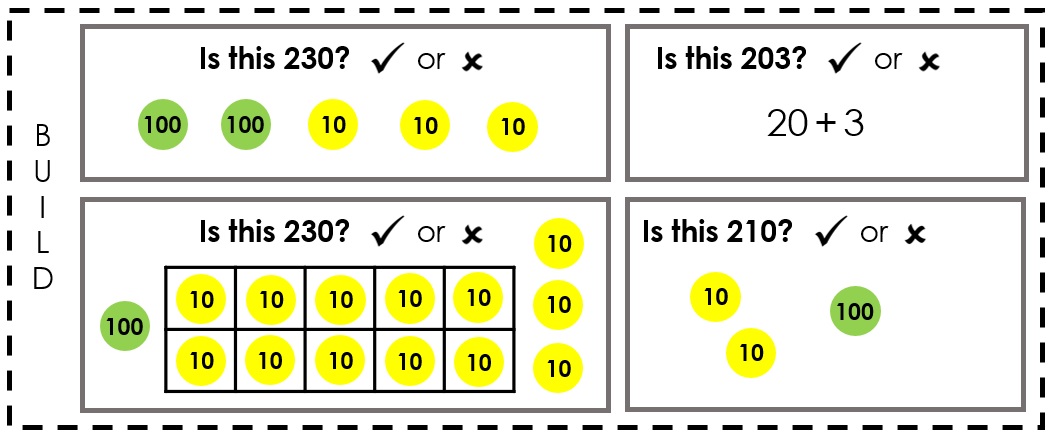
This basic idea is the foundation for many place value investigations. For example, the I See Reasoning – Y5 question ‘How many ways can 0.42 be made using 0.1 and 0.01 coins?’ One of the I See Problem-Solving – LKS2 tasks also explores this idea: it’s one of the free sample tasks which can be downloaded from this page. The ‘build’ task introduces the idea of making 230 in different ways:

The main task presents this challenge:

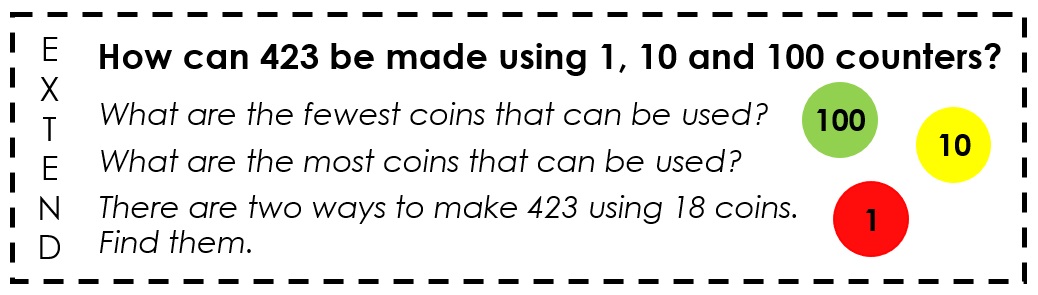
There are ‘support’ and ‘explain’ tasks. Here’s the ‘extend’ prompt:

Of course, 423 can be made with four 100s, two 10s and three 1s. It can be made with 423 ones. There are so many combinations beyond that to be explored.

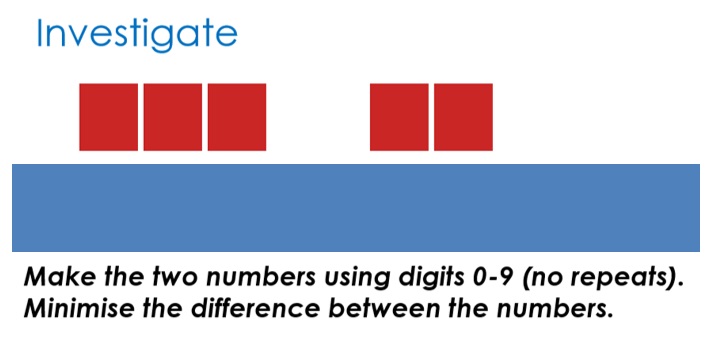
Another of my favourite types of investigations are ‘sum of the digits’ tasks – this blog gives an example from I See Problem-Solving – UKS2. Here’s how you can introduce a sum of the digits question. To start off with, present this question from I See Reasoning – Y6, but with part of the instruction covered up:

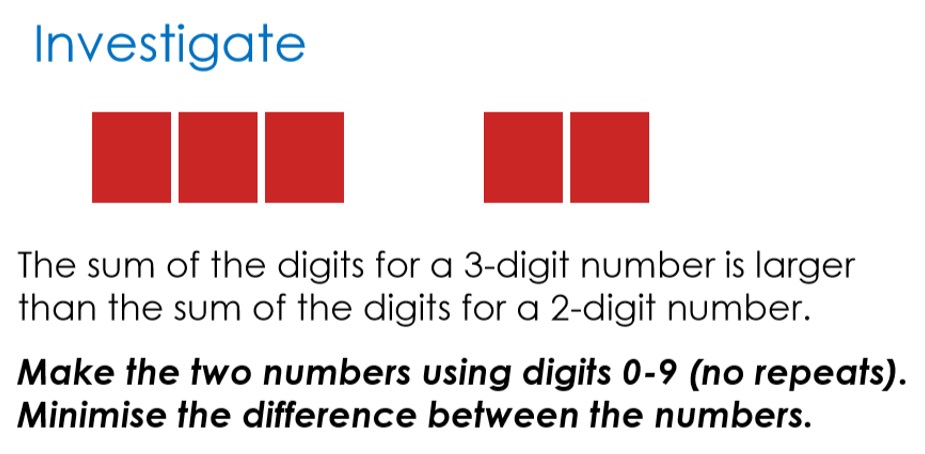
The correct answer is 102 and 98. Then the sum of the digits element of the question can be uncovered:

Children have to find ways to increase the digit sum for the 3-digit number without increasing its size too much (e.g. increasing the ones value), and how the sum of the digits for the 2-digit number can be reduced without making the number significantly smaller. Should the 9 be used in the ones column for the 3-digit number or the tens column for the 2-digit number? It’s one of my favourite tasks!

The blog Deepening Understanding of Column Value gives more ideas for how to develop children’s understanding of large quantities. I would love to hear from you if you use any of these ideas or questions in your classroom. I hope you enjoy getting to know your new class!

For information about NCETM-accredited training by Gareth Metcalfe, please visit www.iseemaths.com – bookings are being taken from Spring term 2021 onwards. Online training is available this term.